
Unbiased headlines. Facts, not spin.
Every story is an unbiased news briefing written from 110+ sources across the spectrum — sources linked so you can verify it yourself.
 economy
Major Story (7/10)
July 25, 2026 at 12:04 PM
economy
Major Story (7/10)
July 25, 2026 at 12:04 PM
Trump's New Section 301 Tariffs Hit With Two Lawsuits Within 24 Hours
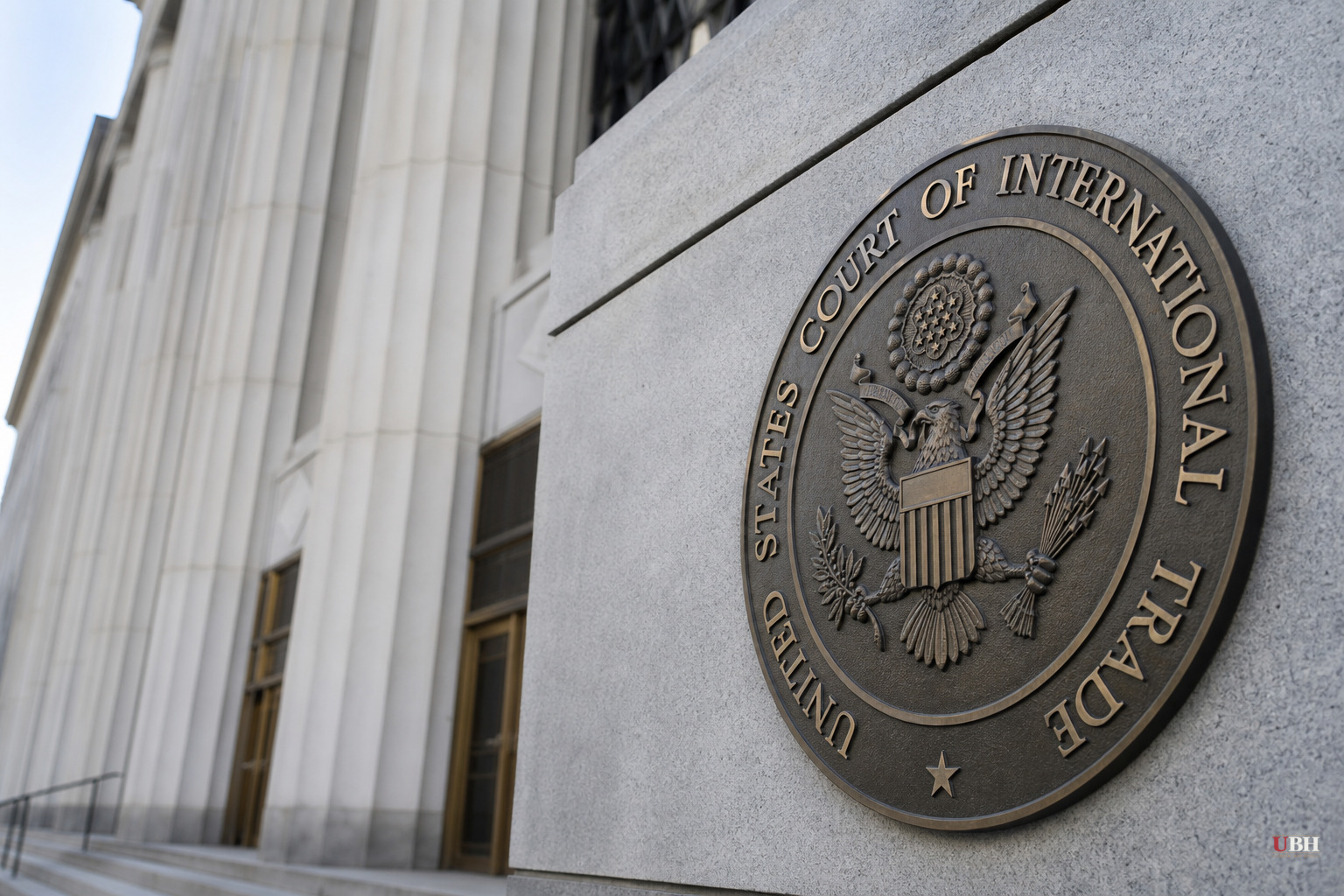
Since the Supreme Court struck down Trump's IEEPA tariffs in February, the administration has cycled through two more legal theories to keep a global tariff wall standing. The latest one lasted about a day before lawyers showed up in court.
The Section 122 tariffs that replaced the IEEPA levies expired Friday, July 24. Hours earlier, on Thursday, July 23, the administration announced new duties of 10% to 12.5% on imports from more than 80 countries, this time invoking Section 301 of the Trade Act of 1974. The stated justification: a probe into roughly 60 economies allegedly failing to stop forced labor in their supply chains.
By Friday, two lawsuits were sitting at the US Court of International Trade in New York.
The first suit: Burlap and Barrel and Collective Horology
The Liberty Justice Center, the firm that beat Trump at the Supreme Court in the IEEPA case (V.O.S. Selections v. Trump), filed on behalf of Burlap and Barrel, a New York spice importer, and Collective Horology, a California watch retailer, according to The Guardian and Reason.
Burlap and Barrel imports from Canada, India, Spain, Turkey, and Vietnam. Collective Horology sources watches from the UK, France, and Austria. Both are now subject to the new duties.
"These tariffs would punish a responsible American business, and the farmers we work with, without showing how taxes on our spices would address the policies of foreign governments that USTR says it is targeting," said Ethan Frisch, co-founder and co-CEO of Burlap and Barrel, according to The Guardian.
The complaint argues Section 301 grants only "targeted, country-specific and practice-specific remedial authority," not a blanket global tariff scheme, and that the US Trade Representative "failed to provide a reasoned, record-based explanation for its determinations," per the Guardian and business-standard reporting. This suit is filed as a proposed class action covering all importers hit by the new duties, according to business-standard and briefs.co.
Reason's Ilya Somin, who worked directly on the earlier IEEPA case with the Liberty Justice Center, notes this suit also invokes the constitutional nondelegation doctrine and the major questions doctrine as backup arguments if courts find Section 301 does technically authorize this.
The second suit: Learning Resources
A separate case, Learning Resources, Inc. v. United States, was filed by a group of businesses led by the toy manufacturer Learning Resources, according to Somin's Reason post. Learning Resources is a familiar name in this fight. Its earlier case against the IEEPA tariffs got consolidated with the Liberty Justice Center's case and ended up lending its name to the Supreme Court's February ruling, even though the Court ultimately dismissed Learning Resources' specific claim on jurisdictional grounds.
This time Learning Resources is represented by appellate litigator Pratik Shah and colleagues at Akin Gump. The complaint raises similar statutory and nondelegation arguments but does not invoke the major questions doctrine, and it does not seek class certification, according to Somin's post. That means a win for Learning Resources would likely only benefit the named plaintiff firms, not every importer.
What both suits are actually arguing
Both cases hinge on the same core claim: Section 301 requires the US Trade Representative to do a country-specific investigation into specific unfair trade practices before imposing duties. The plaintiffs say the administration skipped that step and instead used the forced-labor investigation as cover to rebuild, almost dollar-for-dollar, the tariff structure the Supreme Court already killed.
The lawsuit's language is blunt on this point. Attorneys wrote that Section 301 "is not a freestanding authorization to tax substantially all imports from substantially all trading partners at rates selected to replicate the invalidated IEEPA tariff regime," according to briefs.co.
That is a serious legal argument, not a throwaway line. Section 301 was written for retaliating against specific unfair practices by specific countries. Applying a blanket 10-to-12.5% rate across 80-plus countries based on a single forced-labor rationale is a stretch of the statute's plain language, and even a sympathetic reading of Trump's trade strategy has to grapple with that gap.
The administration's defenders would counter that Trump used Section 301 successfully in his first term against China and that those tariffs survived legal challenges. That's true, but those were narrower, China-specific actions built on a lengthy, documented investigation. Applying the same authority to dozens of countries at once, in response to a broad forced-labor sweep, is a different scale of claim, and the plaintiffs are betting courts will see it that way too.
Spokespeople for the USTR, the White House, and the Justice Department did not respond to requests for comment, according to both business-standard and briefs.co.
What happens next
Somin expects the CIT to consolidate the two cases, given the overlapping legal theories and shared venue. The court already ruled against Trump's Section 122 tariffs earlier this year in a separate Liberty Justice Center case, so this is not unfamiliar territory for the judges.
More filings are likely. Somin flagged that additional businesses, public interest groups, and possibly state governments could bring their own Section 301 challenges in the coming weeks. For now, importers paying the new 10% to 12.5% rates have no court order blocking collection, and the tariffs remain in effect while litigation proceeds.
Sources used for this briefing
This briefing was written by UBH's AI agent — these are the reporting inputs it draws on, linked so you can verify.


