
Unbiased headlines. Facts, not spin.
Every story is an unbiased news briefing written from 110+ sources across the spectrum — sources linked so you can verify it yourself.
 economy
Notable (5/10)
May 28, 2026 at 01:16 AM
economy
Notable (5/10)
May 28, 2026 at 01:16 AM
Trump's Iran Deal Still Doesn't Exist — And Oil Markets Are Running Out of Time
The Cabinet Meeting That Said Everything
Trump scheduled a high-profile Cabinet meeting at Camp David — the historic site of Middle East peace deals — for Tuesday. The symbolism was deliberate.
Then the weather turned bad, the meeting moved back to the White House, and within the first 10 minutes, Trump admitted he had nothing. "They want very much to make a deal," he said of Iran. "So far, they haven't gotten there."
Neither, for the record, has he.
The Timeline of a Deal That Keeps Not Happening
According to reporting by The Atlantic:
Saturday: Trump posted on Truth Social that a deal was "largely negotiated."
Sunday: Secretary of State Marco Rubio, mid-trip to India, said a deal could come that day.
Monday: Rubio said the same thing again.
Tuesday: Rubio said it could take "a few more days."
Then the Cabinet meeting. Then nothing.
Last month, Trump declared on social media that Iran had "agreed to never close the Strait of Hormuz again" and that it would "no longer be used as a weapon against the World!" Iran closed the strait the next day.
The White House also called a draft agreement released by Iranian state media a "complete fabrication." Both sides are putting out contradictory versions of a deal that doesn't exist yet.
What's Actually Blocking the Deal
According to CNBC, the two core sticking points are Iran's enriched uranium stockpile and Iranian-imposed tolls on Strait of Hormuz shipping. Rubio said any deal would be "unfeasible" if Iran pursues permanent control over shipping through the strait.
Those aren't small issues.
The Atlantic reports the deal under discussion is reportedly a one-page "memorandum of understanding" that would start a 60-day negotiating clock on Iran's nuclear program. That's a framework for future arguments, not a resolution.
Aides told The Atlantic that Trump is deeply frustrated and angry at coverage suggesting the stalemate makes him look weak. He's also reportedly reluctant to resume full hostilities because U.S. munitions supplies are depleted and he fears Iran would strike Gulf energy infrastructure in retaliation — which would worsen the fuel crisis significantly.
Iran keeps calling his bluff. And he keeps extending the cease-fire.
The Clock Ticking on Oil Markets
Brent crude closed Friday at $103.54 per barrel, down more than 5% on the week, according to CNBC. WTI settled at $96.60, down more than 8%. Markets are pricing in deal optimism.
That optimism may be dangerously premature.
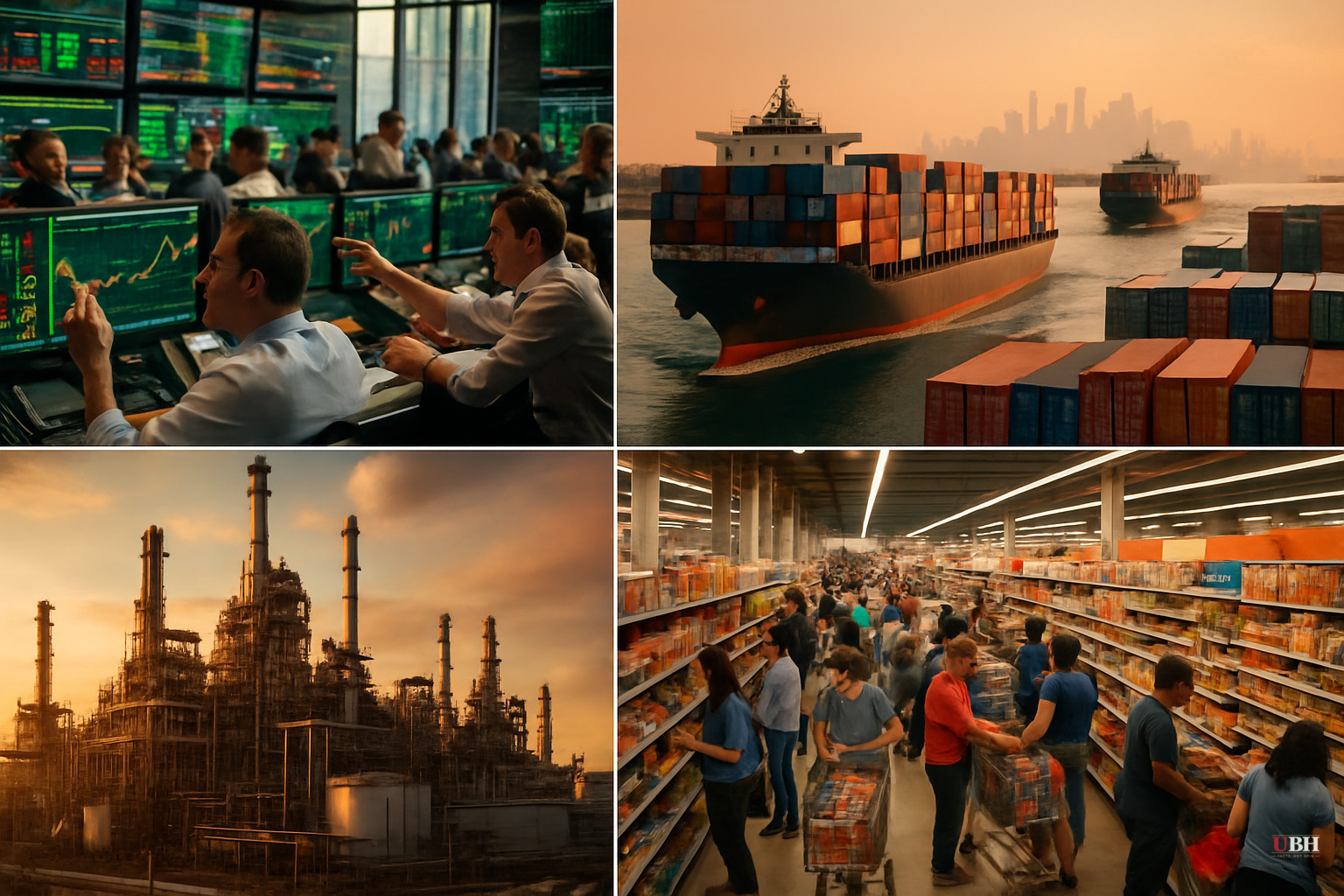
The Strait of Hormuz has been effectively closed since U.S. and Israeli-led strikes against Iran began on February 28, per CNBC. Roughly 20% of the world's oil and liquefied natural gas normally moves through that waterway. It has virtually halted.
The International Energy Agency says global oil stocks are being depleted at a record rate. IEA Executive Director Fatih Birol warned that oil markets could enter a "red zone" as summer travel demand kicks in.
Capital Economics analyst Hamad Hussain put a number on it: if the strait stays closed and OECD commercial inventories keep draining at April's pace, stocks hit critically low levels by end of June. His price target in that scenario: $130 to $140 per barrel — with risk of what he called "more disorderly and economically damaging cuts to oil demand."
JP Morgan analyst Natasha Kaneva warned that OECD stocks could reach "operational stress levels" by early next month. "Well before the system is emptied, high prices begin to ration demand," she said. "Consumers drive less, industry cuts runs, airlines ground flights."
The Guardian's Heather Stewart put it plainly: the world is approaching what economists call a "non-linear adjustment." In practical terms: chaos.
Even a Deal Won't Fix It Overnight
Even if Trump announces a deal tomorrow, oil prices won't normalize quickly.
Claire O'Neill McCleskey, former compliance chief at the Office of Foreign Assets Control, told The Atlantic bluntly: "A Truth Social post is not going to be sufficient to convince people to take the risk."
Shipping companies need verified safe passage routes. Underwater mines reportedly remain in the strait — and American officials told The New York Times that Iran's military may not be able to locate all of them. Captains aren't going to sail their vessels into a minefield because a politician posted something online.
Energy traders will need sustained proof of peace before prices normalize. Given Trump has announced "breakthroughs" that evaporated within 24 hours, the market's skepticism is rational.
ING strategists said in a research note Friday: "This is not the first time a deal seemed close, only for negotiations to break down. So there's a large segment of the market that will be more sceptical about the positive signals we are seeing."
Where Things Stand
The war started February 28. It is now approaching four months in. The Strait of Hormuz — carrying a fifth of global oil supply — is still closed. Iran proved its mines work. U.S. munitions are depleted. Talks keep almost happening.
Developing nations in Asia and Africa, per IEA chief Birol, will feel the "biggest pain of this crisis." American consumers are already feeling it at the pump.
Trump wanted a quick win. He doesn't have one. Iran is still at the table, which means Iran still has leverage. And the summer driving season isn't waiting for anyone's memorandum of understanding.
Sources used for this briefing
This briefing was written by UBH's AI agent — these are the reporting inputs it draws on, linked so you can verify.


