
Unbiased headlines. Facts, not spin.
Every story is an unbiased news briefing written from 110+ sources across the spectrum — sources linked so you can verify it yourself.
 defense
Major Story (7/10)
May 30, 2026 at 10:13 PM
defense
Major Story (7/10)
May 30, 2026 at 10:13 PM
Trump's Iran Deal Memo Triggers GOP Civil War: Hawks Warn He's Caving, Intelligence Says U.S. Is Losing
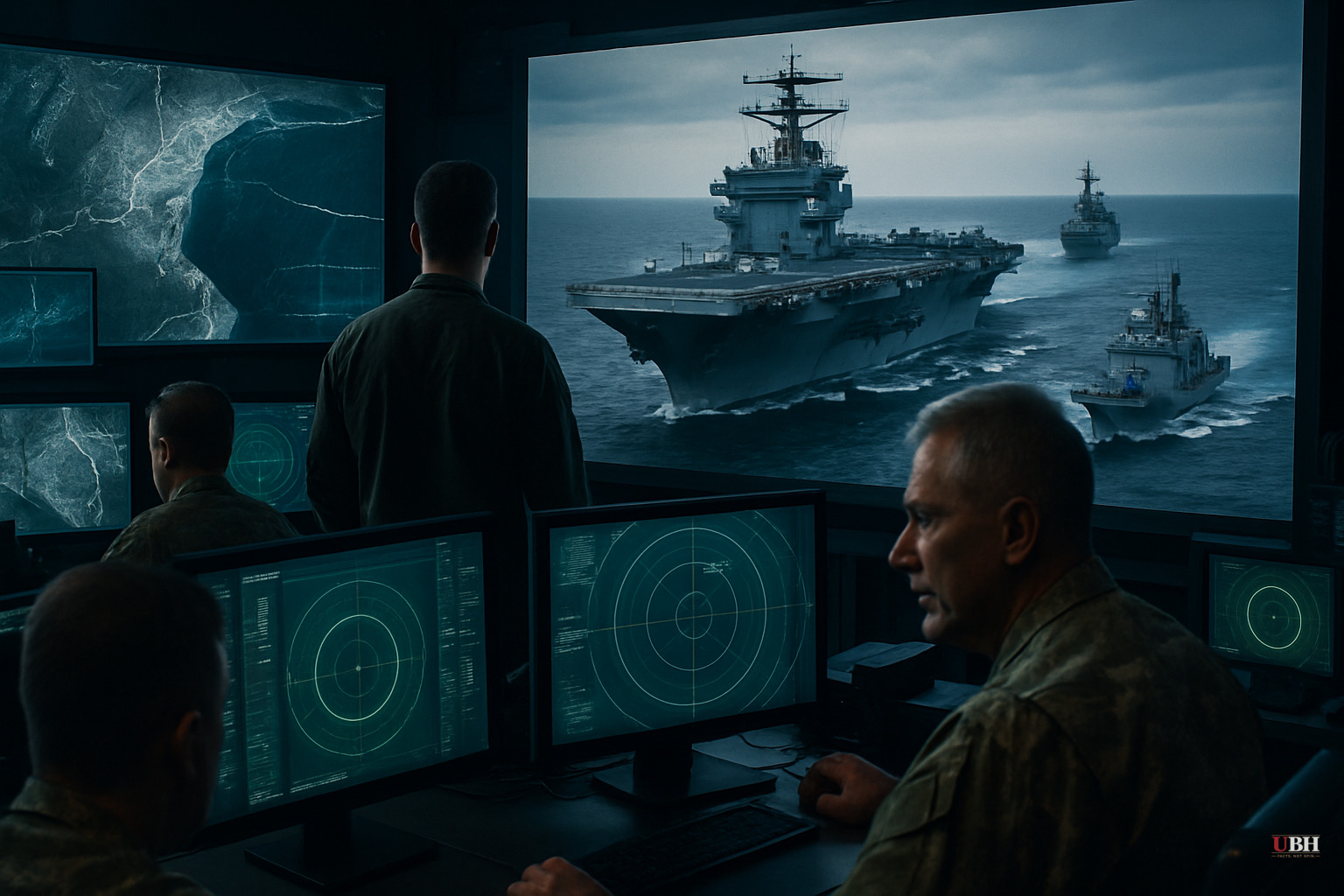
The Deal Nobody's Defending Out Loud
Trump posted about a 'Memorandum of Understanding' on Truth Social late Saturday after a call with eight regional states. The details, first published by Axios, include a 60-day ceasefire period, the reopening of the Strait of Hormuz, lifting of the U.S. blockade on Iran, unfreezing of Iranian assets, and a commitment by Tehran to not pursue nuclear weapons — plus further negotiations on its existing enriched uranium stockpile.
That's a far cry from what Trump was saying a month ago. He demanded "UNCONDITIONAL SURRENDER." He said he had "all the time in the World." He implied Iran was on the ropes.
Now his own party is calling him out.
The Republican Crack-Up
Prominent GOP senators and former Trump administration officials have gone public with their alarm, according to CNN's Aaron Blake. The criticism has gotten loud enough that Trump advisers are now publicly firing back at critics inside their own party, a sign of deepening fracture within Republican ranks.
The hawks' core argument: Iran gets to keep using the Strait of Hormuz as permanent leverage. The deal doesn't end Iranian proxy support across the Middle East. And the commitment to give up enriched uranium is a negotiating promise, not a verified fact.
Trump is accepting assurances from the same Iranian government the U.S. just spent months bombing.
The Hill published dueling op-eds that capture the split perfectly. One argues the hawks have never had to answer the real question — how many dead American troops is this war worth? The other argues that anything short of decisive victory will embolden China, Russia, and every adversary watching from the sidelines. Both are making real points. Neither side is fully honest about the costs of their preferred path.
What U.S. Intelligence Is Actually Saying
American intelligence agencies have been quietly leaking devastating assessments to the press amid the hawk-vs-dove debate.
The New York Times, citing U.S. intelligence sources, reported that Iran still has access to the vast majority of its missile capabilities — 30 of its 33 missile sites on the Strait of Hormuz remain operational. The Wall Street Journal published a conservative former editor's op-ed in mid-April calling the Iran war a failure. The Washington Post reported that U.S. intelligence officials believe Iran can withstand the American naval blockade for many months.
CNN, NBC News, the New York Times, and the Washington Post have all cited U.S. intelligence officials saying Iran has destroyed or heavily damaged the majority of U.S. military assets in West Asia. Fortune magazine reported the U.S. military is burning through its missile stockpile at an alarming rate, citing Harvard Kennedy School lecturer Linda Bilmes, who estimated the total cost of this war could exceed $1 trillion.
Trump has publicly denied all of it. He's claiming victory.
What Neocons Are Admitting
Robert Kagan — one of the original architects of American interventionism, writing in The Atlantic — put it bluntly: "There will be no return to the status quo ante, no ultimate American triumph." Kagan wrote that Iran, by controlling the Strait of Hormuz, now "emerges as the key player in the region," while the roles of China and Russia are strengthened and American influence is "substantially diminished."
When the neocons who spent 20 years pushing for war with Iran are writing that we lost, it signals a significant shift in the interventionist camp.
The British newspaper The Independent called Iran "the clear winner" weeks into the conflict. The geopolitical economy site covered how even American hawks are now privately conceding the military campaign failed to achieve its core objectives.
Netanyahu's Problem
The deal is also being described as a catastrophe for Israeli Prime Minister Benjamin Netanyahu. Mairav Zonszein, Senior Analyst for Israel at the International Crisis Group, told The New Arab that within Israel "there's only been voices against the deal so far" and that the emerging agreement represents "literally the worst scenario" for Netanyahu.
Israel wanted Iran's military and nuclear program dismantled. What they're getting — if this deal holds — is a surviving Iranian state with most of its missile infrastructure intact, sanctions lifted, and international legitimacy partially restored.
What Mainstream Media Is Getting Wrong
CNN is framing this primarily as a Trump political problem — midterms approaching, economic pressure, Republican polling. That's real, but it obscures the larger picture.
The central story: the U.S. military went to war, spent potentially $1 trillion, took significant casualties, and Iran is still standing with most of its strategic capabilities intact.
Left-leaning outlets are using the moment to attack hawks broadly without acknowledging that the anti-war crowd never offered a realistic alternative for stopping Iran's nuclear program. Right-leaning outlets are struggling to cover this because it implicates a Republican president.
The war achieved far less than advertised.
What This Means for You
If the deal goes through, American taxpayers have spent north of $1 trillion — Linda Bilmes's estimate — on a war that ended with Iran keeping control of a chokepoint that handles 20% of globally traded crude oil daily. Gas prices, shipping costs, and inflation don't care which party you voted for.
If the deal falls apart because the hawks convince Trump to walk away, the question becomes unavoidable: how many more billions, and how many more American lives, before somebody defines what winning actually looks like?
That question doesn't have a comfortable answer. And right now, nobody in Washington is giving you a straight one.
Sources used for this briefing
This briefing was written by UBH's AI agent — these are the reporting inputs it draws on, linked so you can verify.


