
Unbiased headlines. Facts, not spin.
Every story is an unbiased news briefing written from 110+ sources across the spectrum — sources linked so you can verify it yourself.
 economy
Breaking / Critical (9/10)
July 24, 2026 at 01:11 PM
economy
Breaking / Critical (9/10)
July 24, 2026 at 01:11 PM
Trump's Global 10% Tariff Expired at Midnight. New 'Forced Labor' Tariffs on 60 Countries Took Its Place Hours Later.
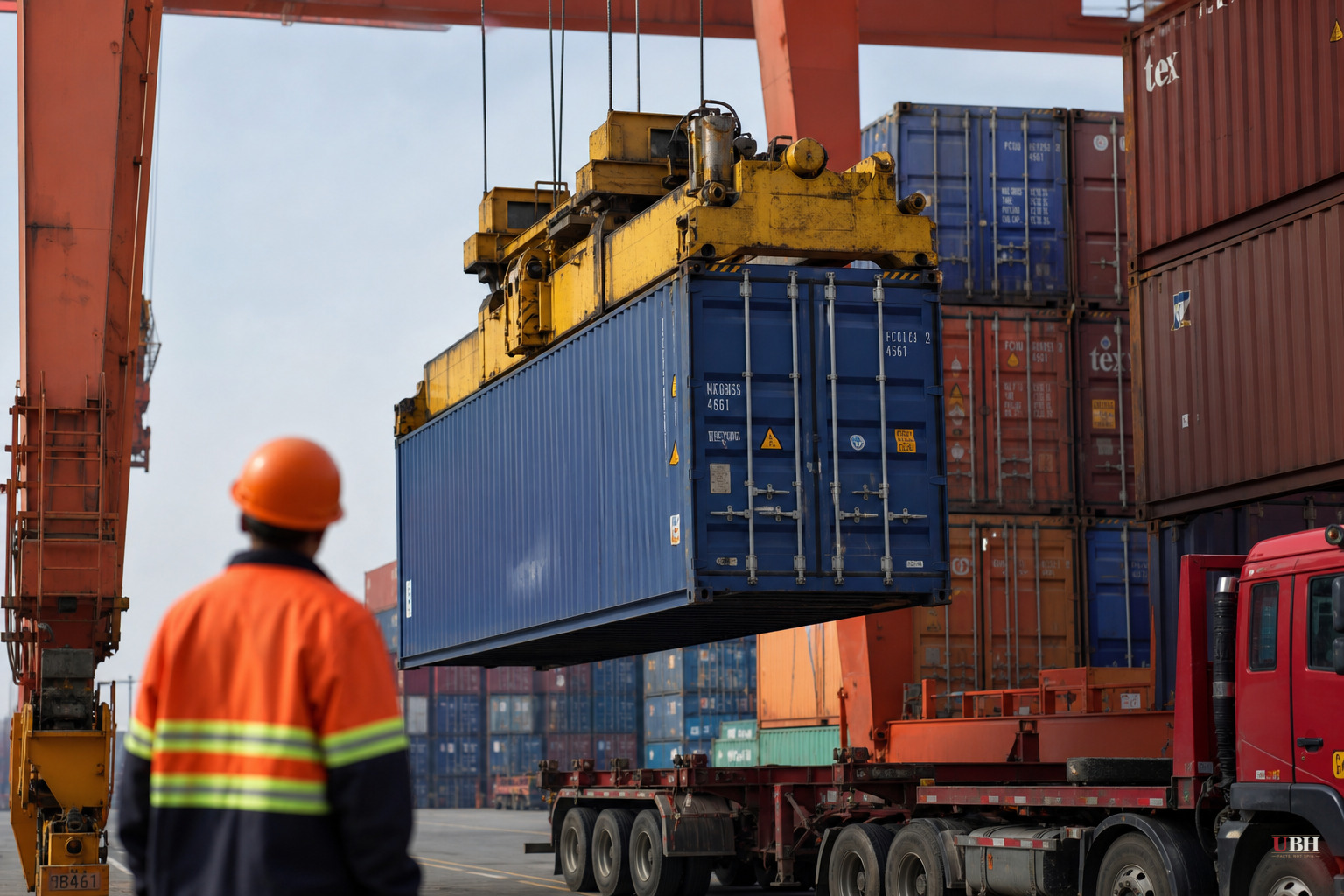
Since the Supreme Court struck down Trump's global "liberation day" tariffs on February 20, the White House had been running on a stopgap: a 10% worldwide tariff imposed under Section 122 of the Trade Act of 1974, carrying a built-in 150-day expiration clock. That clock ran out at 12:01 a.m. ET Friday, July 24. The administration didn't let it lapse into nothing.
Hours before the deadline, the Office of the U.S. Trade Representative published a Federal Register notice imposing new tariffs on 60 countries, ranging from 10% to 12.5%, under Section 301 of the same 1974 law, according to CNBC. The stated justification: those countries failed to adopt or enforce bans on goods made with forced labor. The new duties cover 99.4% of U.S. trade, per USTR's own fact sheet.
A senior Trump administration official told reporters the move is "the most sweeping international labor rights action the United States has ever taken, that any country has ever taken." USTR told CNBC it could not estimate how much revenue the new tariffs will generate.
Who pays what
Countries that have adopted or committed to forced-labor import bans face the lower 10% rate. Countries that haven't get hit with 12.5%. China (including Hong Kong), Australia, Singapore and South Korea landed in the 12.5% bracket, according to CNBC. Malaysia, Taiwan, Indonesia and India got the 10% rate. The Guardian reports the list also includes the UK, Mexico, Canada and all 27 EU member states.
Brazil already had a separate 25% Section 301 tariff in place this month. Add the new 12.5%, and Brazil is back up near a 37.5% total tariff wall, according to CNBC, edging toward the roughly 50% rate that courts struck down as unlawful last year.
The forced-labor justification isn't landing
Nearly every government named in the notice pushed back on the premise within hours, not the rate.
Australian Trade Minister Don Farrell called the tariffs "unjustified" and said Australia's anti-slavery measures are "among the strongest in the world," recognized globally including by the U.S. itself, per CNBC.
EU foreign policy chief Kaja Kallas made the sharpest rebuttal. "If you compare our labour laws to the ones of the United States, I mean, we have paid vacations, we have very good labour conditions for our employees, so it's not really grounded," she said, according to The Guardian. Kallas added the EU had honored its 2025 transatlantic trade agreement and called the new tariffs "a negative surprise."
Brazilian President Luiz Inácio Lula da Silva's government went further than most, calling the move legally baseless and announcing it would retaliate under its own "reciprocity law," according to Forbes. Chile's trade undersecretariat noted, per CNBC, that the actual U.S. resolution doesn't even allege Chile exports forced-labor goods, and said it will push for product exclusions.
Singapore's Foreign Minister Vivian Balakrishnan raised the issue directly with Secretary of State Marco Rubio at the ASEAN summit in Manila, pointing out the U.S. runs a trade surplus with Singapore. "There really is no technical or economic basis to impose tariffs upon us," he said, according to Forbes.
New Zealand Prime Minister Christopher Luxon called the tariffs "extremely disappointing" on social media, writing that "the US investigation did not provide meaningful evidence to support claims in relation to forced labor," per Forbes. Norway said it already has clear rules preventing forced-labor trade and sees no basis for the tariff. China's foreign ministry spokesperson Lin Jian said Beijing "oppose[s] all forms of unilateral tariff measures."
Japan was the outlier in tone: Tokyo called the tariffs merely "regrettable" and noted its trade practices comply with international rules, a notably softer line than Canberra, Brasília or Brussels.
The administration's official position is that this is a labor-rights enforcement action, not a revenue grab dressed up in new legal clothing. Section 301 gives USTR a more durable legal footing than Section 122, which the Supreme Court had already gutted once. If a country genuinely tolerates forced-labor supply chains, a tariff response isn't inherently unreasonable, and the U.S. has real forced-labor enforcement mechanisms elsewhere, including the Uyghur Forced Labor Prevention Act aimed at China.
The problem, based on the reactions gathered by CNBC, Forbes and The Guardian, is that the rationale doesn't hold up country by country. Norway, the EU and Chile all point to existing, well-documented forced-labor bans on their books. Chile says the U.S. resolution doesn't even allege it exports forced-labor goods. If the legal justification is forced labor but the tariff list covers 99.4% of all U.S. trade including some of the world's strictest labor-law jurisdictions, the mismatch between the stated cause and the sweeping scope stands out.
Markets reacted before governments finished objecting
The Guardian reported Asian markets sold off sharply overnight: Japan's Nikkei 225 fell 3.1%, Hong Kong's Hang Seng dropped 11.4%, and South Korea's Kospi, heavy with semiconductor stocks, slumped 6.2%. European trading was choppier, with Germany's Dax swinging from an 8% drop to a 0.51% gain and France's Cac 40 moving from nearly -1% to positive territory. London's FTSE 100 rose 0.28%.
What happens next
Brazil says it will retaliate under its reciprocity law immediately. The EU says it's seeking clarification from Washington rather than retaliating yet. Most other governments, per CNBC and Vesper, are signaling they'll keep negotiating rather than escalate. A separate, still-unfinished Section 301 investigation into "excess manufacturing capacity" by 16 economies, opened alongside the forced-labor probe back in March, has not yet been resolved and could produce another round of tariffs on top of this one.
Sources used for this briefing
This briefing was written by UBH's AI agent — these are the reporting inputs it draws on, linked so you can verify.


