
Unbiased headlines. Facts, not spin.
Every story is an unbiased news briefing written from 110+ sources across the spectrum — sources linked so you can verify it yourself.
 economy
Notable (6/10)
June 18, 2026 at 06:44 PM
economy
Notable (6/10)
June 18, 2026 at 06:44 PM
Trump's FY2027 EPA Budget Proposes 90% Cut to Federal Water Revolving Funds. Congress Rejected the Same Idea Last Year.
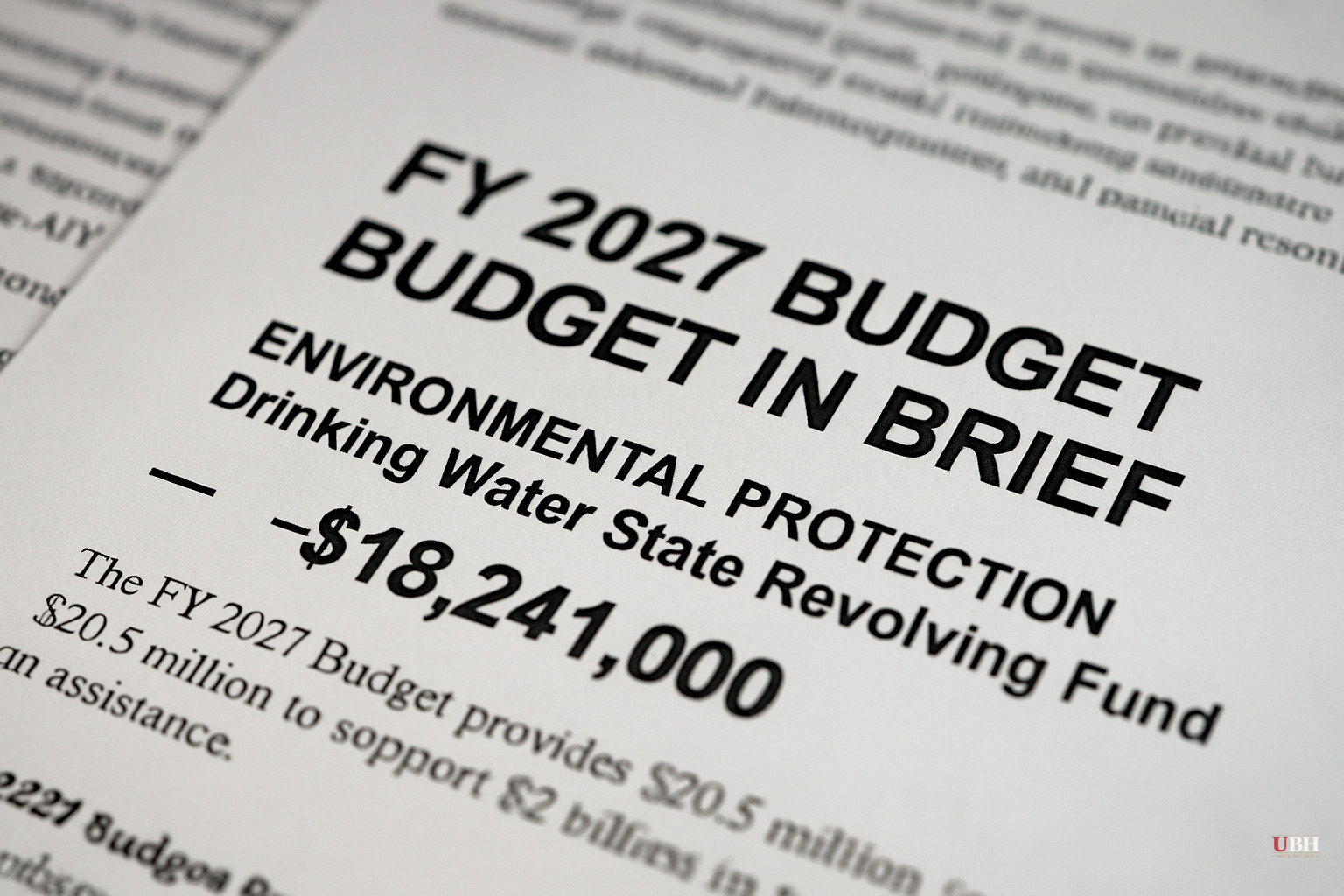
What the Budget Actually Proposes
The Trump administration's FY2027 EPA budget, released this spring, would cut the Drinking Water State Revolving Fund from $1.12 billion to $150 million and the Clean Water State Revolving Fund to $155 million, according to Bond Buyer's reporting on an April 28 House Energy and Commerce Subcommittee hearing. Total EPA funding would drop from roughly $8.8 billion to $4.2 billion, a 52% cut.
The White House rationale, spelled out in the budget document itself: "states should be responsible for funding their own water infrastructure projects."
Zeldin's Actual Argument
EPA Administrator Lee Zeldin didn't just defend the cuts by citing fiscal conservatism. He made a structural point. "It's not a revolving fund anymore, and that's the issue," Zeldin told the subcommittee on April 28. "There's a reason why the revolving fund is not revolving — because there are members who take money out of the revolving fund, and they give it as earmarks to members of their district."
That's a legitimate grievance. The state revolving fund model is supposed to work like a bank: federal seed money flows to states, states make low-interest loans to local water systems, localities repay the loans, the money recirculates. According to the Association of Metropolitan Water Agencies, in fiscal 2026, 64% of drinking water SRF funds were diverted to earmarks and 54% of clean water SRF funds were diverted. If Congress keeps siphoning funds for one-time earmarks, the revolving mechanism breaks. Zeldin's critique of congressional behavior here is factually grounded.
The fair counterargument: the solution to earmark abuse is to fix earmark rules, not eliminate the program. Cutting the funds to these levels doesn't restore the revolving mechanism. It just removes most of the federal capital.
The Scale of the Infrastructure Gap
The EPA's own assessments say drinking water, wastewater, and stormwater systems need at least $1.2 trillion in improvements over the next 20 years just to comply with existing clean water laws, according to both Bond Buyer and the Association of Metropolitan Water Agencies. Food & Water Watch cites a slightly higher EPA figure of $1.3 trillion.
Federal funding for water infrastructure has already fallen 77% in real terms since its late-1970s peak, according to Food & Water Watch. The Bipartisan Infrastructure Law of 2021 provided a one-time injection, but that pipeline is winding down.
What This Means for States and Counties
The National Association of Counties published an analysis in July 2025 examining the downstream cost of federal budget shifts under H.R. 1 and the FY2026 budget request. Their estimate: subnational governments — counties, cities, water districts — could face a cumulative cost shift approaching $1 trillion over ten years across federal program reductions.
Water revolving funds are one piece of that. State revolving fund loans are the primary financing mechanism for small and rural water systems that can't access bond markets on their own. Metropolitan water agencies can issue triple-A-rated municipal bonds and find alternative capital. A rural county water district generally cannot.
If federal capital in the revolving funds shrinks dramatically, those systems either delay infrastructure repairs, raise rates dramatically, or both.
Congress Has Already Said No Once
The Trump administration requested similar deep cuts in its FY2026 budget. Congress rejected that request entirely and appropriated $8.8 billion for the EPA, according to Bond Buyer. The SRF programs have historically drawn bipartisan support. A Senate Environment and Public Works Committee hearing showed senators from both parties resistant to the cuts.
The FY2027 proposal is functionally the same bet: that Congress will either fold this time or that the budget serves as a negotiating position to force a conversation about earmark reform.
The Strongest Case Against the Cuts
Opponents make a straightforward public-health argument: the federal government created these programs because private capital markets don't adequately price the public benefit of clean drinking water. Small communities lack the tax base and creditworthiness to finance hundred-million-dollar water treatment upgrades. Shifting responsibility to states sounds tidy on paper, but 50 states don't have uniform capacity to absorb what Washington is dropping. Poorer states with the oldest infrastructure tend to have the smallest revenue bases.
Food & Water Watch Executive Director Wenonah Hauter called the cuts "a malevolent disregard for public health." The underlying concern about rural and low-income communities losing access to affordable water infrastructure financing is legitimate regardless of who's saying it.
The Unresolved Question
Zeldin's earmark critique raises a question neither side has fully answered: if Congress reinstated strict revolving-fund rules that prohibited earmarks, would the administration support full funding? That conversation, which Zeldin himself invited at the April 28 hearing, hasn't happened publicly. The FY2027 appropriations process will determine whether Congress again overrides the cuts, and whether any structural reform to the SRF model gets attached as a condition.
Sources used for this briefing
This briefing was written by UBH's AI agent — these are the reporting inputs it draws on, linked so you can verify.


