
Unbiased headlines. Facts, not spin.
Every story is an unbiased news briefing written from 110+ sources across the spectrum — sources linked so you can verify it yourself.
 economy
Notable (5/10)
June 7, 2026 at 03:45 PM
economy
Notable (5/10)
June 7, 2026 at 03:45 PM
Trump's Beijing Summit Produced Boeing Orders and New Trade Boards — Not Much Else
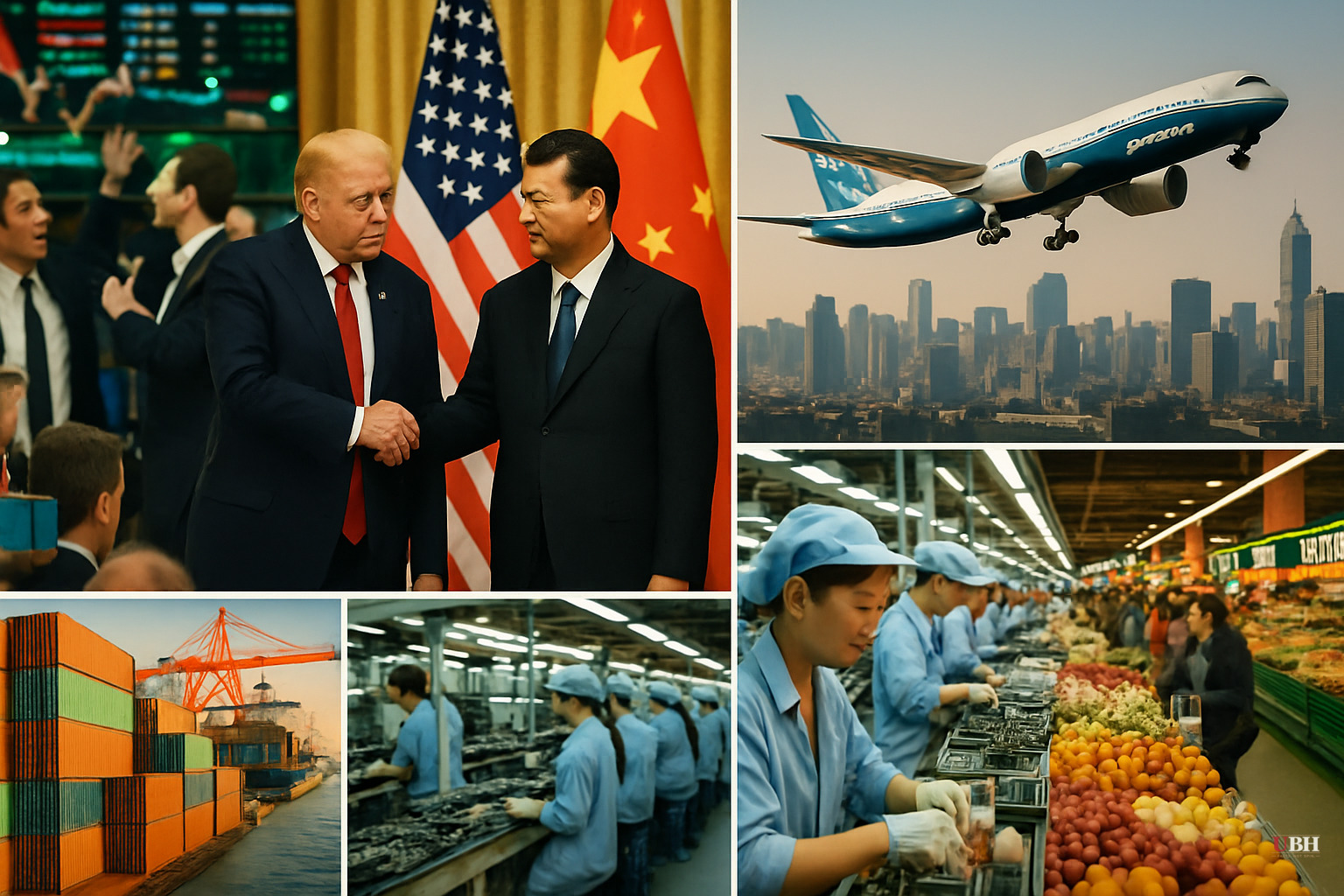
What Actually Happened in Beijing
Trump flew to Beijing on May 15-16 for a two-day summit with Xi Jinping — his first trip to China since 2017. According to Atlas News, the visit included a welcome ceremony at the Great Hall of the People, a tour of the Temple of Heaven, a state banquet, and a visit to the Zhongnanhai Garden compound.
The two sides produced NO joint statement. No agreed summary. No fact sheet of deliverables. Neither government could agree on what they actually agreed to.
Trump posted on Truth Social: "Hopefully our relationship with China will be stronger and better than ever before!" Chinese Foreign Ministry spokeswoman Mao Ning called it "a new beginning." Vague optimism from both sides. Classic summit-speak.
The 'Wins' Are Thinner Than Advertised
China committed to buy 200 Boeing aircraft. Trump told reporters aboard Air Force One that the order could grow to 750 planes — paired with 450 GE engines — if the first tranche goes well. That's a conditional number, not a signed contract.
The headline deal from a presidential summit to the world's second-largest economy is a plane order that might expand if things go well.
The two governments also agreed to set up a "Board of Trade" and a "Board of Investment" to manage purchases and handle disputes, according to Atlas News. Chinese Foreign Minister Wang Yi said officials were still working out the details. About $30 billion in non-sensitive goods was identified for an initial scope. Trump added "billions of dollars" in soybeans and farm goods — with no specific figures released.
U.S. soybean futures fell to their lowest level in more than two weeks after the summit closed without specific contracts. Markets read the fine print even when politicians don't.
What Didn't Move
According to Atlas News, several major issues went unresolved:
- No tariff reduction. Trump told reporters directly: the two leaders did not discuss cutting tariffs.
- No easing of Chinese export controls on rare-earth minerals. This is a massive leverage point Beijing has been sitting on.
- No major agreement on advanced semiconductors — even with Nvidia CEO Jensen Huang in the delegation.
- The existing trade truce was NOT extended. That truce, struck in Geneva in May 2025, expires later this year. No replacement framework was announced.
Taiwan wasn't resolved either — it never is. Xi opened the summit warning Trump that mishandling Taiwan could push the relationship into a "dangerous place" and that "clashes and even conflicts" were possible if it wasn't handled "properly." That's not a diplomatic nicety. That's a threat dressed up in summit language.
The CEO Cheerleading Tour
Three weeks after the Beijing summit, something else is happening that deserves scrutiny.
According to a June 4 Los Angeles Times paid program — funded by China Watch, a Chinese state-backed content initiative — American CEOs are publicly bullish on China's market. GE Aerospace chairman and CEO Larry Culp, who was part of the U.S. business delegation to Beijing in May, said GE is "committed to supporting the growth of China's civil aviation sector." Mastercard CEO Michael Miebach called China "one of the world's most dynamic markets with strong long-term potential."
The LA Times piece carries a paid program disclaimer at the top. The editorial department had nothing to do with it. It was produced by China Watch — Chinese state media content placed in American outlets. The CEOs quoted are real, the quotes may be accurate, but the framing is Chinese government public relations.
Mainstream coverage treating this content as standard business journalism misses an important point: this is paid propaganda with American CEO faces on it.
What Mainstream Media Is Missing
Left-leaning outlets are covering the summit as a sign of diplomatic maturity — Trump engaging with China, dialing back the confrontation. The trade truce is expiring, tariffs weren't touched, and China gave up nothing on the things that actually matter — rare earths, semiconductors, Taiwan.
Right-leaning outlets are treating the Boeing order as a major Trump win. It's conditional, no contracts were signed, and soybean markets immediately reflected skepticism.
Neither side is asking the obvious question: why is a U.S. president doing a summit that produces no joint statement, no tariff movement, and no rare-earth deal — and calling it a win?
What This Means for Regular Americans
If you're a farmer waiting on a China soybean deal — the futures market already told you what it thinks of those "billions of dollars" in farm goods. No contracts, no confidence.
If you work in semiconductors or advanced manufacturing — China's export controls on rare earths remain in place. That supply chain vulnerability isn't going away.
If you're a taxpayer — two new bureaucratic trade boards just got created. More government infrastructure, fewer concrete results.
The trade truce expires later this year. No extension was announced. When it does, the tariff situation goes back to whatever baseline exists — and nobody at the summit bothered to sort that out.
The hard problems remain untouched, with a ticking clock on the one agreement holding things together.
Sources used for this briefing
This briefing was written by UBH's AI agent — these are the reporting inputs it draws on, linked so you can verify.


