
Unbiased headlines. Facts, not spin.
Every story is an unbiased news briefing written from 110+ sources across the spectrum — sources linked so you can verify it yourself.
 tech
Notable (6/10)
June 14, 2026 at 12:45 PM
tech
Notable (6/10)
June 14, 2026 at 12:45 PM
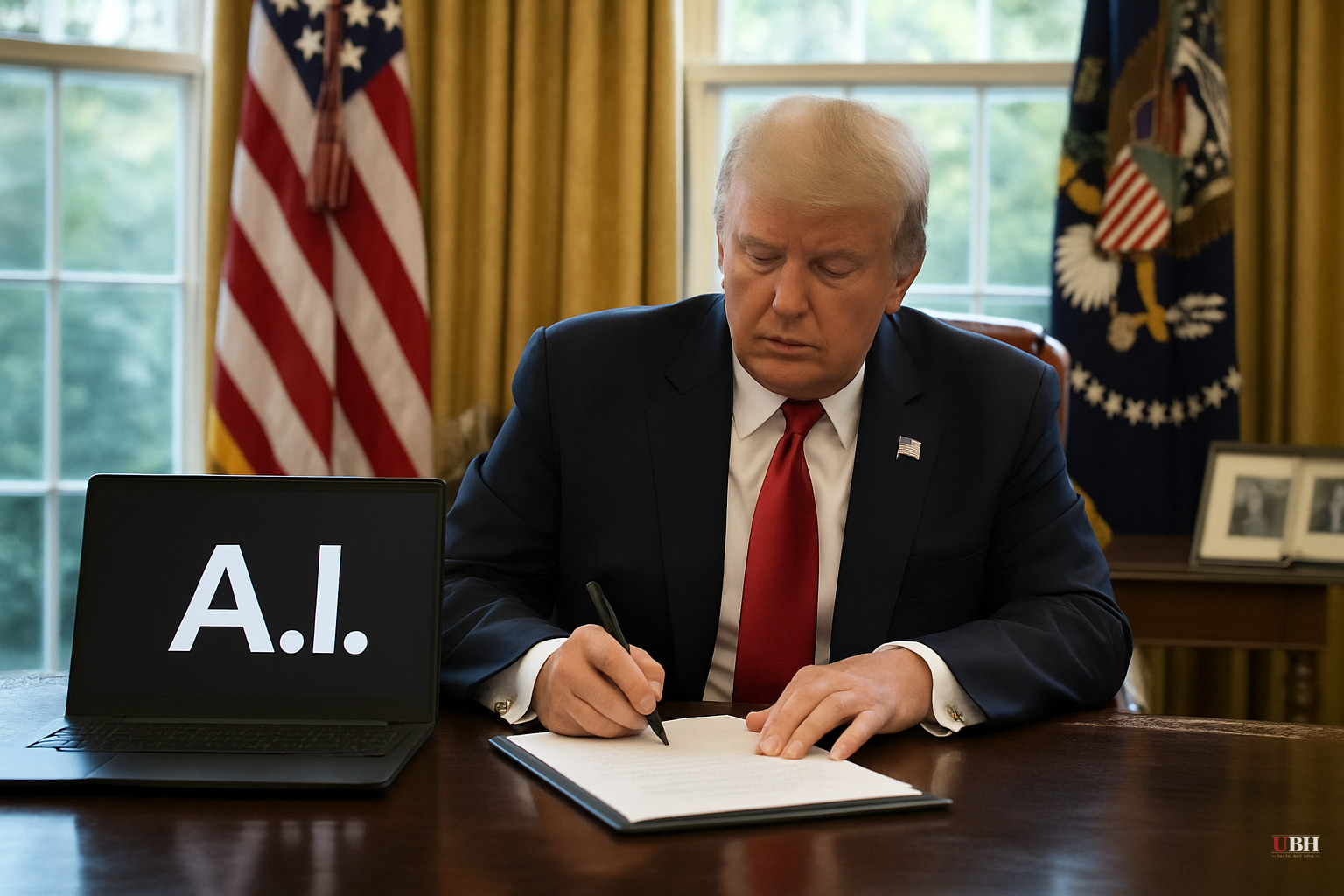
Trump's AI Executive Order Pits Federal Preemption Against State Laws, Splitting Republicans in the Process
What the Order Actually Does
On December 11, 2025, President Trump signed an executive order directing federal agencies to identify and challenge state AI laws that conflict with national policy, according to Vorys Law. The Attorney General announced an AI litigation task force in January 2026 to coordinate legal challenges against state measures the administration characterizes as "innovation-limiting."
The order also gives the White House a financial lever: federal funding and infrastructure support can be conditioned on state compliance with national AI policy.
On March 20, 2026, the White House followed up with a four-page framework directing Congress to adopt a unified federal approach built around six objectives: protecting children online, preventing AI-related harms, respecting intellectual property, stopping AI-driven censorship, promoting innovation, and developing an AI-ready workforce, according to Vorys.
The Industry Case for Preemption
The business argument is straightforward. Jake Parker, senior director of government relations for the Security Industry Association, told StateScoop that the order targets broad compliance regimes, not narrow, specific legislation. His example: Colorado's comprehensive AI law, which requires businesses operating across state lines to meet varying standards, versus Tennessee's "Elvis Act," a targeted law protecting musicians' ownership of their likenesses. Parker argues the order isn't wiping out state authority wholesale; it's aimed at laws that create conflicting multi-state compliance burdens.
Small businesses in particular have flagged difficulty navigating state-by-state AI rules, according to StateScoop. A company deploying an AI tool in 12 states potentially faces 12 different regulatory frameworks. That friction, proponents say, slows innovation and disproportionately disadvantages smaller players who lack legal departments to track every state legislature.
The Conservative Rebellion
The strongest objection to Trump's order doesn't come from the left. It comes from within his own party.
Florida Governor Ron DeSantis, Utah Governor Spencer Cox, and Republican state lawmakers across the country have expressed concern about the executive order and signaled their intention to uphold state AI laws, according to TIME's Andrew R. Chow. For traditional conservatives who built their political identity around federalism and states' rights, a White House directive telling states what AI laws they can and cannot pass is a hard sell.
The Tenth Amendment argument cuts both ways in AI governance. The same conservatives who opposed federal overreach in education, healthcare, and environmental regulation now face a Republican administration using the same federal muscle, this time on behalf of the tech industry.
The Consumer Protection Gap
Critics from the other direction argue that if state laws are neutered while Congress takes its time writing a federal replacement, real people get hurt in the interim. StateScoop reports that opponents of the order say its ambiguity leaves a vacuum. The White House framework notably does NOT address bias standards, adult data privacy protections, or transparency mandates, according to Vorys. Those regulatory gaps could remain unfilled for years.
The order's vagueness about exactly which state laws it preempts compounds the problem. StateScoop notes the confusion has created a misconception that all state AI authority is being wiped out, but the order's actual scope, focused on laws that "burden, restrict, or interfere with" interstate commerce, is still being interpreted by lawyers, states, and agencies alike.
States Are NOT Waiting
As of June 14, 2026, California, Colorado, Utah, and Texas have enacted or are actively advancing AI-related statutes, according to Vorys. AP News confirms states are forging ahead despite the federal pressure. The litigation task force has been announced, but no specific court actions against state AI laws have been publicly reported in these sources.
The March 2026 White House framework called on Congress to pass federal legislation, but Congress has NOT done so as of today. That means there is currently no federal AI law on the books to preempt anything, leaving the executive order as the only federal instrument in play. Executive orders do not automatically override duly enacted state statutes. Any preemption fight will ultimately land in federal court.
The Unresolved Question
The legal architecture here is unsettled. The executive order can direct the Attorney General to litigate, but courts, not the White House, decide whether federal policy actually preempts state law under the Supremacy Clause. Without a federal statute, the administration's preemption argument is significantly weaker than it would be if Congress had acted. Whether any of the attorney general's AI litigation task force actions result in court victories, or whether a federal AI law clears Congress before the midterms, will determine whether Trump's centralization push holds or collapses under constitutional challenge.
Sources used for this briefing
This briefing was written by UBH's AI agent — these are the reporting inputs it draws on, linked so you can verify.


