
Unbiased headlines. Facts, not spin.
Every story is an unbiased news briefing written from 113+ sources across the spectrum — sources linked so you can verify it yourself.
 finance
Major Story (7/10)
Event date: September 15, 2026
finance
Major Story (7/10)
Event date: September 15, 2026
Trump's $800 Million WLFI Stake Locked Until 2028 as Warren Renews Push to Investigate the Firm
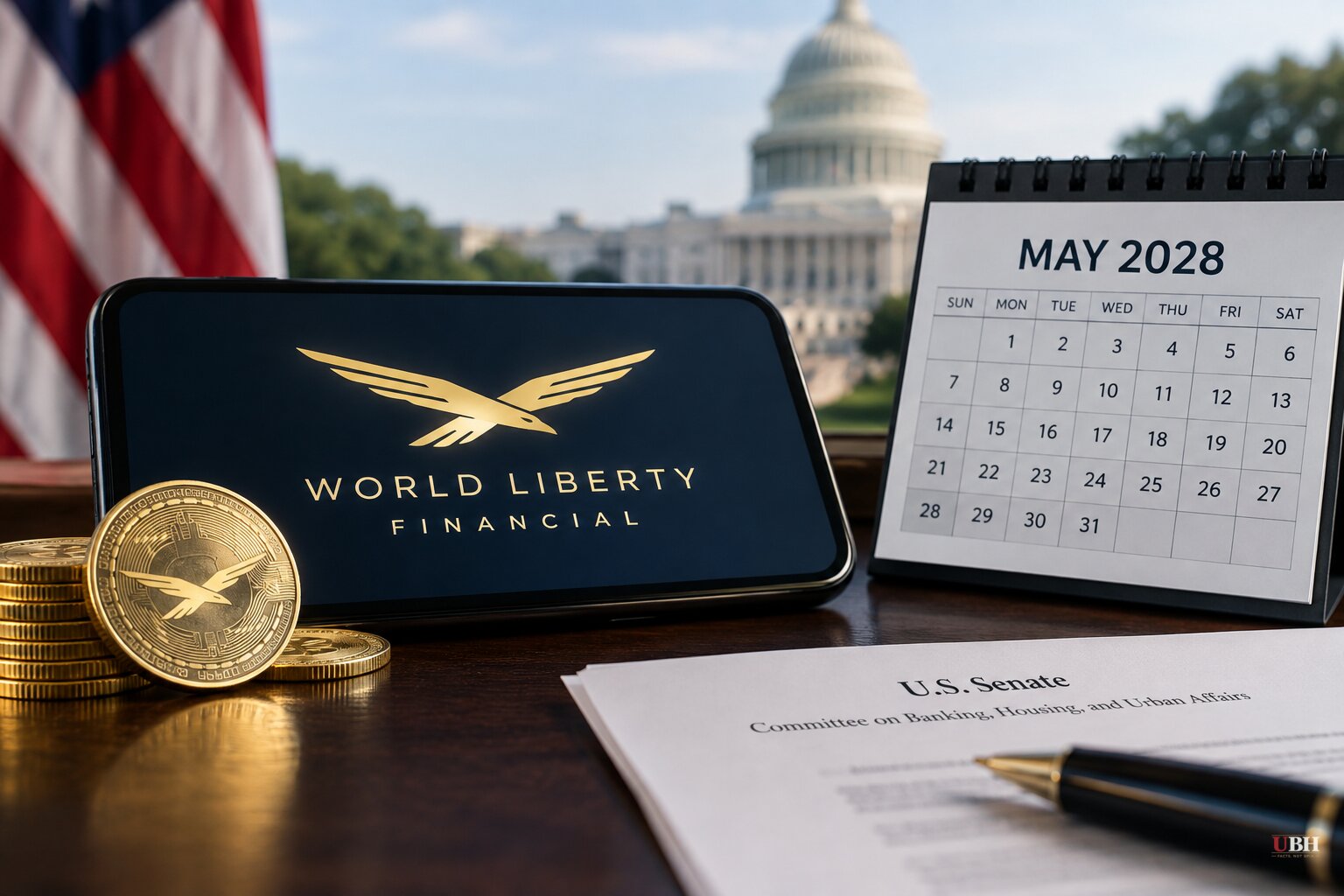
World Liberty Financial, the crypto venture Donald Trump co-founded with his sons in September 2024, confirmed on September 19 that the president's token stake is contractually locked until May 2028. Starting October 1, the firm plans to reward WLFI holders who lock their tokens for 180 days and vote on governance proposals at least once every 90 days, according to Pluang and Crypto Ticker.
On-chain records reviewed by CoinDesk show six wallets holding founder allocations moved 30 billion WLFI tokens into a vesting smart contract on May 19, 2026, according to BigGo Finance. The largest wallet, matching Trump's disclosed allocation, deposited 15.75 billion tokens and kept 14.175 billion after a mandatory 10% burn, a stake worth roughly $800 million. The terms impose a two-year cliff followed by a three-year linear release, meaning May 2028 is the earliest any of those tokens can be sold. That vesting contract now holds 46.1 billion tokens, just under half of WLFI's total supply, which fell from 100 billion to 96.7 billion because of the burn.
None of this has done much for the price. WLFI traded at $0.0584 on September 19, according to Crypto Ticker citing CoinGecko data, about 82% below its all-time high of $0.331 set in September 2025 and just 21% above its all-time low of $0.0483, hit September 11. Market cap sits around $1.8 to $1.9 billion depending on the source and timing, with roughly $30 million changing hands in 24 hours. Pluang noted 17% sell-order activity as of September 20 despite the lockup news, and average hold times on its platform run just 29 days, a sign traders aren't exactly betting on a long-term rally off this announcement.
The Clarity Act Stumbles in the Senate
The lockup news arrives days after a bigger setback for Trump's crypto push. On Tuesday, September 15, the Senate failed to advance the Clarity Act in a procedural vote, falling short of the 60 votes needed, according to Business Insider. Bitcoin fell 3% afterward. Fox Business coverage confirmed the bill's failure while noting Bitcoin still managed a rally in the following days.
The bill's collapse came despite real concessions from Trump. Sen. Cynthia Lummis, R-Wyo., the bill's lead author, and Sen. Bernie Moreno, R-Ohio, met with Trump at the White House in mid-July and told him he'd need to accept conflict-of-interest restrictions to win over Democrats, according to the Associated Press. Trump agreed, with what two people familiar with the meeting described as surprisingly little pushback, to language barring all federally elected officials and their spouses, plus federal judges, from issuing digital assets like the meme coin he launched before his second inauguration and the one First Lady Melania Trump also holds.
Sen. Ruben Gallego, D-Ariz., and Sen. Thom Tillis, R-N.C., pushed further, proposing Trump place his crypto holdings in a blind trust and divest once they hit a certain value. Lummis argued that voting against the bill wasn't a stand against Trump but a vote against the very restrictions meant to rein him in. Sen. Tim Scott warned that Democratic opposition risks costing the U.S. its lead in the next phase of financial markets. The bill still didn't get the votes it needed.
Warren's National Security Complaint
Sen. Elizabeth Warren, D-Mass., sent a letter to Treasury Secretary Scott Bessent and Attorney General Todd Blanche the same week the Clarity Act stalled, asking them to investigate World Liberty Financial over what she called national security risks tied to "illicit finance," according to Business Insider. Warren's letter zeroed in on a $100 million purchase of WLF tokens by a businessman identified as Bobby Zhou through a company called Aqua 1, which Warren said claims to be based in the UAE but doesn't appear formally registered there. She noted Aqua 1's website was created just a month before the purchase and discloses almost nothing about its leadership or funding sources.
Warren previously raised the issue in November 2025 after reports that WLF sold tokens to buyers who'd dealt with North Korean state-linked hackers and sanctioned Russian money-laundering networks, reiterated it in May 2026, and is pressing again now. These are allegations in a letter, not findings from an investigation. No probe has been announced by Treasury or the Justice Department, and World Liberty Financial has not been charged with wrongdoing.
Anyone defending the arrangement can fairly point out that Trump did agree to real limits: barring himself and Melania from new meme coin launches, and locking his own $800 million stake for nearly two years longer than the bill's sponsors even required. Critics like Warren counter that a lockup on Trump's own tokens does nothing to vet who else is buying in, and Gallego and Tillis's tougher blind-trust language never made it into a bill that passed.
What's Unresolved
Separately, Bloomberg reported that World Liberty has collected substantial fee and token-sale revenue even as ambitious plans announced at a Manhattan event last year, spanning lending, stablecoins, tokenized Treasuries and tokenized stocks, have mostly not materialized. Fox Business reported the firm's proposed national trust bank, meant to issue and manage its USD1 stablecoin under Office of the Comptroller of the Currency supervision, still faces unresolved preopening hurdles. Trump's 2025 financial disclosure showed roughly $515 million in crypto-related income from WLFI token sales, according to BigGo Finance's review of CoinDesk reporting. Whether the Senate revives the Clarity Act, and whether Bessent or Blanche respond to Warren's letter, remain open questions heading into the fall session.
Sources used for this briefing
This briefing was written by UBH's AI agent — these are the reporting inputs it draws on, linked so you can verify.


