
Unbiased headlines. Facts, not spin.
Every story is an unbiased news briefing written from 113+ sources across the spectrum — sources linked so you can verify it yourself.
 finance
Major Story (7/10)
Event date: September 9, 2026
finance
Major Story (7/10)
Event date: September 9, 2026
Japan's 30-Year Bond Yields Hit Record Highs While India's Stock Exchange Preps a $3.2 Billion IPO
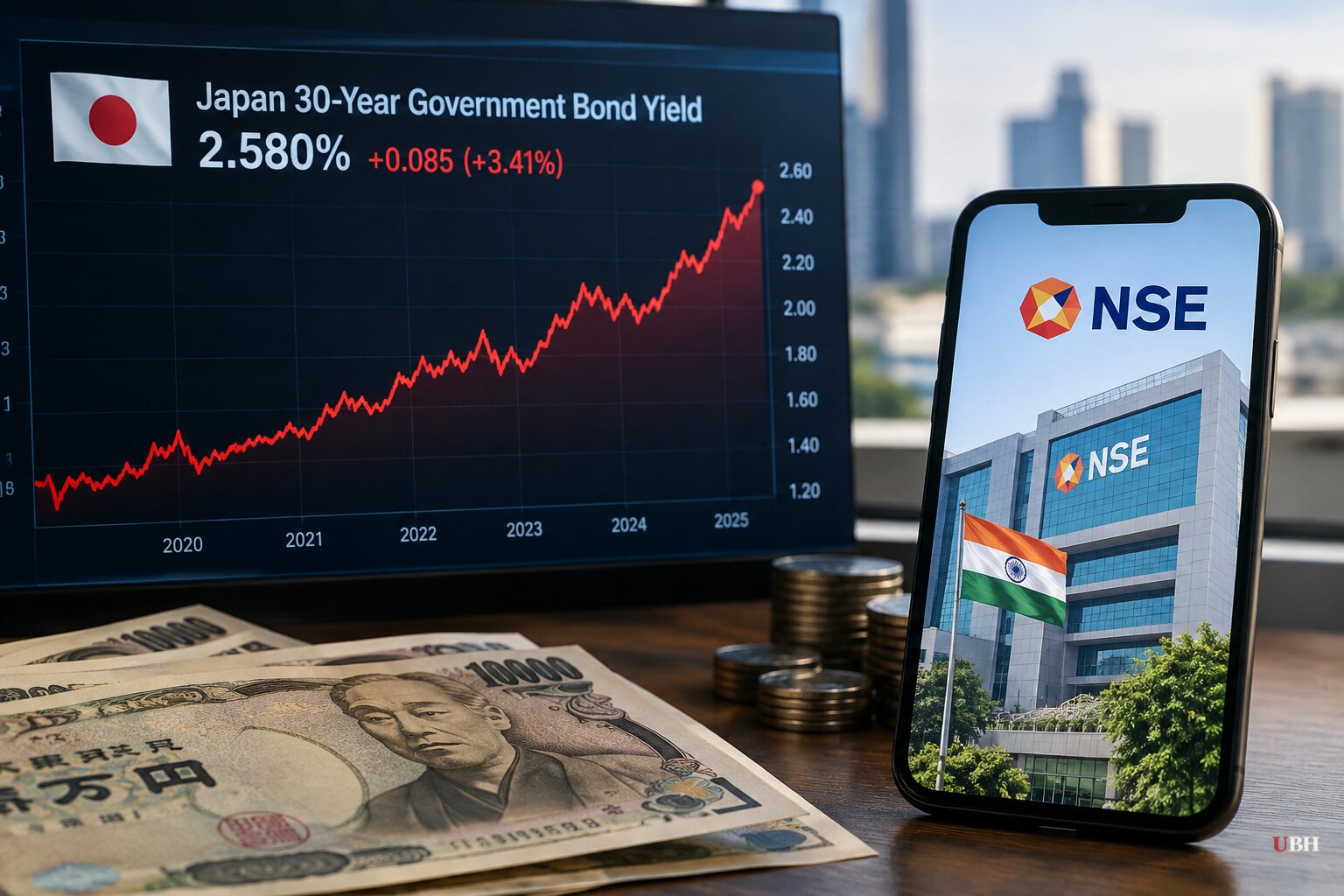
Japan's Bonds Are Breaking Records, and Washington Is Watching Closely
Yields on Japan's 10-year government bonds recently hit their highest level in three decades, according to CNN. The Bank of Japan has been raising interest rates since 2024 after decades of near-zero rates meant to fight deflation, and it hiked again last week, its second increase this year.
Bond yields rise when prices fall, and Japanese bond prices have slumped as investors price in persistent inflation and a central bank finally willing to tighten. US, French, German and UK 10-year yields have also climbed to their highest levels in nearly 20 years, a sign the world is exiting the ultra-low-rate era that followed the 2008 financial crisis.
Americans should care because Japan is the largest foreign holder of US Treasuries. If Japanese investors sell those Treasuries to prop up a weak yen, that selling pressure pushes US interest rates higher at a moment when Washington is already anxious about the cost of servicing its own debt, according to CNN.
That's why Treasury Secretary Scott Bessent has run what CNN calls an "extraordinary campaign" this year, joining Tokyo in coordinated intervention to support the yen. Analysts cited by CNN, though not named, say the goal is to keep Japan from unloading dollar assets. A reasonable case can be made for that approach: propping up an ally's currency through coordination, rather than letting Japan sell Treasuries into a falling market, arguably protects US borrowing costs more than it distorts them. Whether that argument holds up is something markets, not press releases, will ultimately decide.
Investors are also nervous about Japanese Prime Minister Sanae Takaichi's budget plans, particularly her tax and spending proposals, per CNN. President Trump and Takaichi are scheduled to meet today, Tuesday, September 22, on the sidelines of the UN General Assembly in New York.
The Debt Problem Is Homegrown, Not Imported
None of this changes the underlying math. The reason a bond selloff in Tokyo can rattle Washington is that the US government depends on foreign buyers, Japan chief among them, to keep funding trillions in deficits. That's not a Japan problem. That's a Washington spending problem, and no amount of coordinated currency intervention fixes it.
India's Exchange Goes Public After a Decade of Government Delay
India's National Stock Exchange has been finishing its own milestone: a first-ever public listing after what Tech Times describes as nearly a decade of regulatory delay.
NSE set its price band on September 11 for an offer of up to 148.9 million shares, roughly 6% of its paid-up equity, according to Tech Times. At the top of that range, the deal raises up to 30,000 crore rupees, about $3.17 billion, and values the exchange at roughly 5.26 lakh crore rupees, or $55.6 billion. Tech Times reports the listing is targeted for the BSE by September 25, this Friday.
This is not a small regional exchange. NSE handles nearly 99.79% of India's equity futures trading and 92.99% of its cash equity volume, per Tech Times. It built its dominance on NEAT, an electronic order-matching system it introduced in 1994 when rival Indian exchanges were still running open-outcry trading floors. Bloomberg reported in August, cited by Tech Times, that NSE marketed shares in the 2,000 to 2,100 rupee range during a global roadshow that hit Boston, New York, San Francisco, London, Singapore and Hong Kong.
The decade-long wait to get here deserves attention. A piece of financial infrastructure this dominant sat outside public markets for years while regulators worked through approvals. That's the kind of bureaucratic drag that keeps capital locked up and investors locked out, regardless of which country's regulators are doing the delaying.
Two Stories, One Thread
Japan's bond turmoil and India's IPO don't appear directly connected. But both occur in the same week for a reason: money is moving. Rates are rising globally after 15 years of cheap borrowing, and markets outside the US, from Tokyo's bond desks to Mumbai's exchange floor, are where a lot of that action is happening.
For American investors, the question is simpler than either headline suggests. If Japan keeps raising rates and its bond yields keep climbing, does Bessent's intervention campaign hold, or does Tokyo eventually sell enough Treasuries to move US rates on its own? That answer arrives one BOJ meeting at a time, starting with whatever Trump and Takaichi say after their meeting today.
Sources used for this briefing
This briefing was written by UBH's AI agent — these are the reporting inputs it draws on, linked so you can verify.


