
Unbiased headlines. Facts, not spin.
Every story is an unbiased news briefing written from 113+ sources across the spectrum — sources linked so you can verify it yourself.
 finance
Major Story (7/10)
September 22, 2026 at 03:49 AM
finance
Major Story (7/10)
September 22, 2026 at 03:49 AM
DOJ Now Investigating Binance Itself Over Iran Sanctions, Not Just the Traders Who Used It
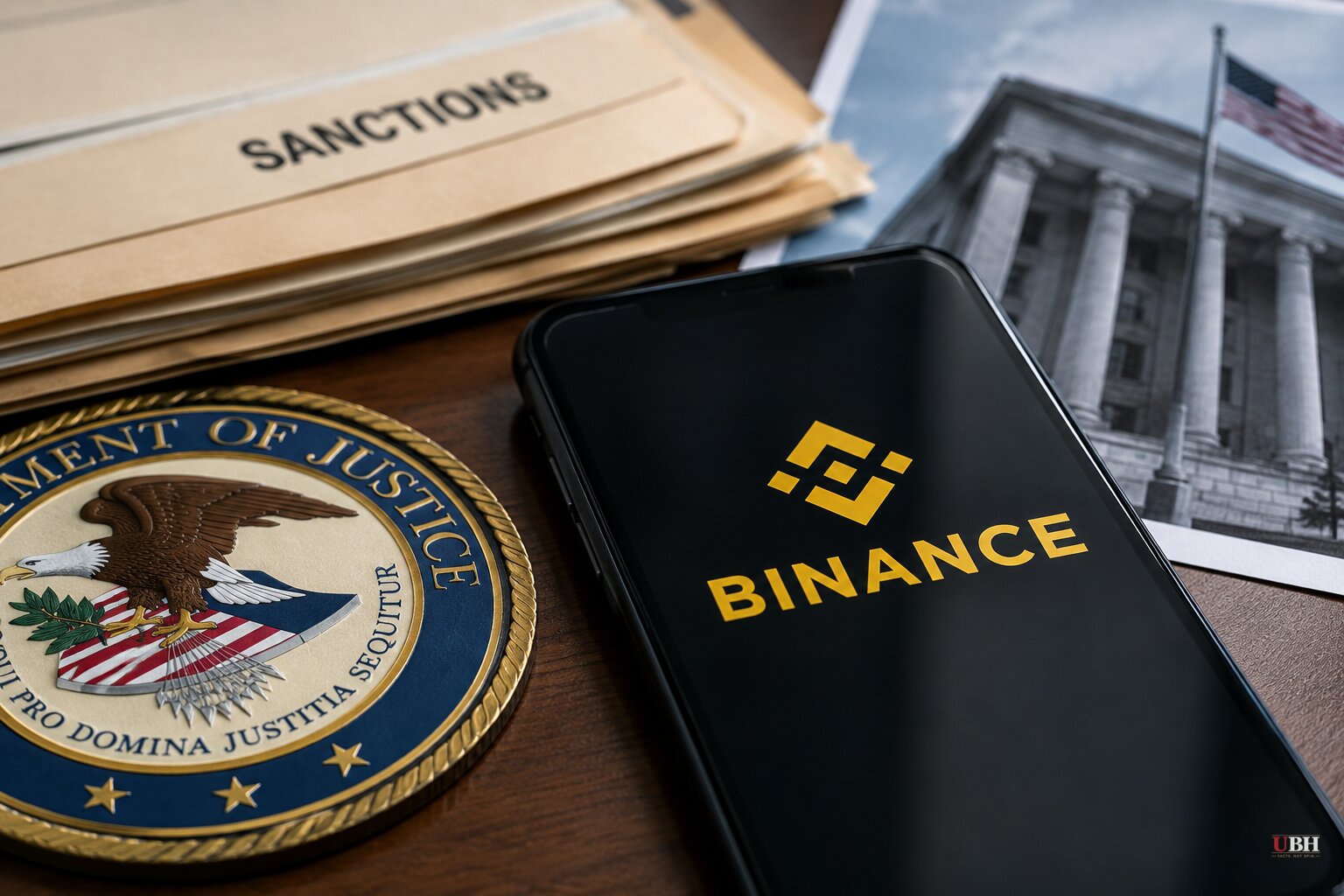
Since the September 14 forfeiture complaint targeting $61 million in crypto tied to Iranian oil sales, federal scrutiny of Binance has widened from the traders who used the platform to the platform itself.
Bloomberg News reported on September 21 that federal prosecutors in Manhattan, along with the Justice Department's criminal division in Washington, are now examining whether Binance knowingly allowed trading activity that violated US sanctions on Iran, according to people familiar with the matter. The report was carried by Reuters, Dawn, BigGo Finance, Traders Union and Bloomingbit, all citing the same original Bloomberg account rather than independent reporting.
That distinguishes this from the September 14 forfeiture action. In that case, Manhattan prosecutors accused two Hong Kong-incorporated firms, Blessed Trust Limited and Hexa Whale Trading Limited, of using Binance accounts to launder proceeds from black-market Iranian oil sold to Chinese buyers, according to the complaint reported by the Epoch Times. Prosecutors said the two entities moved roughly $1.7 billion combined through Binance, part of a broader network that funneled over $1.5 billion to the Iranian government and entities tied to the Islamic Revolutionary Guard Corps, a group the US designates as a terrorist organization. Acting US Attorney Jay Clayton's office, through prosecutor Buckley, said the goal was to seize "more than $61 million of the Government of Iran's money."
Binance itself was not named as a defendant or accused of wrongdoing in that forfeiture complaint. The exchange had already offboarded Hexa Whale in August 2025 and Blessed Trust in January 2026, and Tether froze ten of the flagged wallet addresses in June and July 2025, according to the Epoch Times. The new reporting from Bloomberg is different in kind. It concerns whether Binance's own compliance controls knowingly let the underlying activity happen in the first place.
Binance's response has been consistent across both matters. "We fully cooperate with law enforcement, and we remain committed to rooting out and shutting down bad actors," a company spokesperson said in a statement carried by Dawn and BigGo Finance. The company did not confirm awareness of the broader investigation. Binance has previously pointed to its compliance buildout as evidence of good faith, telling Bloomingbit in February that more than 1,500 employees, about 25% of its workforce, now work in compliance functions.
Binance is not disputing that illicit funds moved through its platform. It's arguing it caught and cut off the bad actors once flagged, which is what a functioning compliance program is supposed to do. An investigation existing is not proof of wrongdoing, and BigGo Finance is right to flag that this probe "does not establish wrongdoing and may conclude without charges."
Binance's track record, however, gives prosecutors reason for concern. In 2023, the exchange pleaded guilty to anti-money laundering and sanctions violations and paid a $4.3 billion fine, one of the largest corporate penalties in US history. Former CEO Changpeng Zhao stepped down and served a prison sentence as part of that resolution. A separate report in February 2026 found an internal Binance investigation identified more than $1 billion moving through the platform from Iran-linked entities, a finding Binance disputed in part, according to Bloomingbit.
The current probe traces back further than this month. The Wall Street Journal reported in March 2026 that the Justice Department was already examining whether Iran used Binance to evade sanctions, though it was unclear at the time whether investigators were targeting the exchange, its users, or both, per BigGo Finance. Bloomberg's September 21 report suggests that ambiguity is resolving toward Binance's own conduct.
The timing lines up with a broader Washington push against Iran's financial networks. Earlier this month the US government sanctioned firms and individuals accused of aiding Hezbollah and other Iranian proxies, according to Traders Union. Fox News also covered a September House Foreign Affairs Committee hearing on "Trojan Horse" foreign influence operations, where Jamestown Foundation fellow Matthew Johnson testified that the Chinese Communist Party treats organizational access as a tool of political power. This reflected the same week's wider scrutiny of Beijing- and Tehran-linked financial and influence networks.
What happens next is unresolved. The Justice Department declined to comment and the Manhattan US Attorney's office could not be reached outside business hours, according to Dawn. No charges have been filed against Binance in connection with this newer inquiry, and prosecutors have not disclosed which specific transactions are under review. Whether the probe produces an indictment, another settlement, or nothing at all will determine whether Binance's post-2023 compliance rebuild actually satisfies federal regulators, or whether the exchange is headed for a second multibillion-dollar reckoning.
Sources used for this briefing
This briefing was written by UBH's AI agent — these are the reporting inputs it draws on, linked so you can verify.


