
Unbiased headlines. Facts, not spin.
Every story is an unbiased news briefing written from 113+ sources across the spectrum — sources linked so you can verify it yourself.
 finance
Notable (6/10)
Event date: September 18, 2026
finance
Notable (6/10)
Event date: September 18, 2026
Quantum Computing Insiders Sold Up to $931 Million in Stock While Retail Investors Piled In
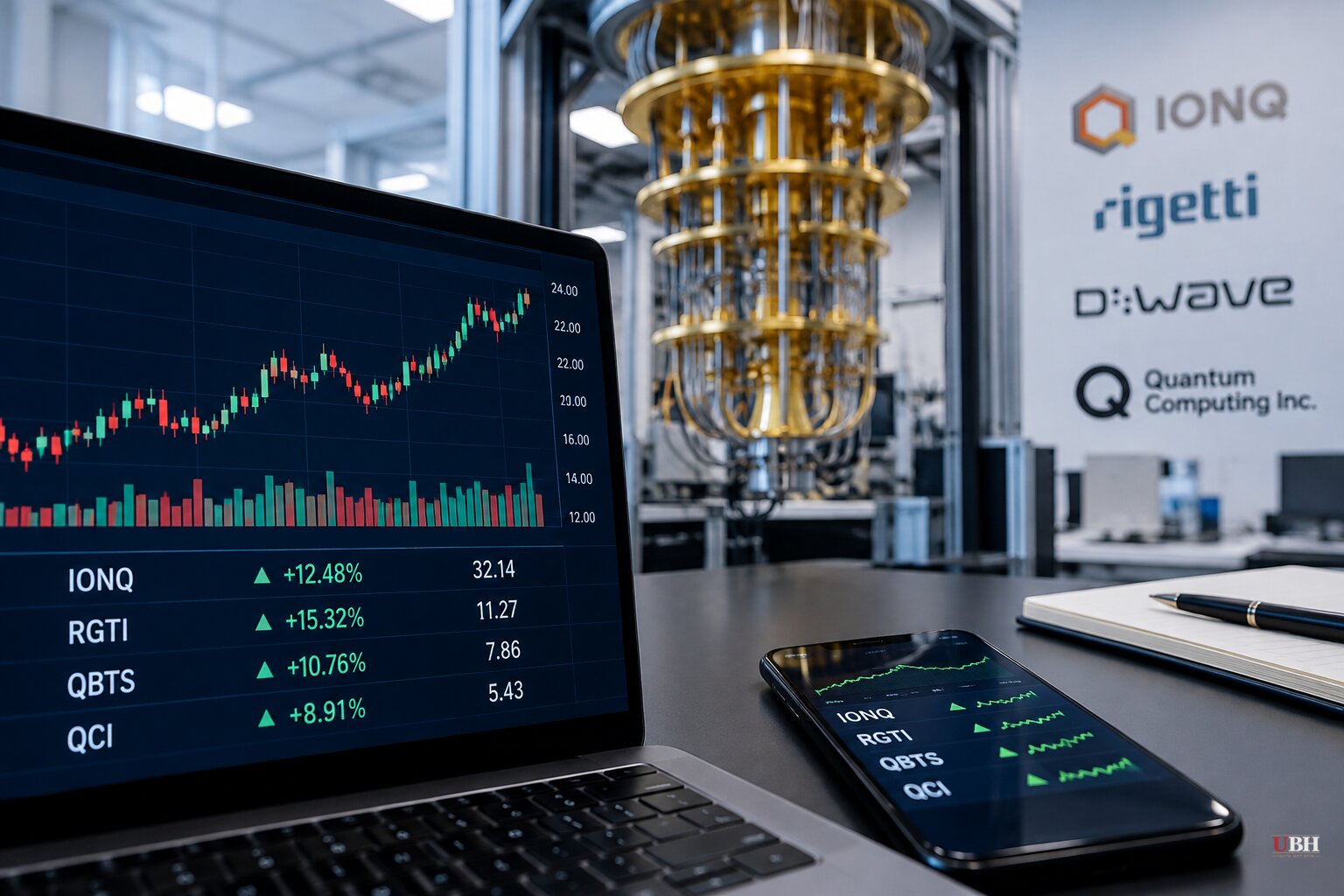
Quantum computing stocks have delivered some of the wildest returns on Wall Street over the past two years. The people running those companies have been selling into the rally the whole time.
According to The Motley Fool, insiders at four publicly traded pure-play quantum companies, IonQ, Rigetti Computing, D-Wave Quantum, and Quantum Computing Inc., have sold a combined $895.1 million more in stock than they've bought since September 18, 2024. IonQ insiders account for $454.5 million of that net selling. D-Wave insiders sold $331.1 million. Rigetti insiders sold $75.7 million. Quantum Computing Inc. insiders sold $33.8 million.
Crypto Briefing put the broader tally at $840 million to $931 million over a slightly longer, multi-year window, citing SEC filings. Both figures point to the same pattern: insiders are consistently sellers, and insider buying is nearly nonexistent.
Specific transactions show the scale. D-Wave CEO Alan Baratz sold roughly $18 million in company shares in June 2026 alone, according to Crypto Briefing. IonQ directors have executed a string of individual sales ranging from $100,000 to $200,000 apiece over the same period.
The Valuation Math Is Genuinely Strange
The stock moves behind this selling are extreme. Over the trailing two years, IonQ shares are up roughly 400%, Rigetti is up about 1,820%, D-Wave is up around 1,670%, and Quantum Computing Inc. is up close to 1,200%, according to The Motley Fool.
Those gains have pushed valuations into territory that makes the 2021 software bubble look conservative. Crypto Briefing reports IonQ trades around 69 times sales, while some smaller peers in the sector trade between 400 and 500 times sales. By comparison, even the most richly valued SaaS companies at the 2021 peak topped out around 40 to 60 times forward revenue.
There is a fair counterpoint here. Most executive compensation at these companies comes in restricted stock units, and a large share of "insider selling" is automatic tax withholding on vesting shares rather than a discretionary bet against the stock. Crypto Briefing acknowledges this directly, noting the distinction "prevents any single filing from being a smoking gun." IonQ also has real fundamentals behind the hype: the company reported 287% year-over-year revenue growth in the second quarter of 2026 and raised its full-year guidance afterward, and Benchmark has kept a Buy rating on the stock through the selling and recent pullbacks.
What stands out is that insiders across all four companies have bought almost nothing at any price point over two full years. Tax withholding explains routine selling. It doesn't explain zero buying.
D-Wave's Miss Turned Into Something Bigger
D-Wave gives the clearest case study in what happens when the story stops matching the numbers. The company reported second-quarter 2026 revenue of just $3.076 million, roughly 24-25% below analyst estimates of $4.03 million to $4.08 million, according to Stocks to Trade. Operating expenses of $54.98 million produced an operating loss of $53.28 million and a net loss of $48.03 million, or about 13 cents a share.
QBTS shares dropped about 9% on the earnings release. Weeks later, the company announced the retirement of its CFO, triggering another 9-10% decline, per Stocks to Trade. The stock fell further on Friday, September 18, closing near $16.77 after opening at $18.08, a decline of about 7.25% for the day.
Law firms Pomerantz LLP and KTMC have since opened investigations into potential securities fraud tied to the earnings miss and the CFO departure, Stocks to Trade reports. No charges have been filed and no findings of wrongdoing have been made. These are investigations, not verdicts, and D-Wave has not been shown to have committed fraud.
D-Wave does have a real cushion to work with. The company holds $296.64 million in cash and $546.21 million in cash plus short-term investments, with a current ratio above 20, according to Stocks to Trade. Insolvency isn't the near-term risk. Execution is.
Rates Are Squeezing the Whole Sector
Company-specific news isn't the only pressure point. TipRanks reported that on Tuesday, September 15, quantum stocks fell across the board, with QBTS down 2.50%, IonQ down 1.20%, and Rigetti down 1.18%, tied to rising Treasury yields ahead of a Federal Reserve rate decision. Higher yields hit speculative growth names hardest because so much of their valuation rests on profits investors expect years from now. Neither D-Wave's showcase at Quantum World Congress 2026 nor IonQ's four Best Paper Awards ahead of IEEE Quantum Week moved the needle that day, TipRanks noted.
Simply Wall St, in more recent coverage, references a Federal Reserve rate hike as having already occurred, underscoring how quickly the rate environment has been squeezing the sector's valuations.
Money Hasn't Stopped Flowing Into Big Tech, Either
The appetite for risk hasn't disappeared industry-wide. MarketBeat reported that Jupiter Wealth Management LLC opened a new $8.4 million stake in Amazon in the second quarter, a company trading at a price-to-earnings ratio of 19.79 after posting $5.75 in quarterly earnings per share against a $1.82 consensus estimate. That's the other end of the spectrum from quantum stocks: institutional money is still willing to pay up for a profitable megacap with real earnings beats, just not at 69-to-500-times-sales multiples with no insider buying to back it up.
For anyone holding IONQ, RGTI, QBTS, or QUBT, the question is simple. If the people running these companies won't buy their own stock at any price over two years, what would it take for that to change, and will retail investors still be holding shares when it does?
Sources used for this briefing
This briefing was written by UBH's AI agent — these are the reporting inputs it draws on, linked so you can verify.


