
Unbiased headlines. Facts, not spin.
Every story is an unbiased news briefing written from 110+ sources across the spectrum — sources linked so you can verify it yourself.
 economy
Major Story (8/10)
July 22, 2026 at 03:59 AM
economy
Major Story (8/10)
July 22, 2026 at 03:59 AM
Trump's 10% Global Tariffs Expire Friday. Greer Signals New Duties Are Coming Under a Different Law
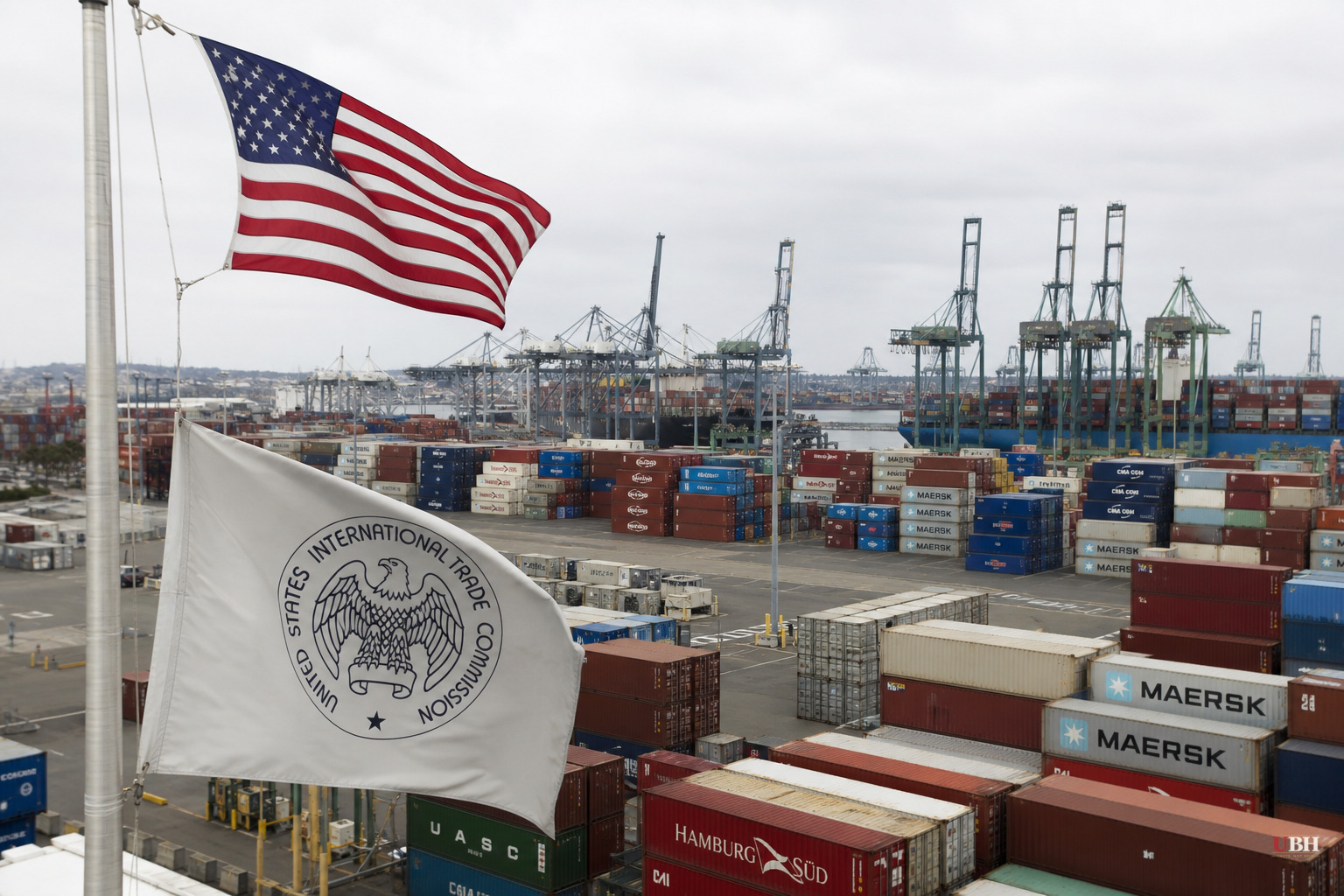
President Trump's global 10% tariff is set to expire at 12:01 a.m. ET Friday. Don't expect the tariffs to actually go away.
U.S. Trade Representative Jamieson Greer told CNBC's Squawk Box Tuesday that "we expect to see some action soon" on new duties, one day after the administration also imposed fresh tariffs on Canada. Greer wouldn't give a date. "I have a responsibility to brief Congress and other stakeholders before I really reveal that kind of thing," he said. The Financial Times reported new duties could land as soon as this week, according to CNBC.
In February, Trump used Section 122 of the Trade Act of 1974 to slap a blanket 10% tariff on imports globally. He did that days after the Supreme Court struck down his broader "reciprocal" tariff regime, which had relied on the International Emergency Economic Powers Act. Section 122 authority is capped at 150 days. That clock runs out Friday, and Congress isn't expected to extend it, according to CNBC.
So the administration is turning to a different law: Section 301 of the same 1974 trade act. In June, the Office of the U.S. Trade Representative proposed tariffs of 10% to 12.5% on imports from 60 economies, including China, the European Union and Singapore, tied to an investigation into forced-labor enforcement. Greer says that group covers "about 99% of our trade."
The legal argument
Greer's justification: "The U.S. has laws to prohibit trading goods with forced labor. Other countries, most don't have a law. Those that do don't really enforce it." The Section 301 probe wrapped up last month, and Greer recommended the 10% to 12.5% range specifically because of what USTR calls trading partners' "failure to impose and effectively enforce a prohibition on the importation of goods produced with forced labor," according to Morningstar.
Greer is scheduled to testify before the Senate Finance Committee Wednesday, where lawmakers will likely press him on timing and scope.
Trade economists are skeptical of the stated reason
Mary Lovely, an economist and senior fellow at the Peterson Institute for International Economics, told Morningstar the whole exercise is really an effort to "find a way to get President Trump his 'liberation day' tariffs" back after courts blocked the original version. She called the forced-labor justification a pretext, saying it "really smacks, particularly to our allies, as just a pretext."
Blake Harden, managing director at Washington Council Ernst & Young, described the pattern more neutrally to CNBC: "The expectation is continuity. We're really seeing a re-creation of that global tariff, and 301 being used as a way to lock that in."
Both economists read the same fact: the new tariffs, at 10% to 12.5%, look almost identical in size to the Section 122 tariffs they'd replace. Whether that's a legitimate legal pivot after a court defeat or window dressing on the same policy is a matter of interpretation, not something these sources resolve definitively. Greer's defenders would note that forced-labor enforcement gaps among trading partners are real and documented, and using an available legal tool to address them isn't inherently pretextual just because the tariff rate happens to land in a similar range as before.
Will markets even flinch?
Maybe not much, according to Jennifer Hillman, a Georgetown University law professor who served as general counsel for the U.S. Trade Representative during the Clinton administration. She told Morningstar there's reason to think a fresh 301 action, expected to closely mirror tariffs already priced in by markets since February, won't trigger the kind of stock selloff the original "liberation day" tariffs caused when Trump first floated them on April 2, 2025.
That's a notable contrast with last year, when the initial reciprocal tariff announcement hammered the S&P 500. If Section 301 tariffs land this week at roughly the same 10% rate markets have already been living with since February, investors may treat it as a formality rather than a shock.
What's unresolved
Greer hasn't given a specific date, and neither CNBC nor Morningstar reports one beyond "this week" and "soon." It's also unclear whether the Section 301 tariffs will survive legal challenges the way the Section 122 and IEEPA versions didn't. Section 301 has a longer track record of surviving court scrutiny than IEEPA, which is presumably why the administration is leaning on it now, but that's an expectation from trade lawyers, not a guarantee. Congress could still act before Friday's deadline, though CNBC reports that outcome looks unlikely.
Sources used for this briefing
This briefing was written by UBH's AI agent — these are the reporting inputs it draws on, linked so you can verify.


