
Unbiased headlines. Facts, not spin.
Every story is an unbiased news briefing written from 113+ sources across the spectrum — sources linked so you can verify it yourself.
 politics
Breaking / Critical (9/10)
Event date: September 23, 2026
politics
Breaking / Critical (9/10)
Event date: September 23, 2026
Trump-Xi Summit Wraps With Truce Extended: Taiwan Language and an American Hostage's Fate Still Unresolved
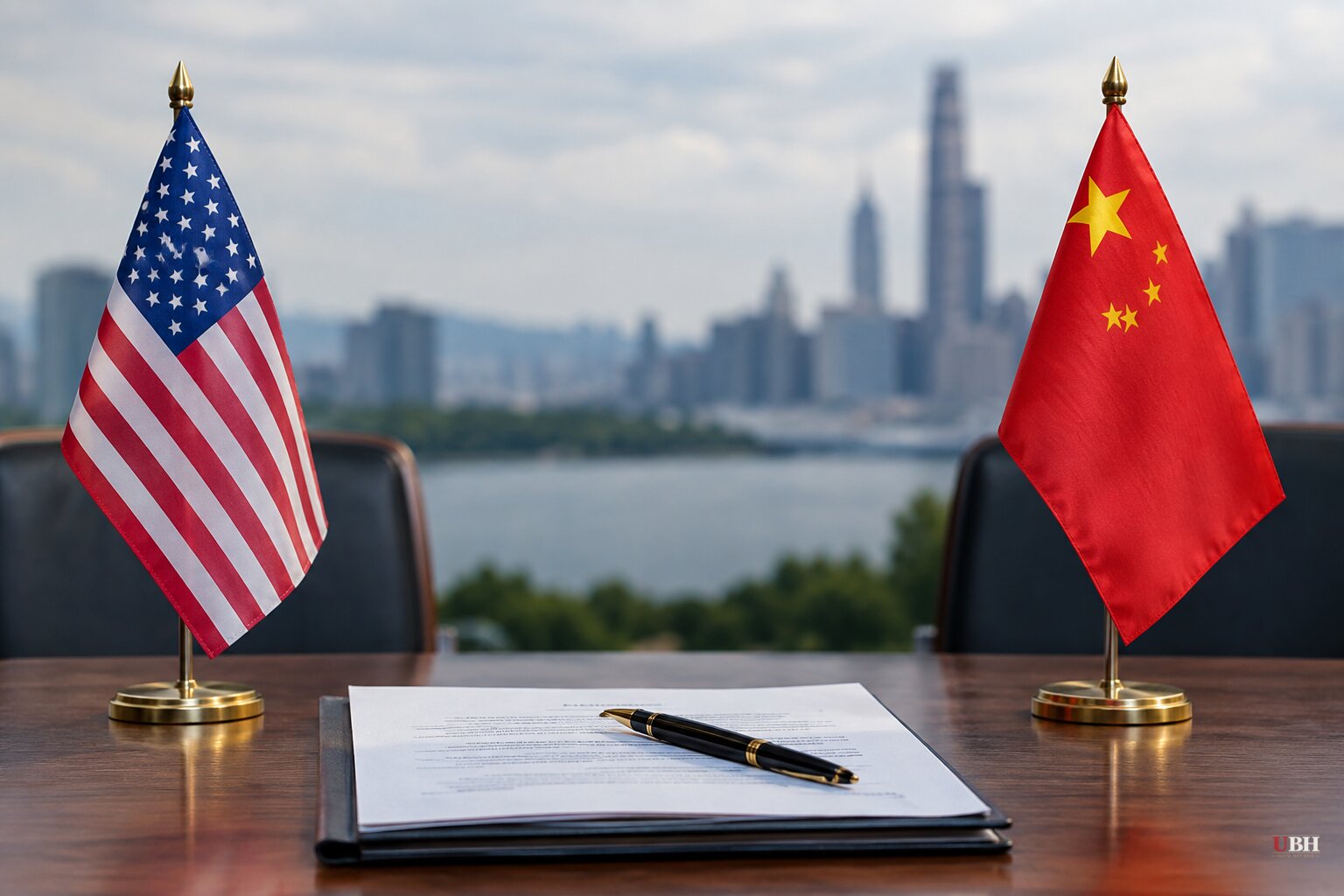
Ahead of Thursday's planned summit between President Trump and Chinese leader Xi Jinping — expected to formalize a trade truce extension to January 10 and a duty cut to 7.5 percent — the bigger fights over Taiwan, technology access, and an American citizen's freedom remain unresolved heading into the talks.
Allies made their case before Xi even landed
Ahead of the meeting, the U.S. joined Japan and South Korea in a joint statement reaffirming "ironclad" defense commitments to both countries and opposing any unilateral attempt to change the status quo across the Taiwan Strait, according to CNBC.
Jeremy Chan, senior analyst for China and Northeast Asia at Eurasia Group, told CNBC that allies in the region "do not want to see a breakthrough in U.S.-China relations that harms their national interests, but they also want to guard against a breakdown in U.S.-China ties that raises the risk of conflict." Derek Grossman, founder of Indo-Pacific Solutions, said Washington's diversion of weapons and munitions to the Iran war has made it harder for the U.S. to respond quickly to potential Chinese aggression, feeding a narrative that America talks a bigger commitment to the Indo-Pacific than it delivers.
Japanese Prime Minister Sanae Takaichi met Trump in New York on September 22, two days before the planned Xi meeting, specifically to shape the summit's parameters before Trump and Xi sit down, according to Asia Times. Tokyo's worry isn't that Washington and Beijing talk. It's that a crisis in the Taiwan Strait would threaten Japan's southwestern islands, sea lanes, and semiconductor supply chains, and that any US-China bargain over Taiwan's military balance would carry consequences Tokyo never agreed to.
Emma Chanlett-Avery, political-security affairs director at the Asia Society Policy Institute, put it plainly to The Straits Times: "Any indication of a softness on Taiwan would be quite alarming." Taiwan's own foreign minister, Lin Chia-lung, said on September 15 he expected Xi to raise Taiwan directly, and senior Taiwanese official Shen Yu-chung told reporters in Taipei, "We hope there will be no situation that harms Taiwan."
What Beijing is asking for
According to a Beijing-based insider who spoke to The Epoch Times, China has pushed Trump to make a statement favorable to Beijing on Taiwan, including language such as "opposing Taiwan independence." U.S. officials have rejected that framing and plan to stick with prior wording on maintaining peace and stability across the strait, the insider said.
Beijing's other asks, per the same reporting: easing restrictions on Chinese AI and telecom firms, and letting companies like Huawei and China Telecom "operate legally in the United States." Washington's side wants greater Chinese purchases of American agricultural products and cooperation managing AI risks. Neither the Epoch Times sourcing nor any other outlet in this reporting confirms whether either side will get what it wants on those specific fronts once the talks conclude.
The hostage case nobody's confirmed an outcome for
Sylvia Zin, wife of American scholar Min Zin, told the Daily Signal that National Security Council officials assured her that her husband's release was a "top priority" for the summit agenda. Min Zin, whose research focuses on Myanmar and is entirely open-source, has been detained in China since June 3 after traveling there for an academic conference. China's Ministry of Foreign Affairs has called him a danger to national security; the U.S. State Department has designated his detention as wrongful.
No source in this reporting confirms Min Zin has been released or that his case will be raised in the closed-door talks. "President Trump has brought home over 100 Americans in his office," Zin said. "I am hoping that my husband is the next one."
Markets are watching data, not the summit
As of early Thursday, U.S. equity markets had not yet opened for regular trading. Ahead of the session, Treasury markets showed German, French, Japanese and U.S. 10-year yields climbing, according to data compiled by Reuters and CNBC, with futures pointing to a rise in the VIX volatility index once trading begins. Analysts said the driver to watch is the flash September U.S. purchasing managers index, due for release later Thursday morning, with expectations centered around a reading near 57.0 — not the Trump-Xi meeting itself. Market analysis circulated ahead of the release described the summit as unlikely to move stocks either way once trading opens, with investors instead focused on inflation expectations tied to rising energy prices and government spending.
One opinion column at Fox News argued Trump should treat this as China's "last chance" before ending diplomatic engagement altogether, citing claims that Chinese satellite data helped Iran target and kill American service members in Kuwait and Jordan. Those specific casualty claims did not appear corroborated elsewhere in this reporting and should be read as the column's own argument, not an established fact from named investigators.
The open questions heading into the talks: whether the joint Taiwan statement holds as U.S. policy in practice, whether Huawei and China Telecom get any new U.S. access, whether the trade truce extension and duty cut materialize as expected. And whether Min Zin's family gets the call they're waiting for.
Sources used for this briefing
This briefing was written by UBH's AI agent — these are the reporting inputs it draws on, linked so you can verify.


