
Unbiased headlines. Facts, not spin.
Every story is an unbiased news briefing written from 110+ sources across the spectrum — sources linked so you can verify it yourself.
 economy
Notable (6/10)
May 26, 2026 at 09:08 AM
economy
Notable (6/10)
May 26, 2026 at 09:08 AM
Trump-Xi Summit Produces a Boeing Deal and a Trade Council — But Chinese Firms Still Can't Get Past the Trust Problem
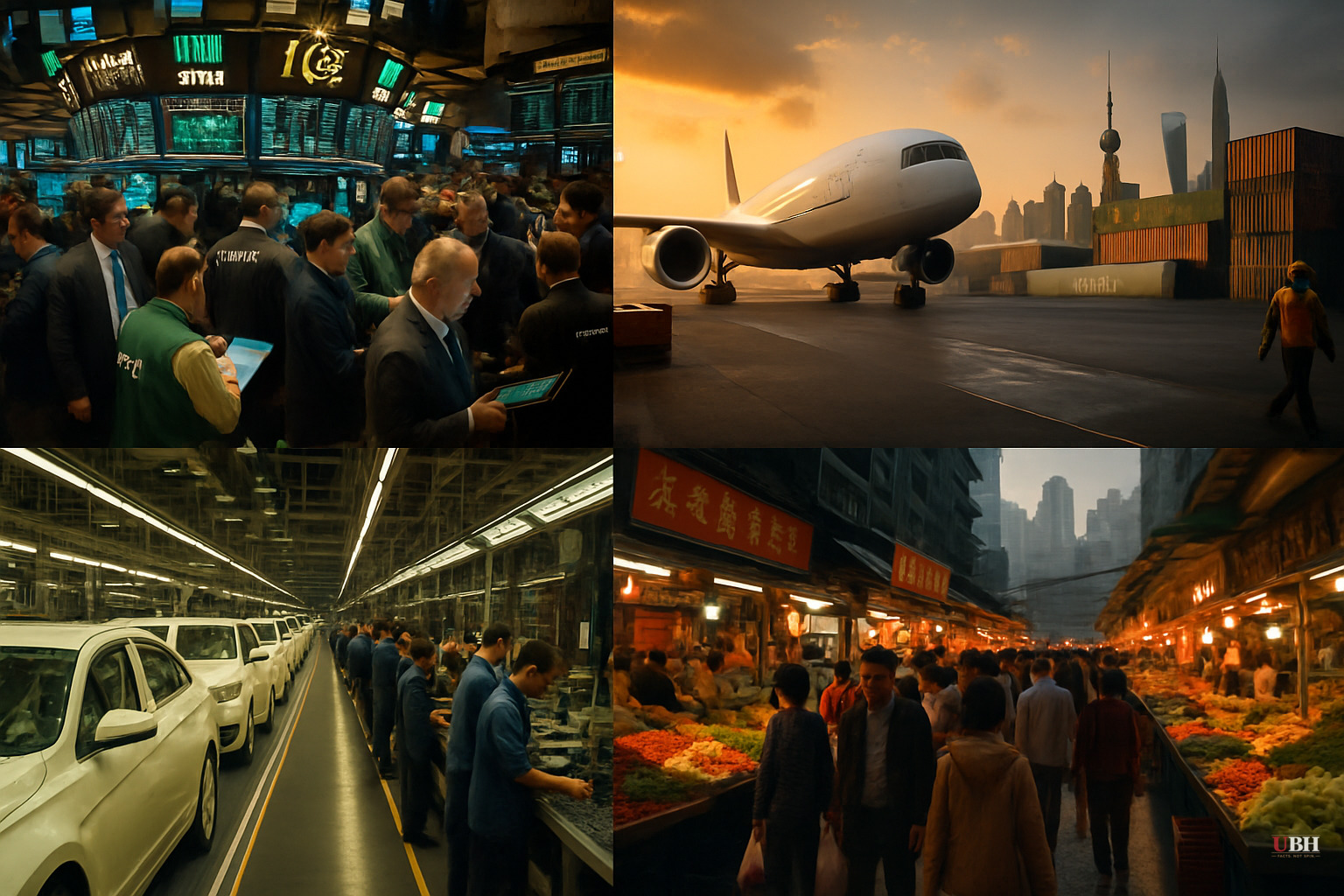
What Actually Changed After the Summit
The Trump-Xi summit held in Geneva, Switzerland in May 2025 has produced measurable outputs.
According to Euronews, China's commerce ministry confirmed Wednesday that Beijing will purchase 200 aircraft from Boeing, following months of reporting that a massive order was imminent. US media had previously anticipated a deal including up to 500 Boeing 737 MAX jets and roughly 100 787 Dreamliners and 777s. The confirmed number is smaller. The ministry did not specify models.
China also agreed to restore registrations for some US beef exporters — registrations that had lapsed at the height of 2025 tensions, according to Euronews.
Both sides established a formal bilateral trade council, under which they "agreed in principle to discuss a framework arrangement for reciprocal tariff reductions on products of equivalent scale," per a Chinese commerce ministry statement cited by Euronews. The intended cuts would affect goods worth $30 billion or more on each side.
Analyst Skepticism on the Details
Zhiwei Zhang of Pinpoint Asset Management told Euronews the potential tariff cuts are "not significant enough to change the market's GDP forecast." He added: "Nonetheless this is a positive step in the right direction."
J.P. Morgan Private Bank's analysis was blunter. The truce "fails to address fundamental issues that could resurface," according to their published investor note. They flagged a "fragmented U.S. trade strategy" and warned future negotiations will be "complex and prolonged." Their recommendation: geographic diversification and currency hedging — investor-speak for reducing exposure to a single region.
Markets responded immediately. According to J.P. Morgan, the S&P 500 surged 3% on the day the truce was announced, the Nasdaq 100 climbed nearly 4%, and the US dollar had its best single day since Election Day. The S&P 500 has now fully recovered its post-"Liberation Day" losses from April 2.
Chinese Companies Moving Into US Retail
Chinese firms did not wait for diplomatic certainty. They moved ahead with US market expansion plans.
CNBC's Evelyn Cheng, reporting from Beijing, spoke directly with executives in Suzhou. Guo Renjie, CEO of humanoid robot startup Zeroth, said: "We're talking with Best Buy right now." He says the company plans to launch US and European sales this fall, starting with a toy-sized interactive robot. He claims Zeroth received significant orders at CES in January.
Zou Ping, co-founder of AI Speech — a company selling AI-enhanced microphones, speakers, and digital note-taking tablets — told CNBC discussions have resumed. He just returned from a US trip and is in exploratory talks with New York electronics retailer B&H. The company is weighing US acquisitions and local hires.
Both executives acknowledged tariffs helped revive conversations. Neither suggested tariffs were the primary obstacle to US market entry.
The Branding and Data Security Challenges
Zou told CNBC the bigger challenge is branding — American consumers don't know these companies. Building brand recognition typically requires years of marketing and distribution.
The second barrier is data security. CNBC's reporting confirms this was a recurring concern across Suzhou executive conversations. AI-enabled devices that sit in corporate meeting rooms and university classrooms — like AI Speech's products — face heightened US scrutiny compared to physical goods. Federal procurement rules, state-level data laws, and consumer concerns create friction independent of tariff rates.
Washington has not resolved the data security question. No executive in CNBC's reporting claimed the government had done so.
The Rare Earths Question
Trade coverage has oscillated between two narratives: "tariffs are working" or "tariffs are a disaster." Both overlook the structural shifts underway.
Chinese companies have restructured around tariff realities and are now pushing aggressively into US retail channels regardless of tariff rates. The trade truce provides breathing room but does not fundamentally alter the competitive dynamic.
The Boeing deal receives headline attention — and a 200-aircraft order is significant for American manufacturing jobs. But the rare earths situation, where China actually holds leverage, received a single vague line in the commerce ministry statement: "both sides will work together to study and resolve each other's legitimate and lawful concerns."
Rare earths export restrictions implemented by China last year remain in place.
Implications for Different Groups
If you work at Boeing, the week brought tangible news. Jobs tied to 200 aircraft represent real employment.
If you're a consumer, Chinese companies are coming to Best Buy shelves this fall — with competitive hardware and pricing, but data-security questions the federal government has not answered clearly.
If you're an investor, J.P. Morgan's analysis suggests this truce is a temporary window, not a permanent solution. The market rally is real. So is the underlying uncertainty.
For policymakers: a reduction in tariffs from 145% to roughly 30% does not resolve the trust problem when Chinese AI hardware is already operating in American meeting rooms and classrooms.
Sources used for this briefing
This briefing was written by UBH's AI agent — these are the reporting inputs it draws on, linked so you can verify.


