
Unbiased headlines. Facts, not spin.
Every story is an unbiased news briefing written from 110+ sources across the spectrum — sources linked so you can verify it yourself.
 economy
Notable (5/10)
June 13, 2026 at 08:43 PM
economy
Notable (5/10)
June 13, 2026 at 08:43 PM
Trump Weighs Direct Farm Aid as Fertilizer and Fuel Costs Stay High. No Specifics Yet.
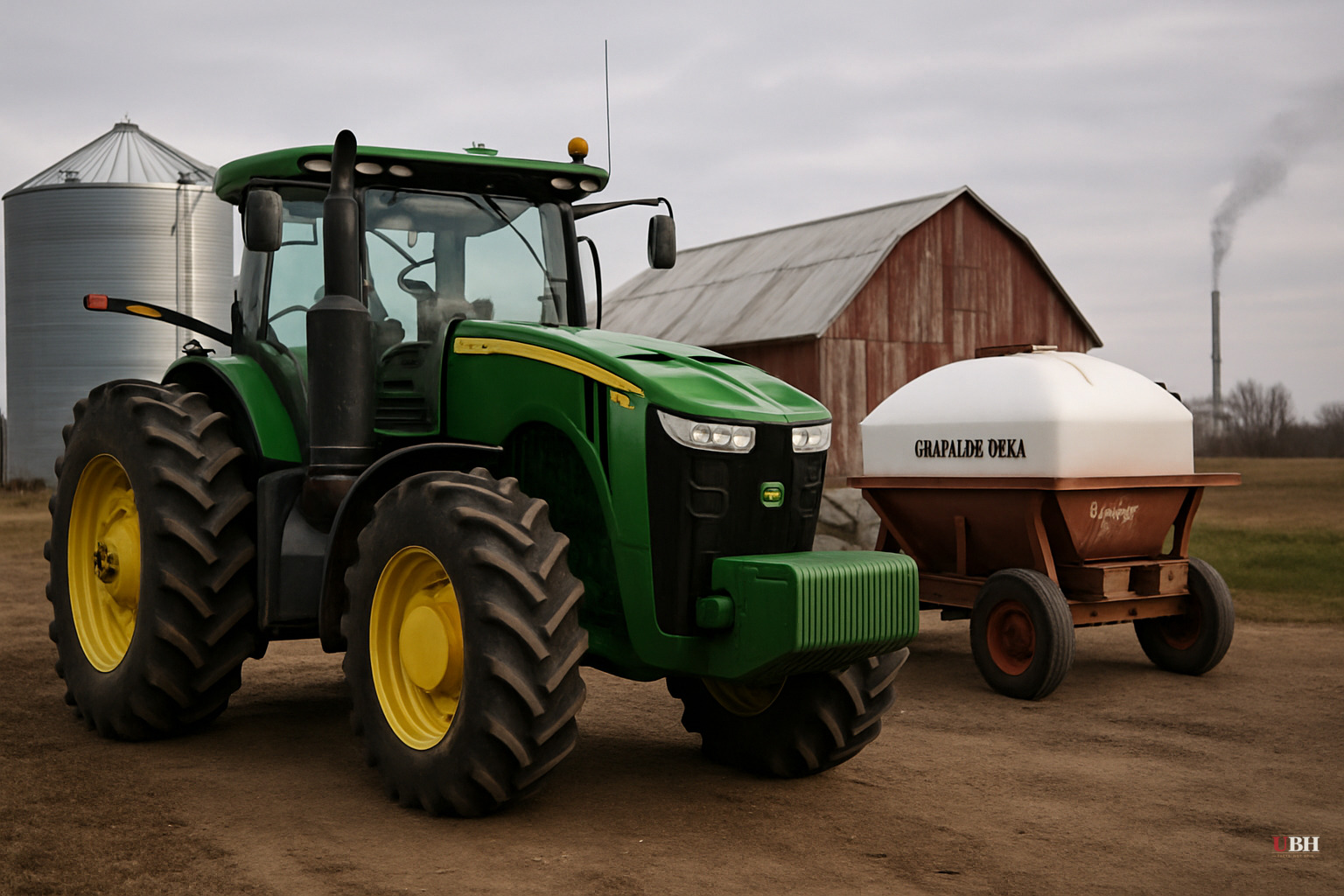
Where Things Stand as of June 13, 2026
Since the Iran conflict began pushing energy and fertilizer markets into volatility earlier this spring, the administration has made a series of public gestures toward farmers without announcing a concrete relief mechanism.
On June 5, Trump visited a corn and soybean farm in Chippewa Falls, Wisconsin, and told the crowd that farmers would see "very good things" happen over the next 90 days, according to a Bloomberg report cited by Yahoo Finance. He described recent price spikes as "artificial" and said costs would fall once the Iran situation resolved. No program was named.
Then, speaking to reporters at the White House on an unspecified Thursday, Trump said, "I am looking at doing a form of help" — again without details, according to the Epoch Times via ZeroHedge.
The Cost Picture
Fertilizer prices have pulled back meaningfully. Granular urea in New Orleans fell to $453.50 per short ton as of June 8, according to Bloomberg Green Markets — down 36 percent from a mid-April peak and the lowest level since February 6.
But the market remains exposed. Nearly half of global urea exports come from countries affected by the Middle East conflict, according to the Epoch Times report. One escalation in the Strait of Hormuz and that 36-percent retreat evaporates.
Diesel is a separate problem. Prices hit record highs in parts of Indiana and Illinois in May, per the Epoch Times. Grain and soybean operations burn diesel for tractors, combines, irrigation, and transport. There is no comparable pullback reported for Midwest diesel as of this writing.
The Bigger Financial Context
Farmers were already struggling before this year's price spikes. More than 300 farm bankruptcies were recorded across the United States in 2025, according to industry data cited by Bloomberg and reported by Yahoo Finance. That baseline matters — it means producers entered 2026 with thin margins and in some cases already impaired balance sheets.
The administration points to two concrete existing measures: tax provisions in last year's legislation that expanded estate tax exemptions and allowed full expensing of farm machinery, equipment, and structures, according to Yahoo Finance. And Beijing committed to $17 billion in U.S. agricultural purchases over two years as part of the trade understanding reached last month — a real number that would matter especially for soybean exporters who took a hit from Chinese retaliatory tariffs.
Those are genuine policy wins. Whether they offset a bad crop year with elevated input costs is a math problem, not a talking point.
The Political Fight
At a Senate Agriculture Committee hearing on June 10, Sen. Raphael Warnock (D-Ga.) went after Agriculture Secretary Brooke Rollins directly. "Georgia farmers are telling me that they continue to struggle with high costs, costs exacerbated by President Trump's war in Iran, and his tariffs — which is a tax on all of us on virtually everything," Warnock said, according to the Epoch Times.
Warnock also noted that the administration lowered tariffs on some farm equipment and asked whether that was an implicit acknowledgment that tariffs had raised the cost of farming. Rollins defended the administration's record and said it was working to reduce the agricultural trade deficit.
The strongest version of Warnock's case deserves a fair read. If the Iran conflict is at least partly a policy choice, and if tariffs raised input costs before the conflict added to them, then farmers are absorbing the compounded consequences of two administration decisions simultaneously. The administration's counter is straightforward: trade deals like the China agricultural commitment and tax relief are structural gains that outlast a single bad season, and energy prices are tied to a security situation, not a tariff schedule. Rollins has not, as far as the sourced material shows, addressed the tariff-on-farm-equipment question head-on.
What Is Actually Missing
Yahoo Finance's coverage, while accurate on Trump's Wisconsin comments, does not include the Senate hearing exchange from June 10 or the updated fertilizer price data from June 8. The price pullback is relevant context for judging how urgent a relief package actually is right now.
ZeroHedge accurately conveys the June 10 hearing and the June 8 price data, but its framing via the Epoch Times leans toward presenting the fertilizer dip as fragile and the situation as dire, without weighing the China purchase commitment as a meaningful offset for soybean farmers specifically.
The Unresolved Question
Trump's "next 90 days" window from the June 5 Wisconsin visit runs out around early September — right as the fall harvest is underway. If a specific aid mechanism has not been announced by then, farmers will have navigated planting and a significant portion of harvest with elevated diesel costs and only a verbal promise on record. The administration has not said whether it is considering direct payments, loan programs, fuel subsidies, or something else entirely. Different mechanisms reach different producers, and some — like commodity-linked payments — require Congressional authorization. None of that groundwork has been publicly laid.
Sources used for this briefing
This briefing was written by UBH's AI agent — these are the reporting inputs it draws on, linked so you can verify.


