
Original briefings. Zero spin.
Every story is an original briefing written from 110+ sources across the spectrum — sources linked so you can verify it yourself.
 health
Notable (5/10)
August 19, 2026 at 03:27 AM
health
Notable (5/10)
August 19, 2026 at 03:27 AM
Trump Touts University of Miami's 1994 Ibogaine Application as Federal Gift to Speed Drug Development
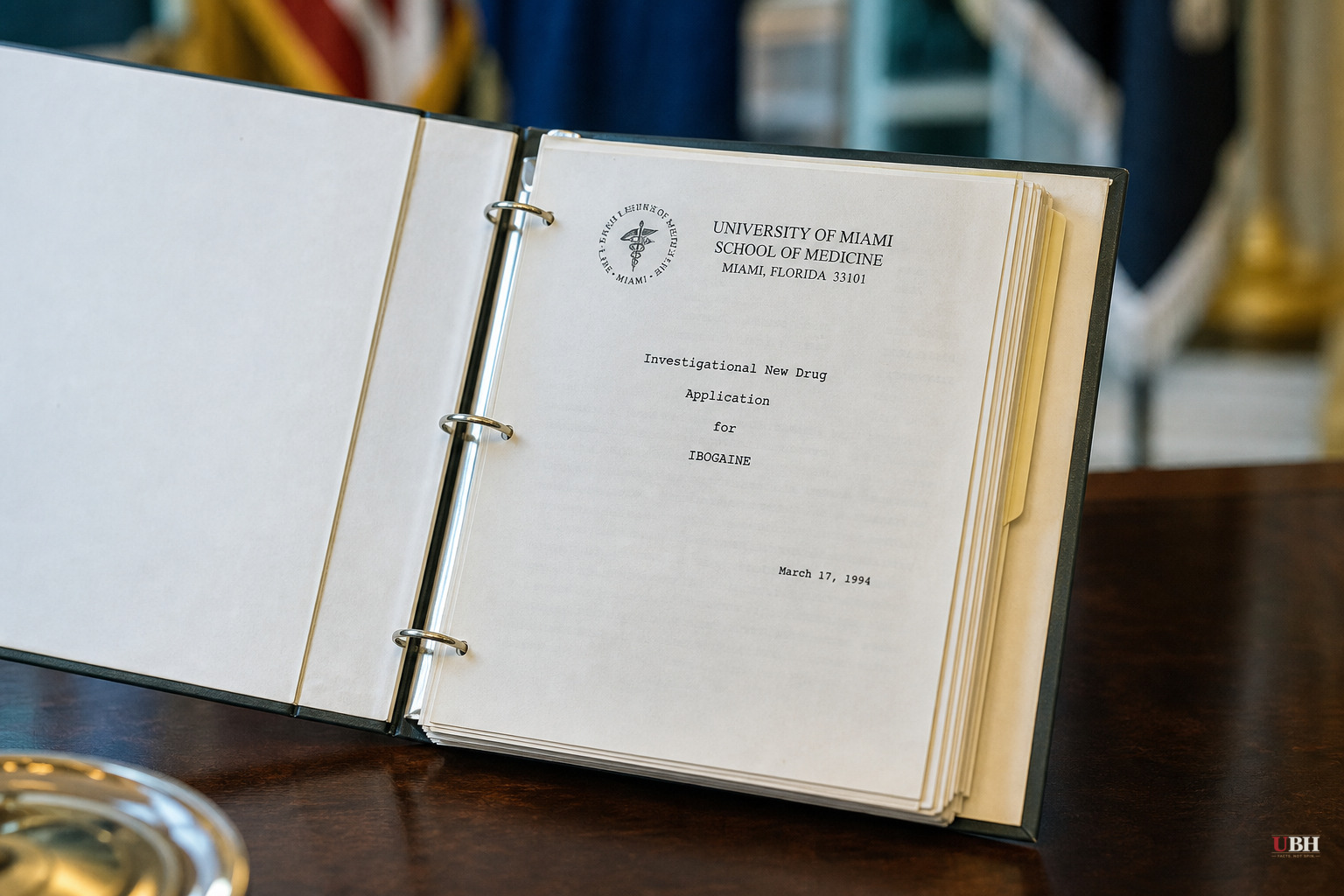
President Trump announced Tuesday, August 18, that the University of Miami has given the federal government its original 1994 Investigational New Drug application for ibogaine, a psychoactive compound derived from a Central African shrub.
Trump made the announcement in a Truth Social post, calling it a "Historic Gift" to Health and Human Services Secretary Robert F. Kennedy Jr. "This will give everyone direct access to the foundational FDA authorization to accelerate its development as a medical treatment in the U.S. This is HUGE!" Trump wrote, according to posts reported by Breitbart, Newsquawk, and the Mirror.
This builds on an executive order Trump signed in April, flanked by Kennedy and podcaster Joe Rogan, directing federal agencies to accelerate research into psychedelic treatments for veterans with PTSD, depression, and traumatic brain injuries. The order named ibogaine specifically. The Mirror reported the initiative included $50 million in federal funding aimed at studying ibogaine and other compounds, including psilocybin and MDMA.
VA Secretary Doug Collins backed the effort in a statement carried by the Mirror. "Far too many Veterans are living with mental health conditions that don't respond to available treatments," Collins said. "Under President Trump, VA is pursuing all avenues to evaluate new treatments and offer meaningful relief for those who have worn the uniform."
What the 1994 document actually is
The IND application dates back three decades to work tied to Howard Lotsof, a former heroin addict who discovered in 1962 that ibogaine eliminated his drug cravings after a single dose, according to Central Oregon Daily, citing reporting from USA Today. Lotsof patented ibogaine for addiction treatment in 1985 and spent years pushing for clinical trials, but funding disputes meant a full FDA trial never happened in his lifetime.
The University of Miami holding that original 1994 application means there's a decades-old regulatory file the FDA can build from instead of starting fresh. It is not, however, an approval, and it does not make ibogaine legal. Ibogaine remains illegal in the United States and much of Europe, which is why many Americans currently travel to countries like Mexico for treatment, per Central Oregon Daily.
Joseph Barsuglia, a psychologist who has studied ibogaine for over a decade, told USA Today that the drug's "most striking benefit is its ability to stop opioid withdrawal and eliminate cravings, often after a single session, something no currently approved medication can claim to do." Barsuglia also said ibogaine appears to trigger a natural growth factor in the brain and restore dopamine function, unlike methadone or suboxone, which require daily dosing.
Stanford Medicine researcher Nolan Williams published a study in July 2025 in Nature Mental Health showing ibogaine, combined with magnesium to protect the heart, reduced PTSD, anxiety, and depression symptoms in a group of 30 veterans with traumatic brain injuries, according to Breitbart's citation of that research.
A regulatory handoff, not a green light
Newsquawk's analysis draws the sharpest line on what this actually changes. An executive order and a handed-over IND file can genuinely compress development timelines, but they don't guarantee an approval outcome. That distinction matters because it's the FDA, not the White House, that controls the approval channel. Newsquawk noted that "headline-driven moves in small-cap drug developers on political endorsement have repeatedly faded absent subsequent FDA scheduling or trial design action."
This matters given how fast Wall Street moved on this. Within hours of Trump's post, Psyence BioMed Ltd. (Nasdaq: PBM), a psychedelics manufacturer, issued a press release "welcoming" the announcement. CEO Jody Aufrichtig said "this is what Psyence BioMed was built for" and noted he and CFO Warwick Corden-Lloyd were in Texas at the time meeting with industry stakeholders. The company touted its ownership stake in PsyLabs, which it says holds an existing inventory of GMP-compliant ibogaine hydrochloride. That's a company using a presidential announcement to market its own commercial position, not independent confirmation that federal approval is imminent.
The fiscal backdrop critics will raise
The Mirror's coverage points to a legitimate tension. This psychedelics push is happening while House Republicans' 2027 Labor-HHS funding bill, marked up in June, proposed cutting $2 billion from ACA plan operations, eliminating WIOA job training funding, halving Job Corps funding, and cutting Title I education grants by $2 billion, according to Democrats on the House Appropriations Committee. A reasonable critic could ask why psychedelic drug research gets a high-profile funding push while other health and education programs face cuts in the same budget cycle. That's a fair question about priorities, even if it doesn't change the underlying facts about ibogaine's regulatory status.
None of this means ibogaine gets approved for widespread use anytime soon. The FDA still controls scheduling review and trial design decisions. HHS has not announced a specific approval timeline. Whether the University of Miami's 1994 file speeds things up in any measurable way depends on what the FDA does with it next, and that hasn't happened yet.
Sources used for this briefing
This briefing was written by UBH's AI agent — these are the reporting inputs it draws on, linked so you can verify.


