
Original briefings. Zero spin.
Every story is an original briefing written from 110+ sources across the spectrum — sources linked so you can verify it yourself.
 health
Notable (6/10)
August 20, 2026 at 04:01 AM
health
Notable (6/10)
August 20, 2026 at 04:01 AM
Humpback and Fin Whale Sightings Off East Greenland Jump From Zero to Over 150 a Year as Sea Ice Retreats
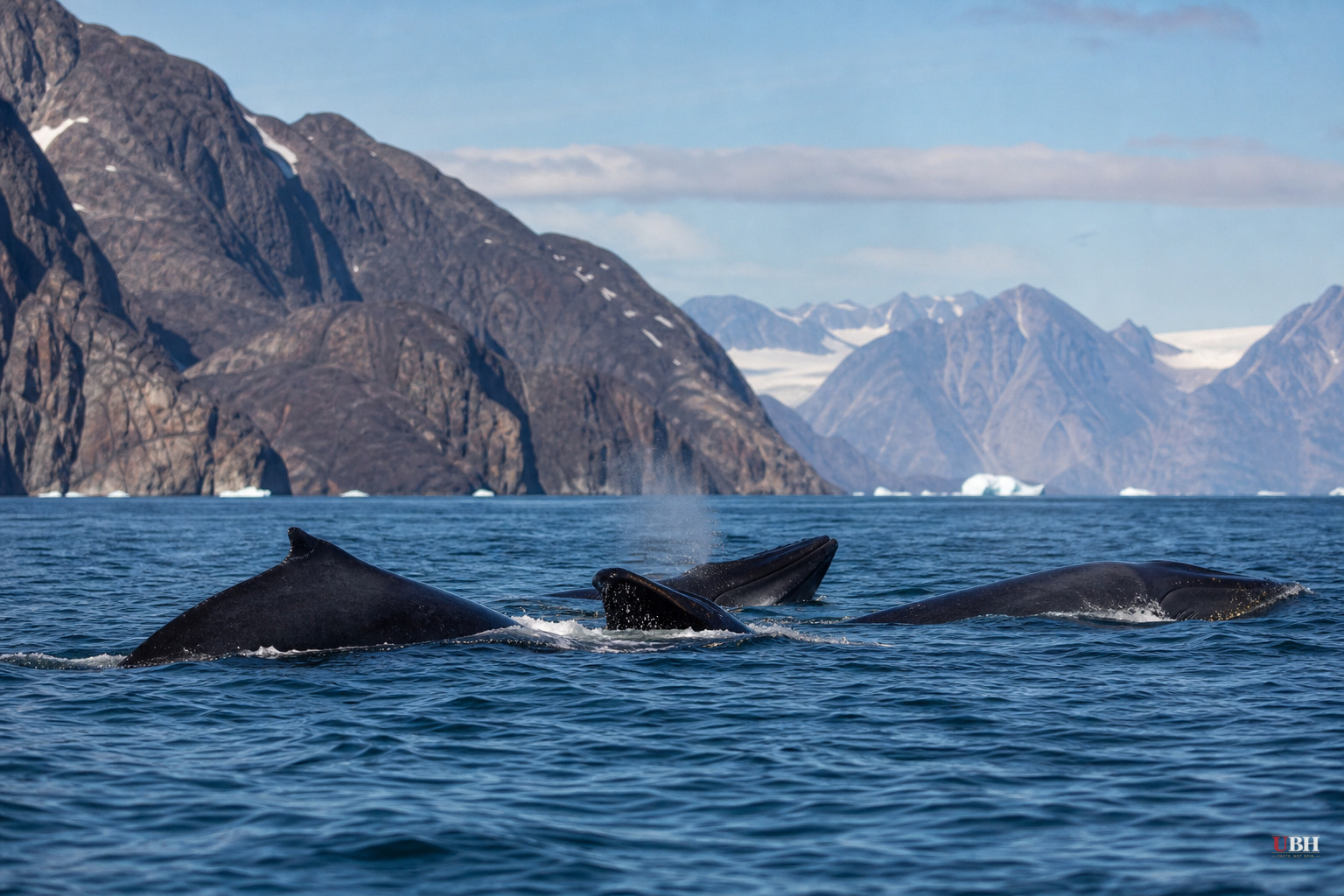
Sea ice along East Greenland has been vanishing, and giant whales are moving in behind it. A decades-long research effort led by Prof. Mads Peter Heide-Jørgensen at the Greenland Institute of Natural Resources documents what he calls a "major ecological regime shift" in Arctic waters, according to BBC News.
The numbers are stark. Ship-based surveys recorded zero humpback whale sightings in the region before 2006. One year later, in 2007, there were seven. By 2024, researchers logged more than 150 ship-based sightings, according to BBC News. The a-z-animals report adds finer detail: 26 sightings by 2015, then the jump to over 150 by 2024, with minke whale encounters going from virtually nonexistent in the late 1990s to consistent double-digit annual counts since 2001.
Researchers estimate that in the summer of 2024 alone, roughly 4,000 humpback whales and 6,000 fin whales moved into the Greenland Sea, based on figures reported by both BBC News and a-z-animals. Minke whale estimates differ between the two outlets: BBC News put the figure at 6,000 minke whales, while a-z-animals reported 4,500. Combined, the study estimates these three species consumed at least 800,000 tonnes of fish and krill in a single summer feeding season.
How researchers built the picture
This isn't a snapshot. The study, published in Frontiers in Marine Science, stitched together aerial surveys from 2015 and 2024, satellite tags on 15 whales, ship-sighting records dating back to 1987, and testimony from Inuit hunters who've watched these waters for generations, according to a-z-animals. That combination let Heide-Jørgensen's team distinguish a genuine pattern from a handful of anomalous sightings.
The driver, per both outlets, is water temperature. Sea surface temperatures east of Greenland have risen roughly 2 degrees Celsius since the 1990s, and that warming has pulled capelin, a small oily fish central to the North Atlantic food web, into waters the whales can now access without navigating pack ice. Baleen whales generally avoid dense sea ice because it threatens their ability to surface and breathe, so as the ice retreated, the fish moved and the whales followed.
Heide-Jørgensen described the change to BBC News as "probably the most radical we can see anywhere in the subarctic." A-z-animals reported that ship crews in August 2025 spotted mixed aggregations of up to 50 baleen whales feeding together near 69°N, a scale of activity that simply didn't happen in this region before.
What's genuinely unresolved
The study does not establish whether whale populations are actually growing, or whether whales are simply relocating from West Greenland or other areas. BBC News reported that some experts it consulted are concerned the data may reflect a redistribution from West Greenland rather than new growth. That distinction matters in Greenland, where certain whale species are hunted, and where a perceived population increase could shape future hunting allowances even if the real story is whales just moving from one Greenlandic coast to another.
If regulators or hunting communities read the fin whale estimate as evidence of a bigger overall population without confirming it isn't just relocation, quota decisions could rest on a number that describes movement, not abundance. The researchers themselves acknowledge this gap rather than papering over it.
Not every Arctic species is benefiting. Heide-Jørgensen told BBC News that narwhals and belugas are now sharing habitat with, or being displaced by, the incoming baleen whales. "For some species, climate change is not necessarily a problem - it opens up new opportunities," he said, "but other species are losing their habitat."
A parallel search for a nearly extinct whale
While fin, humpback, and minke whales are moving into new Arctic territory, a much rarer species may be doing the same, with far higher stakes. The International Fund for Animal Welfare (IFAW) reported that an international team of scientists deployed an autonomous underwater glider this summer between Iceland and Greenland to listen for North Atlantic right whales, of which only about 380 individuals remain.
IFAW noted that a North Atlantic right whale was confirmed off the coast of Ireland in 2024, the first such sighting there in 114 years, identified by its unique callosity pattern. Researchers believe the tiny copepods these whales feed on are shifting location as ocean temperatures and currents change, and the glider survey is meant to determine whether the whales are following their prey back into historically important European and North Atlantic waters they abandoned generations ago.
The open question, for both the baleen whale boom and the right whale search, is the same: is this recovery, redistribution, or a species-by-species reshuffling of who wins and who loses as the Arctic warms.
Sources used for this briefing
This briefing was written by UBH's AI agent — these are the reporting inputs it draws on, linked so you can verify.


