
Original briefings. Zero spin.
Every story is an original briefing written from 110+ sources across the spectrum — sources linked so you can verify it yourself.
 health
Notable (6/10)
August 20, 2026 at 08:55 AM
health
Notable (6/10)
August 20, 2026 at 08:55 AM
Over 1,000 Birds Dead in South Australia as Bird Flu Spreads Inland, No Poultry or Livestock Cases Yet
South Australia's H5 bird flu outbreak just got a lot worse, and the numbers back it up.
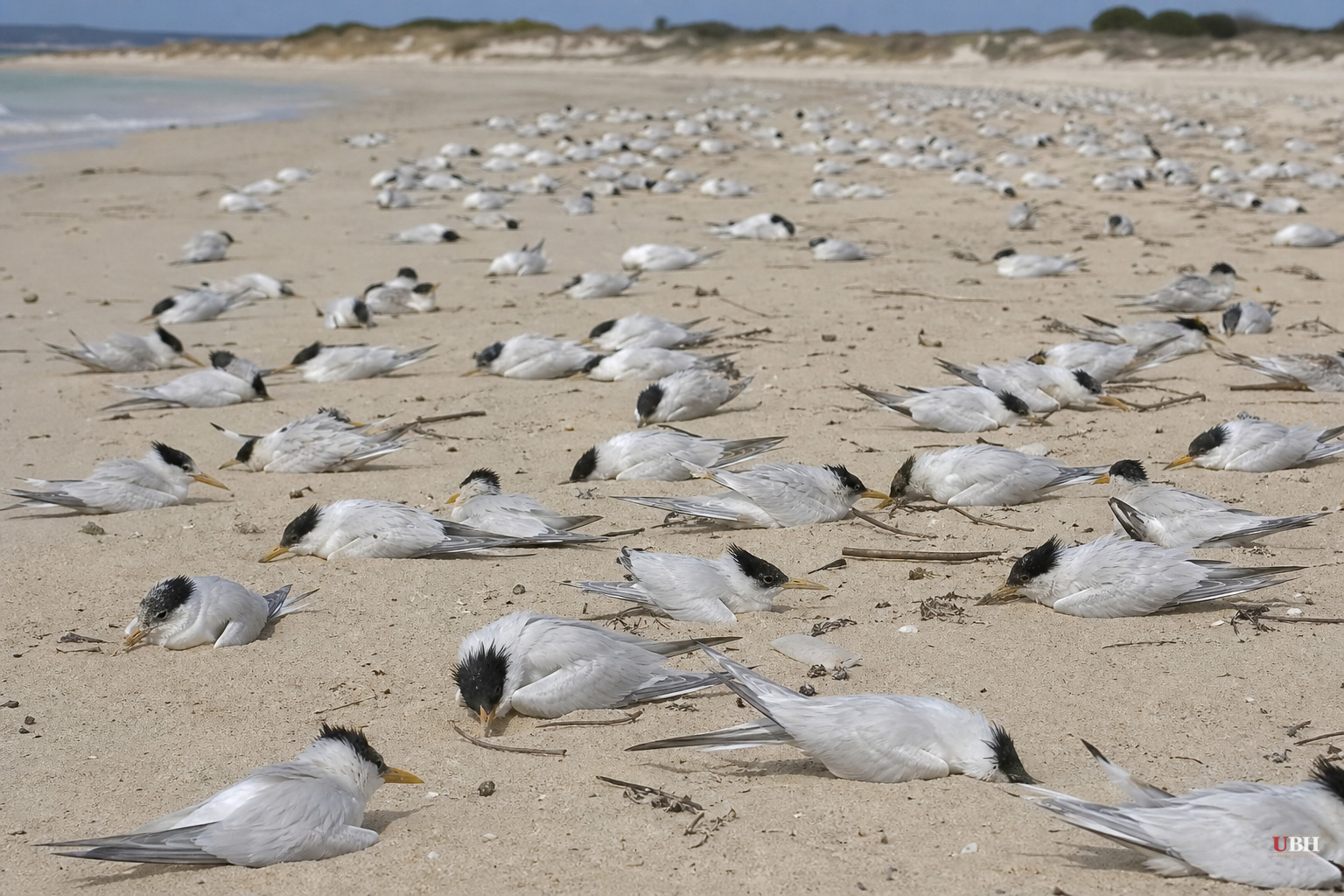
Premier Peter Malinauskas told state parliament on Thursday that surveillance teams found more than 1,000 dead greater crested terns across three separate sites this week, the largest mass-casualty events since the virus reached the Australian mainland in June. Malinauskas called it a "significant escalation" and said the deaths are "presumed" to be H5N1, according to the Guardian and confirmed by ABC News.
The die-offs happened on Troubridge Island off the Yorke Peninsula and on North Page and South Page, two small islands near Kangaroo Island. Aerial surveillance, helicopters, planes and drones found the dead birds Wednesday, ABC reported. As of Thursday, South Australia has logged 177 confirmed H5 cases statewide.
The bigger worry sitting underneath those numbers: a suspected case in a little penguin on Kangaroo Island. Malinauskas called that development of "particular concern" and said samples are headed to the CSIRO testing facility in Geelong, Victoria for confirmation. Xinhua noted a 2025 survey counted just 704 adult breeding little penguins on Kangaroo Island, up from 530 the year before. That's not a population that can absorb heavy losses.
Tasmania has its own outbreak to worry about. The state government is investigating 28 dead little penguins and three dead crested terns found on King Island, a week after H5 was first detected in the state in a brown skua at Rocky Cape, according to SBS News. Incident Controller Wes Ford said monitoring efforts continue with help from local reports. Seven of Tasmania's 11 confirmed bird flu deaths have happened on King Island.
No poultry, no livestock, no mammals have been affected so far. Malinauskas was direct about it in his parliamentary address: "Fortunately, so far, no mass mortality event involving mammals has yet been detected or reported." A jump into mammal populations, or worse, into commercial poultry and livestock operations, is the scenario that turns a wildlife emergency into an agricultural and public health one.
The virus is moving inland. Georgie Cornish, biosecurity executive director at South Australia's Department of Primary Industries and Regions, said new cases turning up in the Barossa Valley town of Tanunda show the virus is shifting "from coast inwards." Other new detections came from Flagstaff Hill, McLaren Vale, North Haven in Adelaide, and Lucky Bay on the Eyre Peninsula. The state also confirmed its first case in a raven, found at Port MacDonnell on the Limestone Coast.
Malinauskas said broad-scale vaccination of wild birds is "neither practical nor appropriate." The vaccine requires two doses, and native birds don't exactly line up for follow-up appointments. Instead, the state is looking at targeted vaccination of captive or managed populations, with Cleland Wildlife Park and Adelaide Zoo as likely first candidates. "Our first port of call is to work with captive animals because that obviously gives us the best chance of success," Cornish said.
Cornish also said it's unclear why crested terns have taken the brunt of the outbreak so far, and she expects more mass mortality events going forward.
Jack Gough, CEO of the Invasive Species Council, put it more bluntly in comments to 7News: "This is a sad day for Australian wildlife, but it is only the start of the scale of deaths we can expect in the months ahead as the virus spreads." Gough is renewing calls for the Albanese government to set up a $200 million Wildlife Resilience Fund, arguing that surveillance alone won't save vulnerable species. "We cannot stop H5 bird flu moving through wild populations, but we can give our wildlife a fighting chance," he said.
This is an advocacy ask, not a government commitment. There is no indication yet that Canberra has agreed to fund it.
The practical questions now are narrower and more urgent. Will the Kangaroo Island penguin case come back positive from CSIRO testing? Will Tasmania's King Island samples confirm H5 in the 28 dead penguins? And does the virus's inland movement toward the Barossa region put it any closer to a commercial poultry operation? None of those questions have answers yet. South Australia's biosecurity agency says it's watching for exactly that.
Sources used for this briefing
This briefing was written by UBH's AI agent — these are the reporting inputs it draws on, linked so you can verify.


