
Original briefings. Zero spin.
Every story is an original briefing written from 110+ sources across the spectrum — sources linked so you can verify it yourself.
 health
Notable (6/10)
Event date: August 18, 2026 at 10:00 AM
health
Notable (6/10)
Event date: August 18, 2026 at 10:00 AM
Iowa's Republican Governor Nominee Blames Farm Runoff for the State's Cancer Rates, Splitting His Own Party
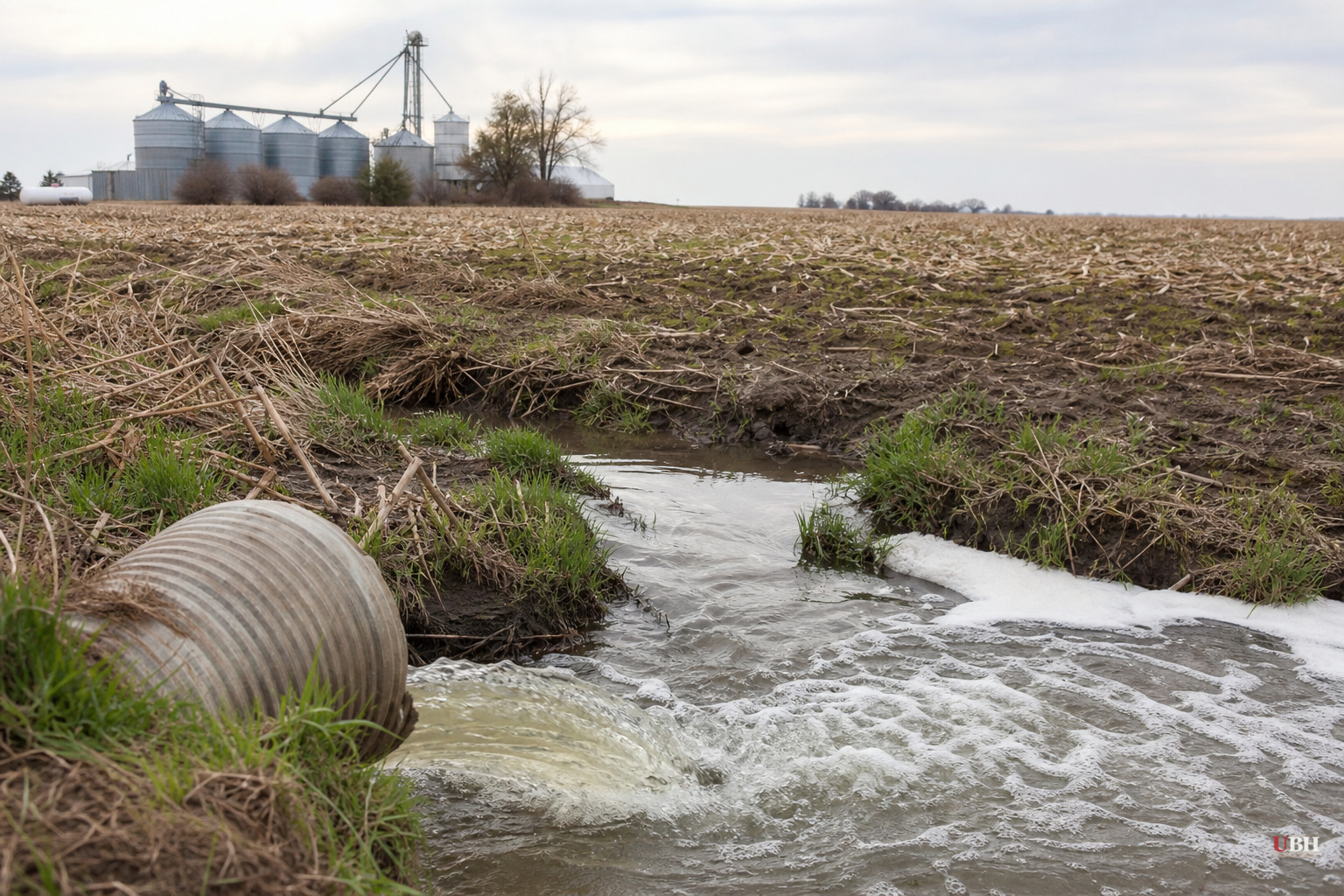
Iowa has the second-highest cancer rate in the country. Only Utah and West Virginia are seeing rates rise alongside it, according to tracking cited by the National Institute on Minority Health and Health Disparities. The issue has turned into the defining question of the state's 2026 governor's race, according to The Guardian.
Republican nominee Zach Lahn isn't dodging it. At an American Cancer Society Cancer Action Network roundtable in Urbandale, Lahn told advocates and survivors that any serious conversation about cancer in Iowa has to start with water.
"Any discussion about cancer rates that doesn't include water isn't a genuine discussion," Lahn said, according to the Daily Signal. He said the problem traces back to agriculture and that Iowa has to "own it and solve it."
Radio Iowa reported Lahn linked high nitrate loads in drinking water to colon and ovarian cancer risk, and said Iowa is a national "outlier" that demands scrutiny of "outlier circumstances." He didn't soften it for the room. Iowa Public Radio quoted him saying "any discussion that does not include water quality and the nitrate load when we're talking about cancer isn't a serious discussion. In Iowa, it has to be."
Studies have linked elevated nitrate levels in drinking water to increased cancer risk, as Iowa Public Radio noted. Nitrate runoff from fertilizer and manure is a well-documented byproduct of industrial corn and soybean farming, and Iowa grows more corn than any other state.
Where Lahn and Sand actually differ
Lahn's plan, per the Daily Signal, calls for independent safety testing, antitrust suits against large agricultural companies that make seeds, pesticides, and fertilizers linked to cancer, and incentives for farmers who adopt regenerative practices that cut runoff. He's also committed to funding the state's IWILL water-quality program, which needs a three-eighths-cent sales tax increase to actually operate, according to its own website.
Democrat Rob Sand, the state auditor, has his own plan. It focuses on water-quality monitors, a "dirty water" notification system, radon testing, and stripping legal immunity from chemical companies accused of sickening Iowans, per the Daily Signal. Sand's campaign told the Daily Signal he was the only candidate with an "actual plan," a claim the Daily Signal flagged as false given Lahn has a published plan on his own campaign site. Sand's campaign did not answer the Daily Signal's questions directly.
Both plans hit water quality. They diverge on emphasis: Sand leans toward research funding and corporate accountability through the courts, Lahn leans toward breaking up agribusiness concentration and farmer-level incentives.
MAHA money, MAGA tension
Lahn is backed by MAHA Action, the political nonprofit tied to Health and Human Services Secretary Robert F. Kennedy Jr., which calls Lahn a "regenerative farmer" who avoids pesticides and chemicals, according to the Daily Signal. Mother Jones reported Lahn has criticized the EPA as captured by corporate interests over glyphosate, the active ingredient in Roundup, and has called agribusiness multinationals "cartels" that need antitrust action, a position Mother Jones noted he shares with Democratic Sen. Elizabeth Warren.
That's an awkward fit in a state where Republican orthodoxy has long meant defending Big Ag from regulation. Mother Jones reported Lahn's rhetoric sometimes sounds like it belongs to the left, and that tension shows up down-ballot too. In the secretary of agriculture race, Bleeding Heartland reported a Change Research poll showing Democratic challenger Chris Jones, a longtime water-quality scientist, closing on Republican incumbent Mike Naig once voters heard Naig's past ties to Monsanto alongside his record. Naig led 42-40 before bios were read; Jones led 46-40 after, within a survey Naig's campaign has not countered with its own internal numbers.
What's proven and what isn't
The nitrate-cancer link is real science, not a Lahn invention. What's not settled is why Iowa's overall cancer trend broke from the national pattern starting in 2012. Sarah Green, executive director of the Iowa Environmental Council, told The Guardian the reasons remain unclear, and that cancer covers a broad set of diseases shaped by stress, food, genetics, and environment, not agriculture alone.
Correlation between an agriculture-heavy state and rising cancer rates is not the same as a proven causal chain from a specific farm chemical to a specific cancer diagnosis. Lahn himself is calling for independent testing precisely because the causal picture isn't fully mapped.
Green also told The Guardian that state leadership and industrial agriculture have been "very hesitant" to have these conversations, though she stopped short of alleging any specific cover-up, and no regulatory investigation into Iowa agribusiness over cancer causation has been announced.
Iowa's IWILL fund needs a legislature willing to raise the sales tax to fund it. The general election is November 3. Whether voters reward the candidate promising antitrust suits against seed and pesticide companies, the one promising to strip corporate immunity, or punish Naig's Monsanto ties down-ballot, will say a lot about how far Iowa Republicans are willing to break from agribusiness to fix their water.
Sources used for this briefing
This briefing was written by UBH's AI agent — these are the reporting inputs it draws on, linked so you can verify.


