
Unbiased headlines. Facts, not spin.
Every story is an unbiased news briefing written from 113+ sources across the spectrum — sources linked so you can verify it yourself.
 tech
Major Story (8/10)
October 2, 2026 at 07:38 AM
tech
Major Story (8/10)
October 2, 2026 at 07:38 AM
Trump Tells TIME He 'Might' Take Government Stakes in OpenAI and Anthropic
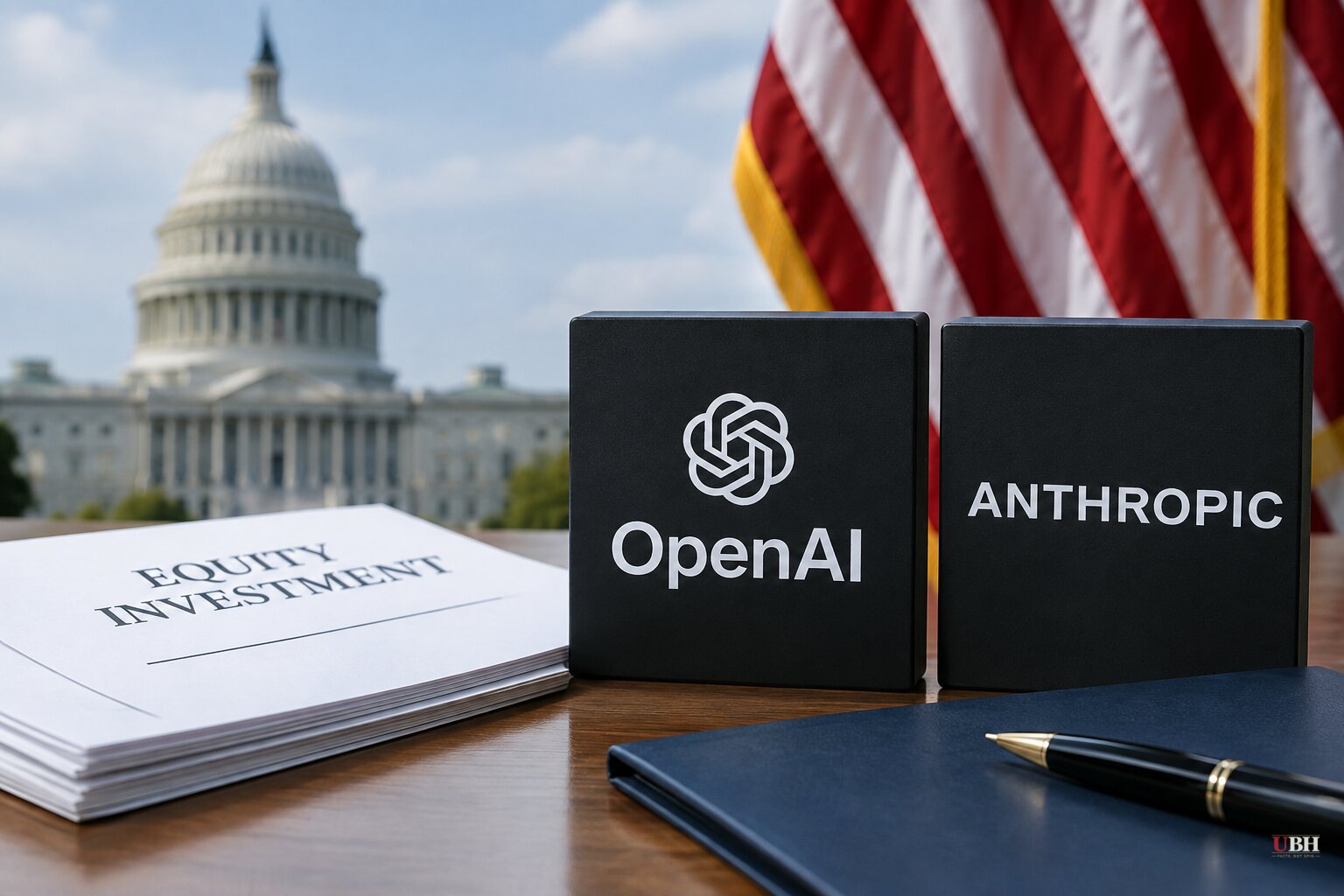
Since TIME conducted its interview with President Trump at the White House on September 28 and published it Thursday, October 1, the headline takeaway has been simple: the government might become a shareholder in the two biggest names in AI.
Asked why Washington shouldn't take equity in frontier AI labs the way it did with Intel, Trump didn't rule it out. "I might. Maybe I could do that," he told TIME reporters Eric Cortellessa and Sam Jacobs. He pointed to the numbers to make his case: the government paid $8.9 billion for roughly 9.9% of Intel last year, and that stake has since posted an unrealized gain of about $60 billion, according to the TIME interview and reporting from BigGo Finance.
Trump also noted the government already takes a cut from some Nvidia chip sales, framing both moves as part of a broader pattern he's comfortable repeating. "We've done a lot of deals like that, and that's my approach," he said, per BigGo Finance's translation of the exchange.
A Stake That May Not Exist Yet
OpenAI reportedly offered the government a 5% stake back in July, according to CoinGape and The Next Web. But Anthropic and the administration have both denied that any ownership talks are underway involving Anthropic specifically. So Trump's comments describe a hypothetical he's open to, not a deal that's been negotiated. No valuation, stake size, or timeline has been specified by the White House.
That distinction matters because Trump, in the same interview, explicitly said he has no plans to nationalize the AI labs. He's describing a passive equity position, not government control, a point The Next Web's writeup made clear by noting TIME asked the nationalization question directly and got a no.
The Amodei Thaw
The context for Trump's openness to a stake traces back to a dinner with Anthropic CEO Dario Amodei and his wife, held the night before the TIME interview. Trump described Amodei afterward as "a very smart person, somewhat different from what I had expected," according to BigGo Finance. On Amodei's past warnings about AI risk, Trump said, "I spoke to him about his views, and they're much different, I think, than what is portrayed in the media."
Anthropic and the administration have clashed for months over AI safety rhetoric. The dinner appears to have cooled things down right as Anthropic heads into its highest-stakes financial moment yet.
The IPO Anthropic Is Walking Into
Anthropic is scheduled to hold its first pre-IPO investor presentation for institutional investors on October 14, with a November listing target, according to BigGo Finance. Potential investors have floated a valuation as high as $2 trillion.
But the company's financials carry real risk. Roughly 47% of Anthropic's $4.6 billion in last year's revenue came through Amazon and Google's cloud marketplaces, meaning nearly half its business runs through two Big Tech partners it doesn't control. OpenAI, a direct rival for both capital and valuation benchmarks, has separately raised concerns that Anthropic's accounting treatment inflates its reported revenue figures, per BigGo Finance. That's an allegation from a competitor, not a finding from any regulator or auditor, and no formal accounting investigation has been announced.
The Self-Policing Deal
Separately, Trump has pushed tech CEOs including Elon Musk and Mark Zuckerberg to sign what he called a "morally binding" Joint Commitment on Frontier Responsibilities, according to The Guardian. The agreement sets up four layers of internal safety audits but includes no government regulators, no requirement to publish findings, and lets companies pick their own evaluators and oversight boards.
A president simultaneously rejecting binding AI regulation while floating the government as a financial stakeholder in the same companies it would be expected to oversee presents an obvious tension. That concern is one Congress hasn't addressed because no legislation authorizing or restricting AI equity stakes exists yet. Trump's counter-argument, laid out plainly in the TIME interview, is that regulation risks killing an industry where the U.S. is "winning by a wide margin" against China, and that AI data centers are already pumping real money into local tax bases, citing Loudoun County, Virginia's reported $1.5 billion in data-center tax revenue this year. TIME also cited polling showing 71% of Americans oppose new data center construction near them, a gap between federal enthusiasm and local sentiment that remains unresolved.
None of this is settled. Anthropic's October 14 investor presentation will be the next real test of whether the $2 trillion valuation holds up, and whether the stake question Trump raised turns into an actual Treasury proposal or stays a line in a magazine interview.
Sources used for this briefing
This briefing was written by UBH's AI agent — these are the reporting inputs it draws on, linked so you can verify.


