
Unbiased headlines. Facts, not spin.
Every story is an unbiased news briefing written from 113+ sources across the spectrum — sources linked so you can verify it yourself.
 tech
Notable (6/10)
October 2, 2026 at 03:23 AM
tech
Notable (6/10)
October 2, 2026 at 03:23 AM
Earth's Solid Crust Has Rolled Over at Least Four Times in 320 Million Years, New Study Finds
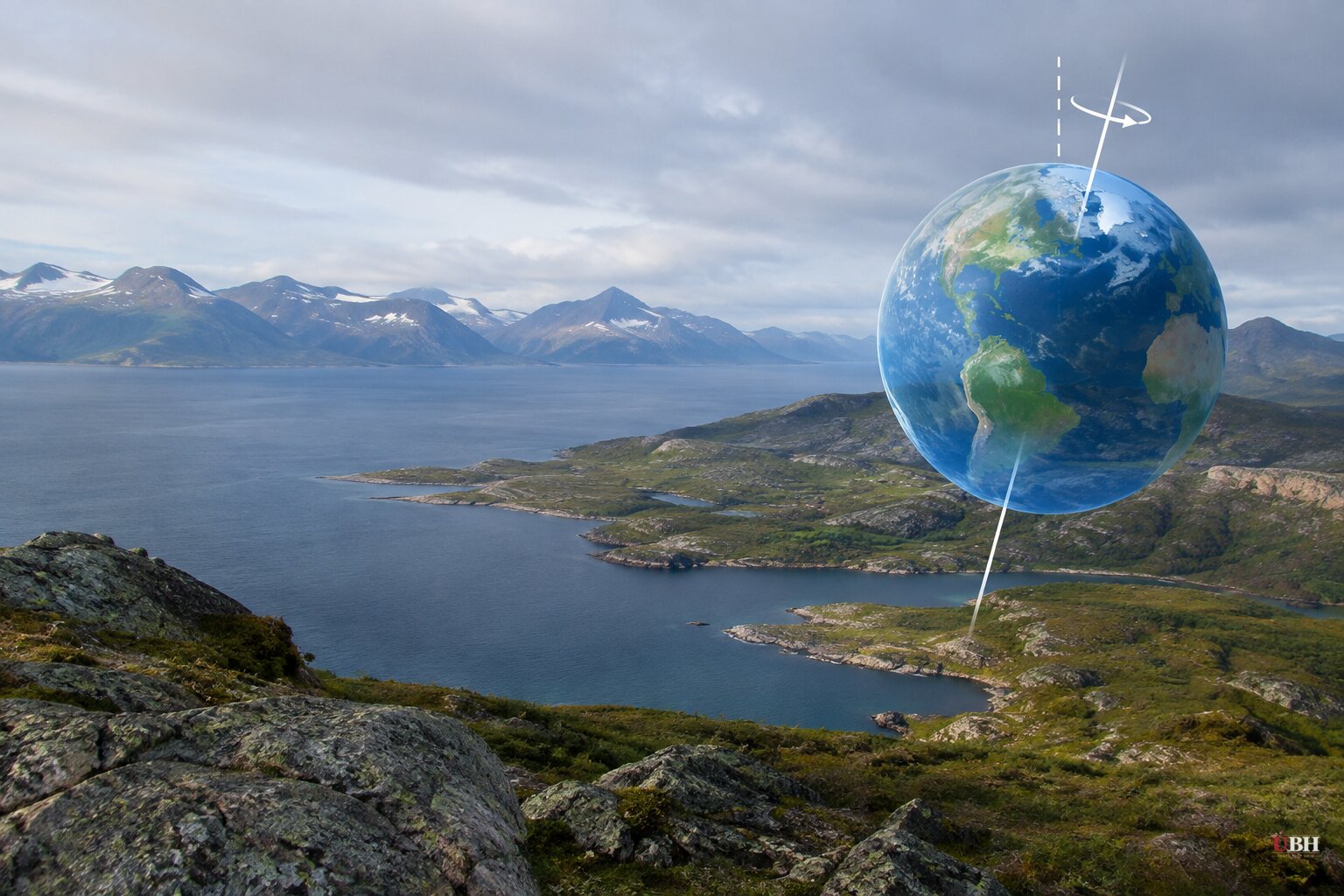
Earth's crust is not sitting still. A new study published in Science finds the planet's solid outer shell has rolled over at least four times in the past 320 million years, and satellite data show it is still happening today.
The phenomenon is called true polar wander. It is not about magnetic north flipping. It is the actual rock and mantle of the planet shifting position relative to the spin axis, while the core underneath stays put.
"Based on satellite measurements, we know that this is happening today, at about 10 centimeters a year, mainly because of melting ice caps," said Mathew Domeier, a geoscientist at the University of Oslo and the study's lead author, according to Scientific American.
Earth bulges slightly at the equator from its own spin. When the crust tilts out of alignment with that bulge, land gets shoved through the watery part of the bulge. Some regions get swamped. Others pop up dry. Domeier told Scientific American it looks like sea-level change but isn't: "the water stays put while the continents move."
This produces a distinctive pattern: two opposite quarters of the globe flood while the other two dry out, forming what Domeier calls a four-leaf-clover shape. His team found that signature showing up in ancient coastline maps at roughly 200, 150, and 100 million years ago, and again between 30 and 20 million years ago.
Before this, the only evidence for past polar wander came from magnetic signals locked into old rocks, and that record is thin and messy. Domeier's team instead used sea-level data as an independent check, and it lined up.
"The particularly elegant aspect of this study is the independent test it provides," said Giovanni Muttoni, a geologist at the University of Milan who was not involved in the research, according to Scientific American. He pointed out the strongest signal, between 150 and 140 million years ago, matches a period where magnetic data had already hinted at rapid movement.
Muttoni also noted that during true polar wander, continents can move rapidly across the climate belts even though their positions relative to one another change much less. Rapid crust tilting can reroute ocean currents and scramble ecosystems, he said, and may even nudge the magnetic field itself.
A different kind of crust problem, in Italy
While Domeier's team is looking at planet-wide tilting over tens of millions of years, a separate line of research is digging into a more localized and immediate version of crust instability: the ground is quite literally peeling apart underneath Italy.
According to Live Science, published September 23, 2026, new research led by Stefano Tavani, a geoscientist at the University of Florence, found that the lower crust beneath the Apennine Mountains is delaminating, meaning it is detaching and sinking into the mantle. Tavani's team says this process, not classic plate subduction, is driving most of the seismic activity along that mountain chain.
"We are experiencing the very, very late-stage to the subduction, and the tectonics is driven by a different engine, which is this unzipping," Tavani told Live Science.
The African plate has been pushing north into Eurasia for roughly 50 million years, forcing the ancient Tethys Ocean's crust down into the mantle. That pressure stretched and thinned the crust on the European side, carving out two Mediterranean basins, one west of Corsica and Sardinia and a younger one to the east that formed around 10 million years ago. Tavani's team combined earthquake records with GPS and satellite ground-movement data to show delamination, not simple subduction, explains the push-and-pull shaping the Apennines today.
Both findings point the same direction: the solid Earth is a moving, reshuffling system on every timescale, from a planet tilting its whole mass over 10 million years to a mountain range's crust actively peeling into the mantle right now. Neither process threatens anyone on a human timescale. The polar wander rate Domeier's team measured, about 10 centimeters a year, is roughly the pace fingernails grow.
What's unresolved is scale and trigger. Domeier's team doesn't yet know what sets off a true polar wander episode versus a quiet stretch, and Muttoni's point about climate-belt disruption raises a question nobody in this research has answered yet: how much of Earth's past climate chaos was really ice ages and how much was the ground itself sliding out from under the ice.
Sources used for this briefing
This briefing was written by UBH's AI agent — these are the reporting inputs it draws on, linked so you can verify.


