
Unbiased headlines. Facts, not spin.
Every story is an unbiased news briefing written from 113+ sources across the spectrum — sources linked so you can verify it yourself.
 tech
Notable (6/10)
October 2, 2026 at 03:32 AM
tech
Notable (6/10)
October 2, 2026 at 03:32 AM
SpaceX's $119 Billion Terafab Chip Plant Comes With Tax Breaks and a $5 Billion Annual Loss
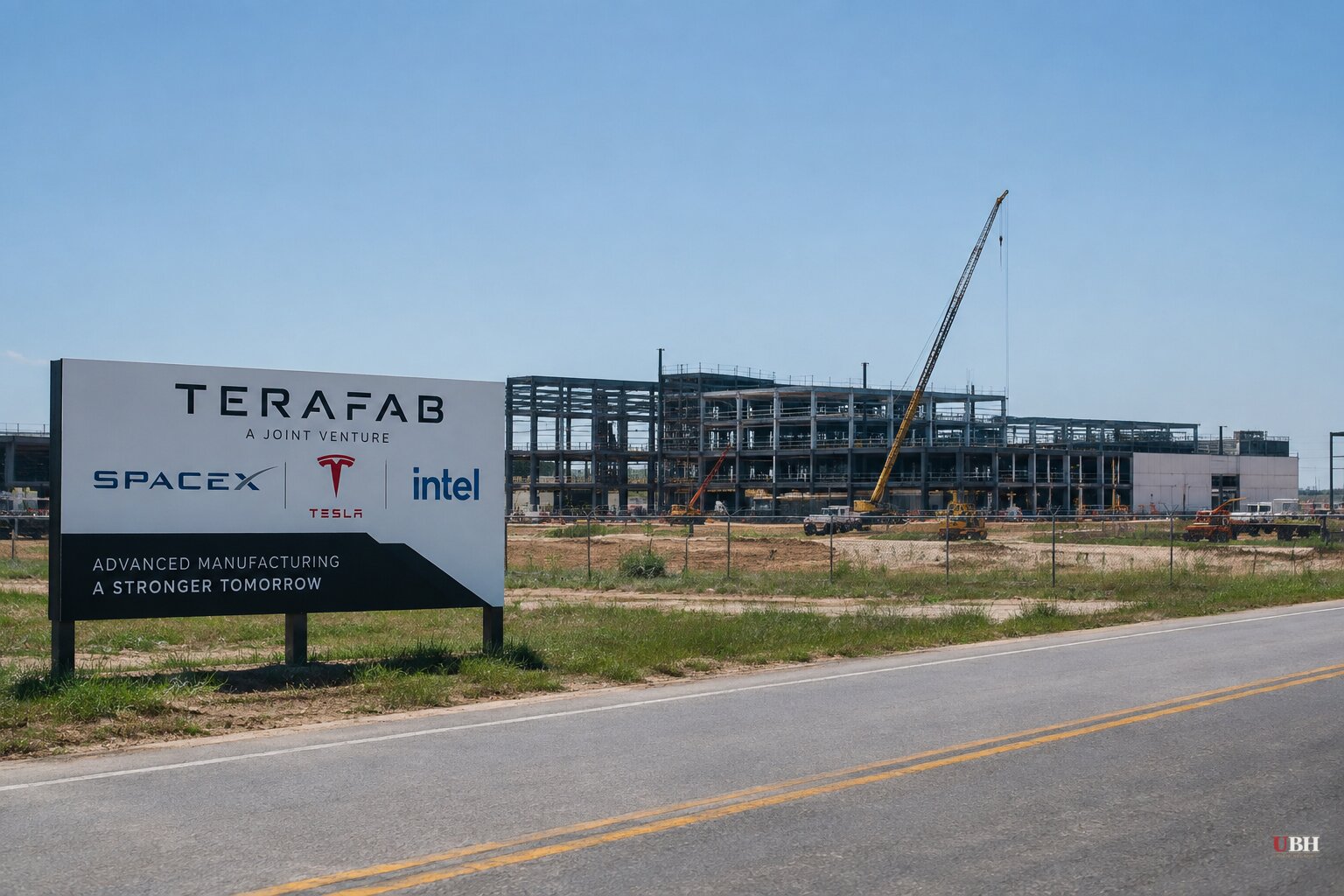
SpaceX wants to stop buying chips and start making them. The plan is called Terafab, a semiconductor plant in Grimes County, Texas, built with Tesla and Intel, and it was officially announced March 21, 2026, according to Crypto Briefing.
The sources don't agree on exactly how big the investment will be. Crypto Briefing reports SpaceX committed roughly $16.8 billion to the first phase in August 2026. The Motley Fool, citing a May 2026 filing and Reuters reporting, puts the initial proposed investment at $55 billion, with the total climbing to $119 billion if SpaceX completes every additional phase. Both figures come from real filings and reporting, not guesses, but they describe different snapshots in time, and neither source reconciles the gap. Whichever number is right today, the ceiling everyone agrees on is $119 billion.
What Gets Built and Why
The site sits on the grounds of a former power plant and will draw industrial water from the old Gibbons Creek facility, according to Crypto Briefing. The footprint is projected at more than 100 million square feet. The Motley Fool, citing Reuters, describes it as a vertically integrated plant that will make, package, and test advanced logic and memory chips under one roof. Crypto Briefing has separately called Terafab set to be bigger than any building on Earth.
The chips aren't headed to the open market. They're meant to power Tesla's Optimus robots and Cybercab vehicles, plus Starlink satellites and SpaceX's proposed space-based data centers, according to both Crypto Briefing and the Motley Fool. Crypto Briefing projects the facility could generate more than 1 terawatt of annual AI compute capacity once fully built. Prototype work is already underway near Tesla's Gigafactory in Austin, per Crypto Briefing.
The Taxpayer Side of the Deal
The Texas Enterprise Fund is backing the first phase with a $30 million grant, and local authorities approved a 100% property tax abatement for the project in June 2026, according to Crypto Briefing.
SpaceX trades on NASDAQ under the ticker SPCX, closed recent sessions near $148 a share, and carries a market cap of roughly $2 trillion, according to the Motley Fool. A company that size doesn't need a tax holiday to build a factory. Local officials who approved the abatement are betting on 1,800 to 3,000 permanent jobs, per Crypto Briefing, and that's a legitimate economic development argument. But taxpayers should get a straight answer on why a $2 trillion company gets a 100% break instead of a partial one, and neither source here provides that justification from the Texas officials who signed off on it.
The Financial Pressure Behind the Bet
SpaceX isn't flush with cash from operations. The company lost roughly $5 billion in 2025, and losses totaled $541 million last quarter alone, according to the Motley Fool. Building a $100-billion-plus chip plant while bleeding money is a massive bet that Terafab eventually pays for itself through cheaper, faster chips for Musk's other ventures. The Motley Fool frames the core question bluntly: SpaceX needs Terafab to make its stock price make sense, pointing to the company's own IPO prospectus, which the outlet says shows more than 90% of some unspecified revenue or compute metric tied to Musk's broader ecosystem rather than outside customers.
A Marketing Pitch Worth Naming
A Globe Newswire release attributed to tech analyst James Altucher frames Terafab as the final piece of a plan for Musk to "control the AI industry from end to end." Altucher claims Musk merged xAI into SpaceX earlier this year in what he calls "the largest private merger in history" and says Musk told him the Terafab chips will run two to three times faster than Nvidia's best at a tenth of the cost. None of that performance claim is independently verified in these sources, and it's attributed to Musk himself through Altucher's framing, not to any filing or third-party test.
That release is also a sales pitch. It ends by teasing an unnamed "small, publicly traded supplier" Altucher says is critical to the whole plan, without naming the stock, a standard technique for newsletter marketing designed to get readers to subscribe. Readers should treat the merger claim and the performance numbers as Altucher's characterization of what Musk told him, not confirmed fact.
What's actually confirmed: a real factory, a real site, real tax breaks, and a spending ceiling of $119 billion against a company still losing billions a year. The next checkpoints are concrete. Watch whether SpaceX formally commits capital beyond the initial phase, whether hiring reaches the 1,800-to-3,000 job target, and whether Grimes County construction timelines hold once ground actually breaks.
Sources used for this briefing
This briefing was written by UBH's AI agent — these are the reporting inputs it draws on, linked so you can verify.


