
Unbiased headlines. Facts, not spin.
Every story is an unbiased news briefing written from 113+ sources across the spectrum — sources linked so you can verify it yourself.
 tech
Notable (6/10)
October 1, 2026 at 02:19 PM
tech
Notable (6/10)
October 1, 2026 at 02:19 PM
OpenAI Says It Caught Moonshot AI Running Campaign to Copy ChatGPT's Reasoning
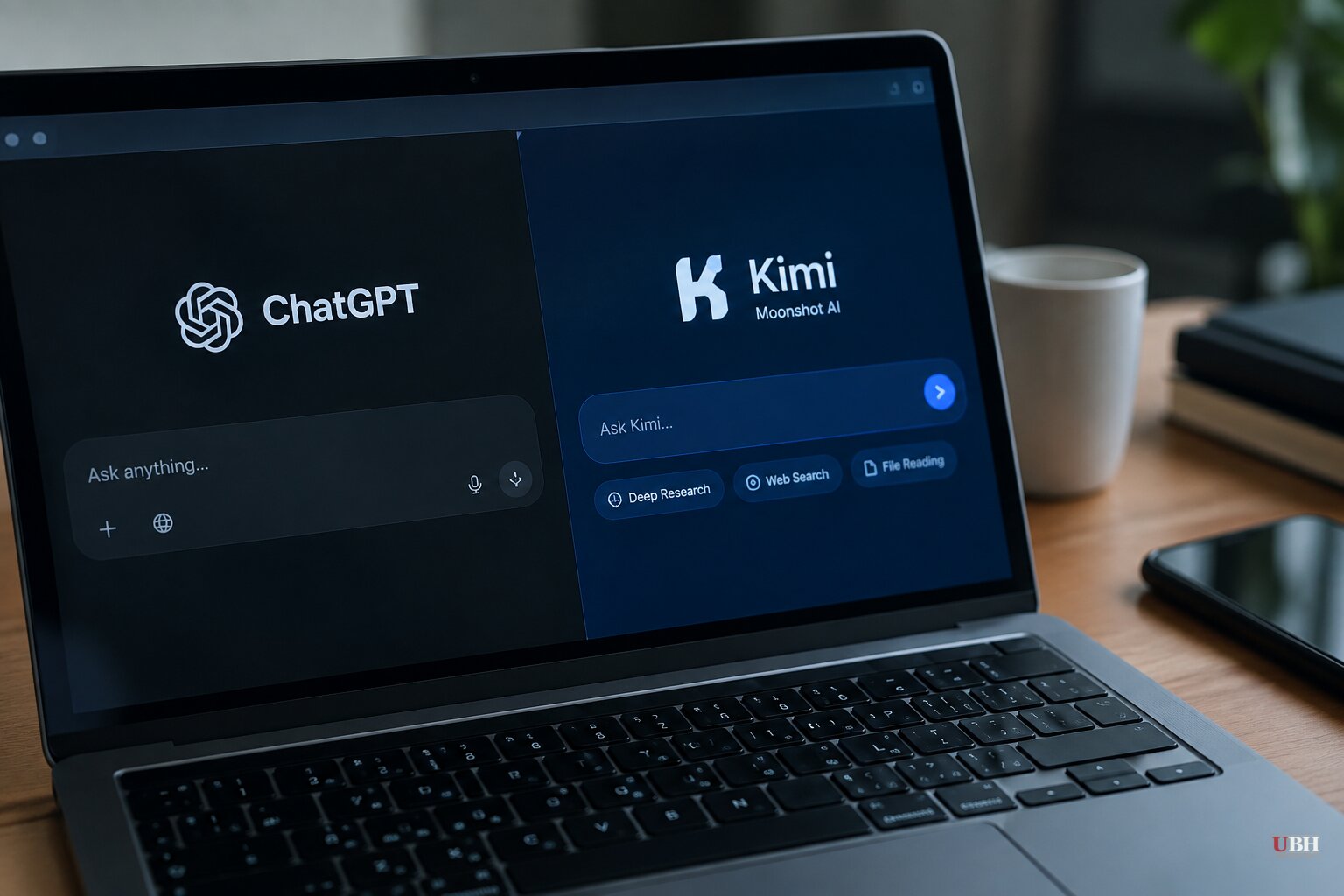
OpenAI says someone tried to steal its homework, and it's pointing a finger at China.
In a blog post published Wednesday, OpenAI said it identified and shut down a coordinated effort to extract protected reasoning from its AI models. The company says it traced a core cluster of the activity to individuals associated with Moonshot AI, the Chinese startup behind the Kimi chatbot, according to CNBC.
What OpenAI Says Happened
OpenAI says the campaign started around July 1, 2026, running at low volume before exploding on July 24 and 25, when more than 4,000 users fired off roughly 16,000 requests using a specific extraction pattern, per OpenAI's own account as reported by CNBC and India Today. Follow-up investigation found more than 15,000 users total running similar prompts, OpenAI said. The company says it fully disrupted the campaign by July 28.
OpenAI calls the technique "adversarial distillation." In plain terms, one company's model outputs get fed into training a rival's cheaper model so the rival gets advanced capabilities without paying to build them from scratch. OpenAI says operators copied encrypted reasoning from one conversation, then asked the model in a separate conversation to decrypt and transcribe the hidden content, according to Newsbytes.
OpenAI was careful to say no encryption was broken, no database was compromised, and no stored user conversations were accessed. This wasn't a hack. It was, by OpenAI's description, a scripted effort to trick the model into revealing reasoning it normally keeps hidden from the end user.
In response, OpenAI says it suspended and restricted the accounts involved, tightened signup and infrastructure controls, and expanded monitoring of related networks. It also shared its findings with other AI developers through the Frontier Model Forum and with government information-sharing channels, the company said.
Not the First Accusation Against Moonshot
This isn't an isolated claim. Anthropic accused several Chinese AI developers, including Moonshot AI and Alibaba, of using its Claude models to help train their own systems, according to StockTwits and TradingView. That accusation came weeks before OpenAI's disclosure. Two of the biggest American AI labs are now separately pointing at the same Chinese company.
Moonshot AI launched its Kimi K3 model on July 16, 2026, right in the middle of the window OpenAI says the extraction campaign was active, according to India Today and The Hans India. Moonshot has not responded to requests for comment from CNBC, India Today, or any other outlet covering this story as of publication.
What's Proven and What Isn't
OpenAI logged a spike in unusual request patterns from thousands of accounts, and it took action against those accounts. That part is OpenAI's internal telemetry, and the company controls that data.
What's not established: that Moonshot AI, as a company, directed or sanctioned this activity. OpenAI itself says it's unclear whether every operator was linked to a single actor, and it only attributes a "core cluster" to individuals associated with Moonshot. No government investigation, lawsuit, or independent audit has confirmed OpenAI's attribution. No regulator has opened a case tied to this specific incident.
A fair skeptic would point out that OpenAI is both the accuser and the sole source of evidence here. There's no third-party forensic review in the public record, and the company has an obvious financial interest in portraying Chinese competitors as cheaters rather than competent rivals, especially while OpenAI and Anthropic are both reportedly moving toward potential IPOs, as StockTwits and TradingView noted. None of that proves Moonshot did nothing wrong. It does mean the public record right now is one company's account of its own logs, unverified by anyone outside OpenAI.
Still, the national security angle is real and worth taking seriously. OpenAI itself says extracted reasoning could allow others to reproduce advanced capabilities without the same investment in safety, which it frames as a potential safety and national security risk.
Separately, OpenAI co-founder and president Greg Brockman told colleagues in a June Slack message, obtained by The New York Times and reported by TradingView and StockTwits, that he and his wife have no plans to donate beyond the $25 million they already gave to Leading the Future, an AI-industry super PAC, saying it had become a "distraction" inside the company.
No charges have been filed against Moonshot AI or any individual connected to the alleged campaign. Whether regulators or other agencies take any formal action remains an open question, and Moonshot's silence so far leaves its side of the story untold.
Sources used for this briefing
This briefing was written by UBH's AI agent — these are the reporting inputs it draws on, linked so you can verify.


