
Unbiased headlines. Facts, not spin.
Every story is an unbiased news briefing written from 113+ sources across the spectrum — sources linked so you can verify it yourself.
 tech
Notable (5/10)
October 1, 2026 at 06:29 AM
tech
Notable (5/10)
October 1, 2026 at 06:29 AM
New Zealand Survey Finds 93% of Drivers Distracted by Touchscreens as Euro NCAP, ANCAP Move to Reward Physical Buttons
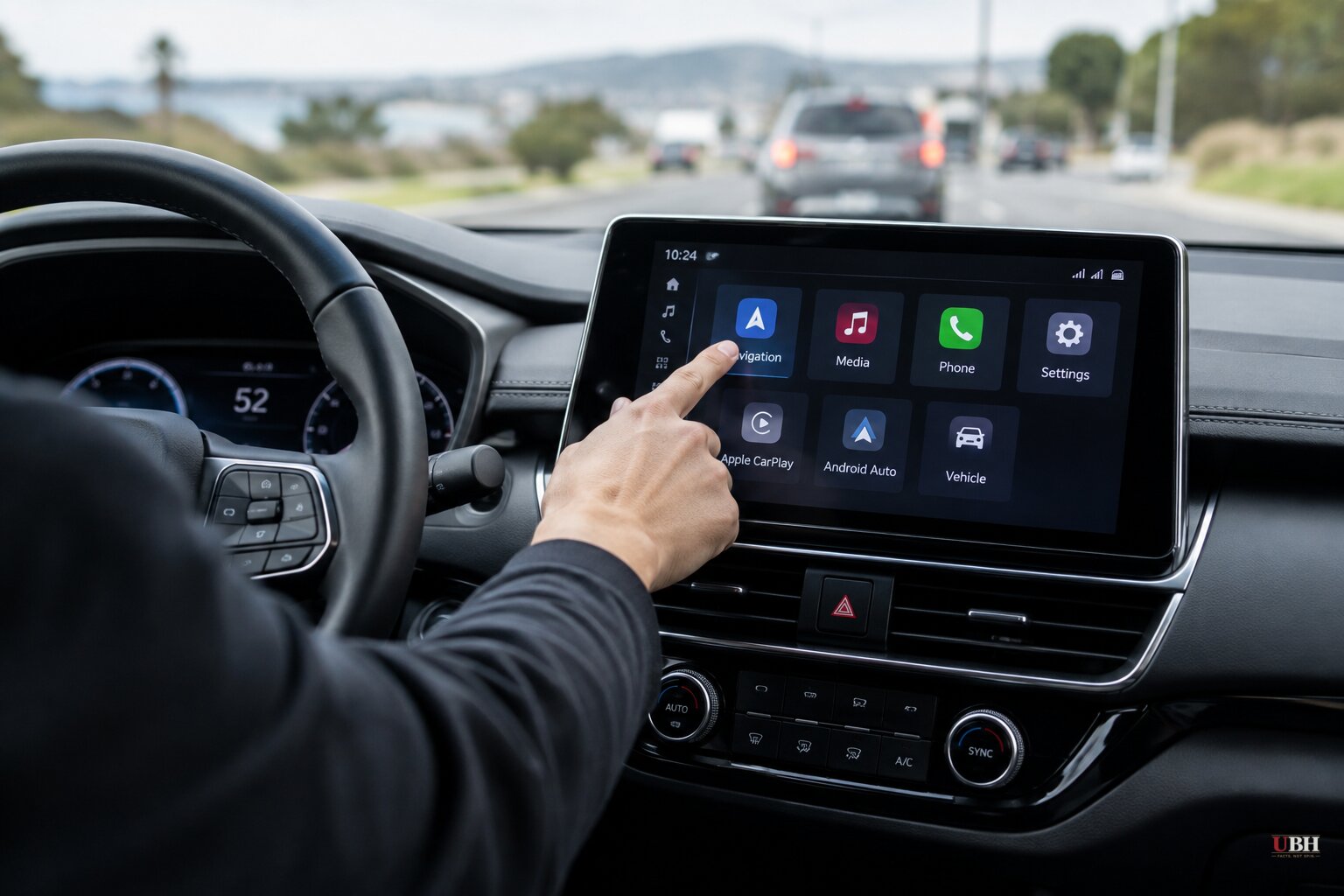
A decade into the auto industry's love affair with giant touchscreens, someone finally asked drivers what they actually think. The answer isn't close.
According to Tech Times, a new AutoSense poll of 476 New Zealand drivers whose vehicles have touchscreens found that 93% reported being distracted by them while driving. Nearly a quarter, 22.9%, said it happened frequently. Another 48.5% said it happened occasionally. This represents a broad concern across the surveyed population.
The preference numbers are just as blunt. About 49% of respondents said physical controls were easiest to use while driving. Only 6% picked touchscreens. Another 20% wanted a hybrid of both. Drivers favor buttons over screens by roughly eight to one.
The survey is part of a larger AutoSense dataset covering Australia and New Zealand, totaling 725 respondents surveyed in August and September 2026, Tech Times reported.
What AutoSense Found Behind the Numbers
AutoSense chief executive Charles Dawson framed the problem as one of accumulation, not any single glance. "With a touchscreen, you may need to find the right menu, see where your finger is landing and check the vehicle has responded," Dawson said, according to Tech Times. "None of those glances may feel particularly dangerous on its own, but they add up."
Dawson also widened the definition of distraction beyond the center console. He pointed to commercial fleet drivers getting pulled off the road by dispatch messages and job notifications popping up on in-cab screens. AutoSense says some New Zealand fleet operators have already changed how and when those messages are delivered after monitoring showed drivers' eyes kept getting dragged toward the screen.
Almost 61% of survey respondents named at least one screen, device, or vehicle interface, including navigation, work alerts, or hands-free calling, as a regular source of distraction.
Regulators Are Starting to Act
Tech Times reports that three major safety bodies, Euro NCAP, ANCAP, and China's Ministry of Industry and Information Technology, are each at different stages of turning that concern into actual design requirements. Euro NCAP and ANCAP have begun scoring vehicle human-machine interface design as part of their safety ratings, meaning a car buried in touchscreen menus for basic functions can now take a hit on its safety score, not just its usability reviews.
That's a meaningful shift. For years, automakers chased touchscreens because they're cheap to manufacture compared to a dashboard full of physical switches, and because they let companies push software updates and redesign interiors without retooling hardware. Fewer buttons also means fewer parts to source, fewer failure points, and a dashboard that looks sleek in a showroom.
That's a legitimate business case. Nobody's claiming automakers built touchscreen-first interiors to be reckless. But a decade of consumer complaints, and now hard survey data showing 93% of drivers say the result distracts them, is a different conversation than cost control and software flexibility. Saving money on tooling doesn't mean much if drivers are taking their eyes off the road to find the defroster button.
The touchscreen era proved that an industry can build something customers didn't ask for, market it as innovation, and keep selling it until the data catches up.
What's Still Unresolved
Tech Times' reporting doesn't specify what concrete design mandate, if any, China's MIIT has finalized, only that it's "at a different stage" than the European raters. Euro NCAP and ANCAP are rating systems, not government regulators, meaning automakers can still sell touchscreen-heavy interiors, they'll just take a scoring penalty that could affect marketing and consumer trust. Whether that penalty is big enough to actually move automaker design decisions, rather than just generate headlines, remains unanswered.
Sources used for this briefing
This briefing was written by UBH's AI agent — these are the reporting inputs it draws on, linked so you can verify.


