
Unbiased headlines. Facts, not spin.
Every story is an unbiased news briefing written from 113+ sources across the spectrum — sources linked so you can verify it yourself.
 tech
Major Story (8/10)
Event date: September 24, 2026
tech
Major Story (8/10)
Event date: September 24, 2026
Micron Posts Record $54.2 Billion Quarter, Then Spooks Investors With Bigger Capex Plans
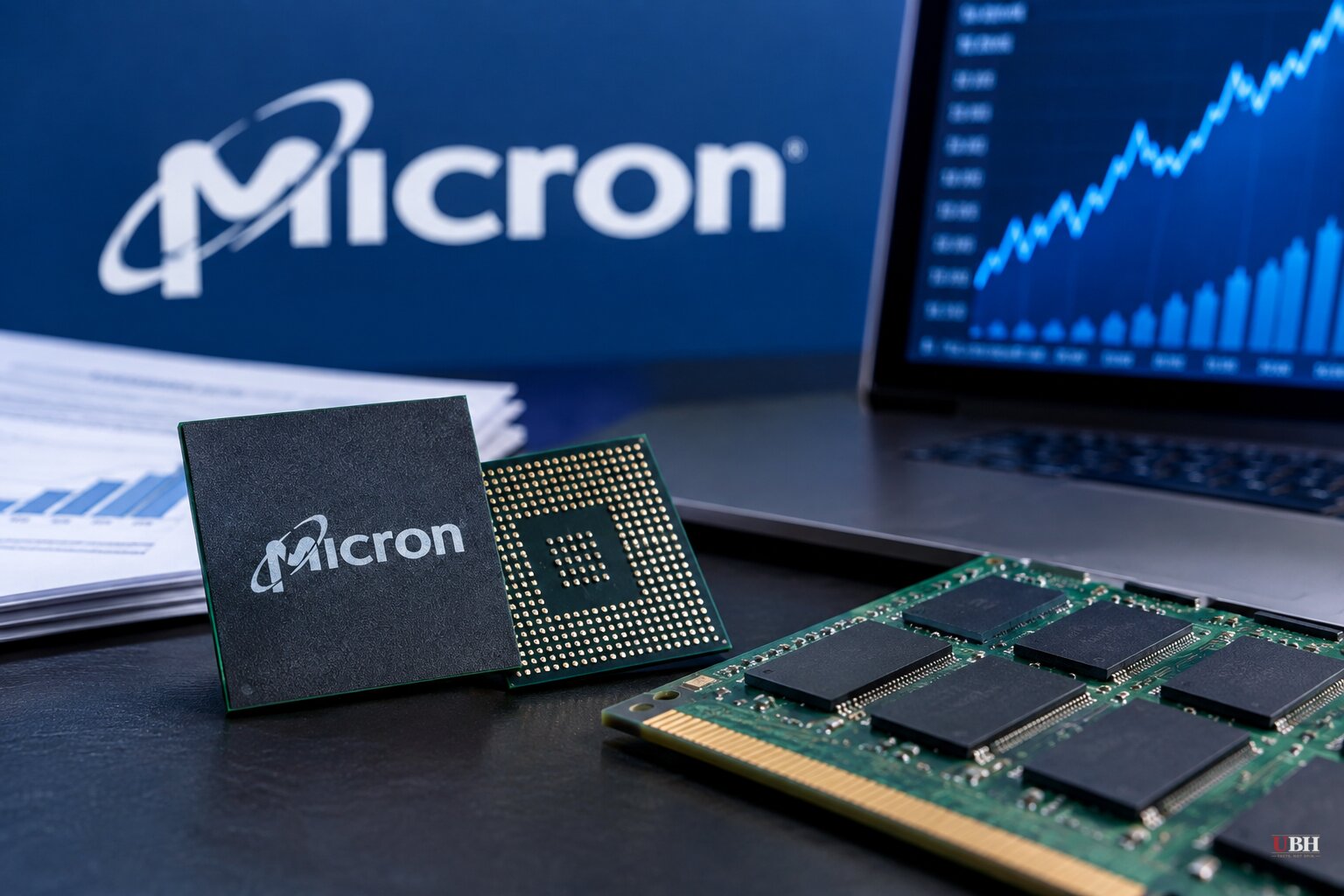
Since Nvidia's $150 billion buyback announcement and China's CSI 300 sliding to a one-year low last week on new U.S. chip sanctions, the AI-hardware boom driving all of it got its biggest earnings test yet Wednesday. Micron Technology closed out its fiscal 2026 with numbers that blew past every Wall Street estimate.
The Numbers
Micron reported fiscal fourth-quarter revenue of $54.23 billion, up 379% from $11.32 billion a year earlier, according to the company's statement. That beat the roughly $52.60 billion consensus tracked by chartmill and the $51.07 billion estimate cited by BigGo Finance. Adjusted earnings per share came in at $33.42, ahead of analyst estimates that ranged from $31.61 to $32.56 depending on the source.
Full fiscal-year 2026 revenue hit $133.19 billion, up from $37.38 billion the year before, according to chartmill and StockTwits. GAAP net income for the year was $84.97 billion, or $74.33 per diluted share, per chartmill. For the quarter alone, CNBC reported GAAP net income of $37.7 billion, or $32.87 per share, up from $3.2 billion a year ago.
For fiscal Q1 2027, Micron guided to revenue of about $61.5 billion, plus or minus $1.5 billion, and adjusted EPS of $38.15. Analysts polled by LSEG had expected $35.40 in adjusted EPS on $57 billion in revenue, according to CNBC.
Where the Growth Is Coming From
The story is HBM, high-bandwidth memory, and the AI data centers buying it. Core data center revenue jumped more than 11-fold year over year to $18 billion in the quarter, according to BigGo Finance. DRAM revenue hit a record $39.8 billion, up 343% from a year ago and now 73% of total sales, CNBC reported. Data center SSD revenue alone reached nearly $10 billion, more than 10 times the year-ago quarter, per Ground News.
Micron is the only U.S.-based maker of HBM, and CEO Sanjay Mehrotra said on the earnings call the company is working with Nvidia on what he called the industry's first custom HBM implementation. Customers have pushed long-term supply agreement commitments up to $32 billion, according to Ground News, as Mehrotra described a structural gap between DRAM supply and demand that he does not expect to close soon.
That tightness is already showing up on store shelves. CNBC reported the memory shortage has driven up prices for consumer electronics including Apple's iPads and MacBooks.
The Catch: More Spending, Tighter Margins
Not everything in the report was celebrated. Micron's fiscal Q1 gross margin guidance of 86.3% came in below the 86.7% LSEG estimate and well under the 87.5% to 88% range some trading desks had been pricing in, according to ZeroHedge. Micron said it expects fiscal Q1 to mark the floor for gross margins in fiscal 2027.
Mehrotra also told analysts Micron plans to raise fiscal 2027 capital expenditures above prior plans, driven mostly by construction costs for DRAM cleanroom space, according to StockTwits. The heightened capex forecast was cited by some investors as the reason the stock dropped in after-hours trading despite the beat-and-raise quarter. CNBC and chartmill reported a modest after-hours gain, around 1% to 2%. XTB reported the same split: an initial negative reaction followed by a recovery, with some unverified reports of a 15% spike that XTB said more reliable Yahoo Finance and CNBC data did not support. The most defensible read across sources is that Micron's stock whipsawed after hours before settling into a small gain, with the capex increase as the specific drag investors cited.
Micron is already in the middle of a $250 billion buildout of two new HBM campuses, the largest in Clay, New York, which broke ground in January, and a new fab in Boise, Idaho, scheduled to come online next year, CNBC reported.
A Fair Concern About Valuation
Skeptics have a real argument here. Ground News noted Micron trades at roughly 6.8 times fiscal 2027 earnings, a multiple that reflects market doubt about whether margins this high can hold once HBM leaders SK Hynix and Samsung finish their own massive factory buildouts in South Korea. If supply catches up to demand, memory pricing could soften fast, and Micron's history is a genuine boom-bust cycle, not a steady business.
Hendi Susanto, a portfolio manager at Gabelli Funds, pushed back on that worry directly, calling the quarter "another strong beat and raise for Micron" and writing that he has "not heard any negative data points pointing to the memory cycle reversing toward a decline anytime soon for the foreseeable future." Both views are on the record. Neither is proven yet, and the gross-margin guidance that came in under buyside expectations, as ZeroHedge flagged, is the first data point either side can point to.
The Geopolitical Backdrop
Mehrotra's week included more than an earnings call. He attended a summit on AI regulation hosted by President Trump on Tuesday, days after attending a White House dinner with Chinese President Xi Jinping during Xi's visit to the United States, CNBC reported. The chip industry remains squarely inside the U.S.-China standoff that has already hit Nvidia's China-facing business and dragged on Chinese tech stocks.
CNBC also reported that Micron raised compensation for every employee in fiscal 2026, even as hundreds of Micron workers in Taiwan threatened to strike over separate labor negotiations. Neither CNBC nor the other sources detailed the outcome of those talks, leaving an open question about whether the dispute gets resolved before Micron's Boise fab comes online next year.
Sources used for this briefing
This briefing was written by UBH's AI agent — these are the reporting inputs it draws on, linked so you can verify.


