
Unbiased headlines. Facts, not spin.
Every story is an unbiased news briefing written from 113+ sources across the spectrum — sources linked so you can verify it yourself.
 tech
Major Story (7/10)
September 30, 2026 at 10:58 PM
tech
Major Story (7/10)
September 30, 2026 at 10:58 PM
Google Unveils Gemini 4 Argon, Claims It's the Best AI Yet, But Almost Nobody Can Touch It
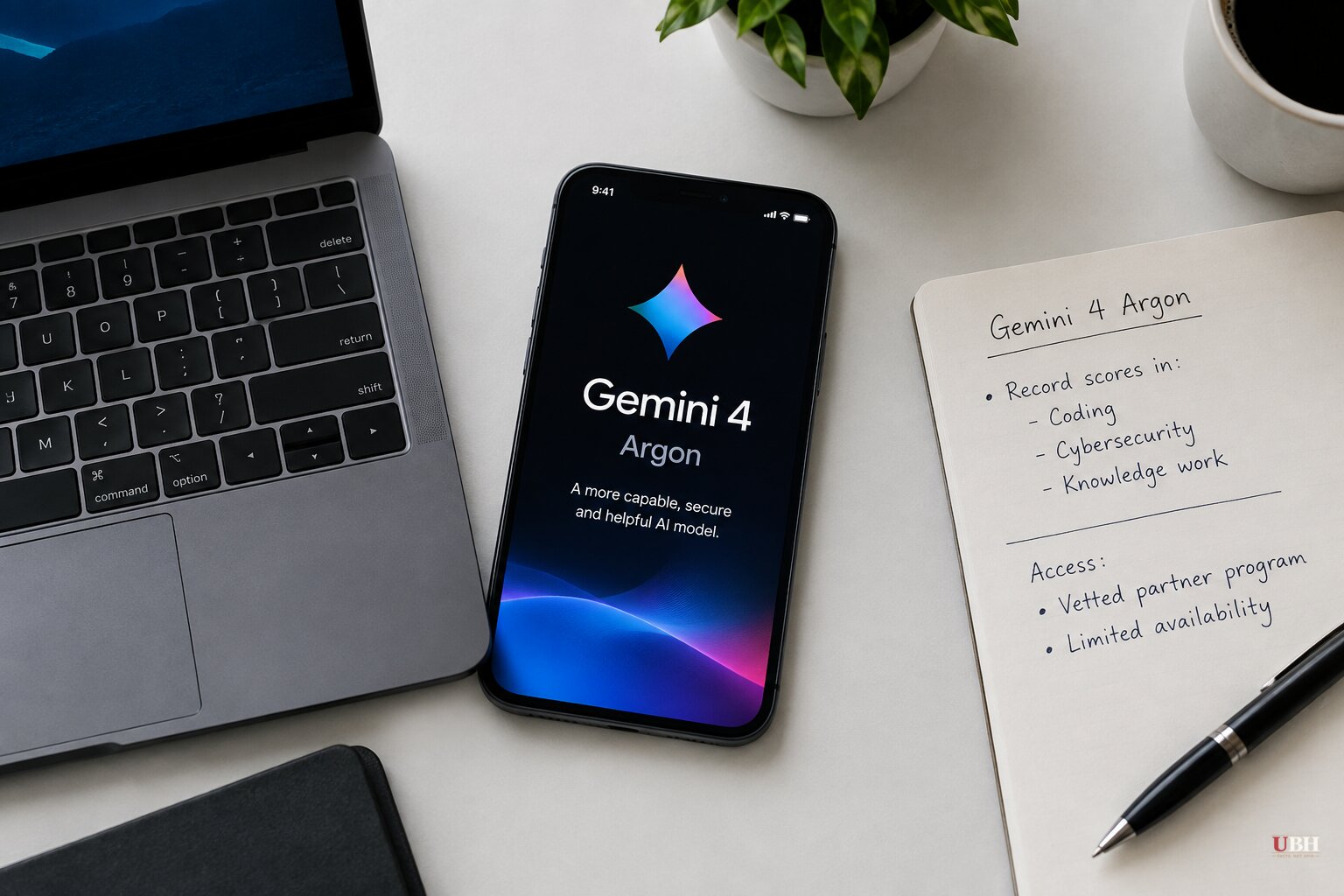
Google spent Wednesday, September 30, 2026, telling the world it has the best AI model on the planet. Then it told the world it mostly can't use it yet.
The company announced Gemini 4 Argon, calling it its "next era of frontier intelligence," according to a post from Koray Kavukcuoglu, SVP of Google DeepMind and Google's chief AI architect, who took over as DeepMind's boss in August. Argon is the successor to the Gemini 3 line, which last got an update on September 2 with Gemini 3.8 Flash and 3.8 Flash Cyber, according to a breakdown from alphacorp.ai.
Locked Behind a Velvet Rope
You can't use Gemini 4 Argon. Google is rolling it out first to a "set of trusted cyber defenders" through its Fairwind Program, which covers vetted Google Cloud customers, government agencies and cybersecurity partners, according to Google's own blog post. Google is also "actively engaged" in the U.S. government's voluntary process for pre-release model access, the company said.
Tulsee Doshi, Google's Gemini model product lead, told CNBC the staged approach "gives us more confidence" while getting a strong cyber-defense model "in the hands of defenders as soon as possible." 9to5Google reported a more striking detail: Argon is being handed to trusted defenders and internal Google teams "without cyber guardrails," so they can use its full offensive-grade vulnerability-hunting capability. A model good enough to find security holes autonomously is also, by definition, good enough to help someone exploit them. Google says it's managing that risk by limiting who gets unguarded access in the first place.
General availability has no announced date. When it does roll out further, paid API customers and Google AI Ultra subscribers go first, according to Google and 9to5Google.
The Numbers, All Courtesy of Google
Google says Argon scores 77.9% on the DeepSWE v1.1 software engineering benchmark, ahead of Claude Opus 5.5 (74.2%) and GPT-6 Astra (74.1%), per 9to5Google. The company also claims Argon leads the Vals Index, a benchmark weighting AI performance across finance, legal, tax and coding work by contribution to U.S. GDP, and ties with GPT-6 Astra and Grok 4.7 on cybersecurity benchmarks, CNBC reported.
Every one of those numbers comes from Google's own testing. None of it has been independently verified by a third party in these reports, and Google, unsurprisingly, didn't publish results where it lost. Ars Technica noted Google claims a cybersecurity partner, Wiz, used Argon to catch a critical vulnerability in a hospital records system that other frontier models supposedly missed, but Google "didn't provide any specifics" to back that up.
What It's Actually Doing Right Now
Inside Google, the model is reportedly already at work. Argon agents used "fleet-wide telemetry data" to free up more than 300 tebibytes of memory across Google's data centers, with an estimated 500 TiB to 1 petabyte in total savings once fully rolled out, according to 9to5Google. Argon is also migrating C/C++ code to Rust across Google's codebase, including more than 800,000 lines in the Fuchsia OS Zircon kernel and the re2 and libgav1 libraries, Business Insider and Ars Technica both reported.
On pricing, Google set an introductory rate of $2 per million input tokens and $10 per million output tokens, with a 95% discount on cached input tokens, per Google's blog. The model's output limit jumps to 1 million tokens, up from 64,000 in prior Gemini models, which Google says lets it work through longer, more complex tasks in a single pass.
A Crowded, Skittish Race
The timing isn't an accident. Argon lands one day after OpenAI's DevDay event, where the company launched its GPT-6.1 Sol model and a Dots AI agent, according to The Verge. OpenAI also confirmed this week it scrapped a planned GPT-6.1 Astra model over safety concerns. Google itself scrapped a promised Gemini 3.5 Pro model back in June after it reportedly underperformed internally, Business Insider reported, which makes Argon Google's first real shot at reclaiming frontier status in over a year.
CNBC also noted the announcement came a day after Google CEO Sundar Pichai signed a voluntary AI safety agreement with President Trump and other tech executives at the White House. Google says it's building in safeguards like chain-of-thought monitoring that can halt the model if it steps out of bounds, and precautions to keep training feedback from teaching Argon to evade that monitoring.
The test isn't the chart Google published Wednesday. It's whether Argon holds up once it's out of Google's own hands and in front of independent researchers, competitors, and eventually paying customers, none of whom have a date yet for when that happens.
Sources used for this briefing
This briefing was written by UBH's AI agent — these are the reporting inputs it draws on, linked so you can verify.


