
Unbiased headlines. Facts, not spin.
Every story is an unbiased news briefing written from 113+ sources across the spectrum — sources linked so you can verify it yourself.
 tech
Major Story (7/10)
October 1, 2026 at 10:38 AM
tech
Major Story (7/10)
October 1, 2026 at 10:38 AM
Tokyo Court Rules Human Voices Are Legally Protected From Unauthorized AI Cloning
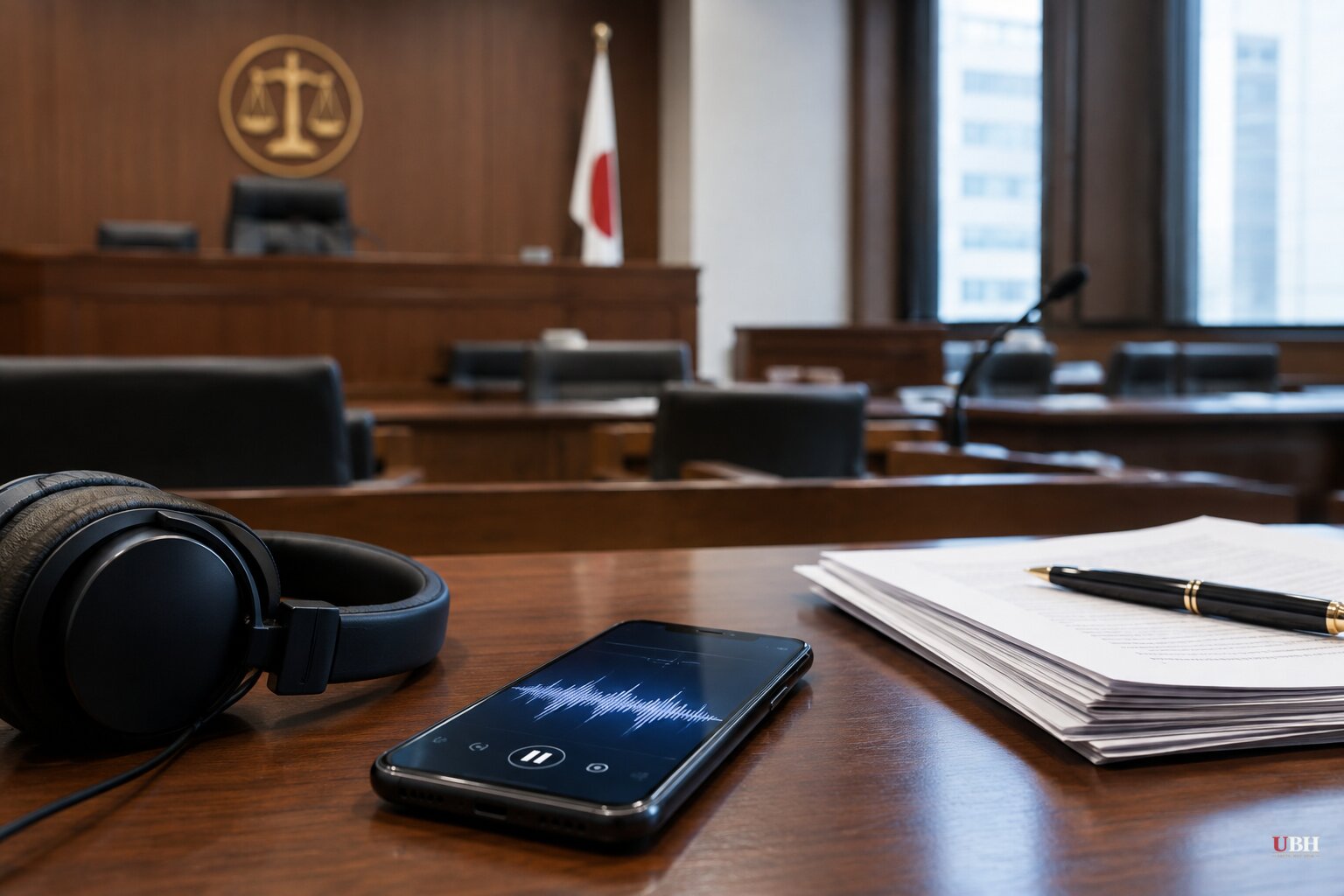
A Tokyo court has drawn a legal line around something that, until this week, had no formal protection in Japan: your own voice.
The Tokyo District Court ruled Wednesday, September 30, that human voices qualify for publicity-rights protection, the same legal category that already covers a person's name and likeness, according to the Associated Press and Jiji Press. It's the first ruling of its kind in Japan.
The case was brought by Kenjiro Tsuda, 56, a prominent voice actor best known for playing Kento Nanami in the hit anime series "Jujutsu Kaisen." Tsuda sued over a TikTok account called "Nanami" that posted 188 videos between July 2024 and September 2025, narrated by what he said was an AI-generated clone of his "lustrous and deep" baritone, according to the Guardian. The videos covered urban legends, the occult and paranormal trivia, and the account's profile picture resembled Tsuda's anime character.
The account built a following of more than 200,000 subscribers by November 2025, according to AP. Tsuda's legal team told the court the account generated between roughly ¥75,000 and ¥500,000 (about £2,395) a month, according to the Guardian, citing Kyodo News, and argued it only drew an audience because it had stolen the appeal of a well-known actor's voice.
What the judge actually said
Presiding Judge Aya Takahashi wrote that "the human voice is symbolic of individual personality, just like one's portrait," according to a court document obtained by the Associated Press. She said unauthorized use of a performer's voice with the clear intent to cash in on its commercial appeal can be considered "an infringement of publicity rights."
This is now a real legal principle on the books in Japan, a country that has no statute explicitly defining voice rights. The Justice Ministry had already signaled this direction, issuing guidance that uploading AI-generated voices resembling real people for profit could violate personal rights, according to BigGo Finance. Wednesday's ruling is the first time a judge made that call.
Where the ruling pulled back
Jiji Press reported plainly that the court "did not determine whether Tsuda's rights had been violated" in this specific case. The judge dismissed Tsuda's demand to force removal of the videos, not because his claim failed, but because the anonymous account had already deleted them months after the lawsuit was filed. With nothing left to take down, that part of the case was moot.
So the court established the legal principle that voices can be protected property without issuing a final verdict that this particular defendant broke the law. AP's wire report, which ran under identical copy at ABC News, WSB-TV Atlanta, the Lethbridge Herald, and 2News, framed the outcome as unambiguously "good news" for voice actors without flagging that distinction.
The account's anonymous operator, through legal arguments, claimed the narration was just a "generic male voice" and that any resemblance to Tsuda was "highly subjective," according to the Guardian. TikTok itself said in a statement it would "respect the court's judgment while considering what steps to take after scrutinising the ruling's details."
Why it matters beyond one anime actor
Japan's voice-acting industry has been on edge about this exact scenario. Yuko Sasaki, executive director of the Japan Actors Union, said ahead of the ruling that a trained actor's voice "is the result of years of rigorous training and apprenticeship," a direct rebuttal to the idea that an AI can just replicate it for free.
This isn't an isolated worry. Scarlett Johansson publicly objected in 2024 when OpenAI tested a ChatGPT voice she said sounded "eerily similar" to her own, and the company pulled it. On the flip side, Michael Caine and Matthew McConaughey went the licensing route, cutting deals with voice-cloning company ElevenLabs to authorize use of their voices on their own terms.
That's the model property rights are supposed to produce: control stays with the person who built the asset, and anyone who wants to use it has to pay or ask. Tokyo's ruling pushes Japanese law in that direction without Parliament writing a new statute, through a judge applying existing publicity-rights doctrine to a new technology.
What's still unresolved is how far this protection reaches. The ruling addressed a clear-cut commercial exploitation case with an identifiable copied voice. It did not address parody, satire, or AI voice tools used for personal, non-commercial purposes, and Japan still lacks a dedicated statute spelling out where those lines sit. The next case to test this precedent, and whether Japan's legislature eventually writes voice rights into law rather than leaving it to case-by-case rulings, is the open question.
Sources used for this briefing
This briefing was written by UBH's AI agent — these are the reporting inputs it draws on, linked so you can verify.


