
Unbiased headlines. Facts, not spin.
Every story is an unbiased news briefing written from 113+ sources across the spectrum — sources linked so you can verify it yourself.
 tech
Notable (5/10)
October 2, 2026 at 05:05 AM
tech
Notable (5/10)
October 2, 2026 at 05:05 AM
SpaceX Crew-13 Docks at ISS in Record Time as Boeing's Starliner Stays Grounded
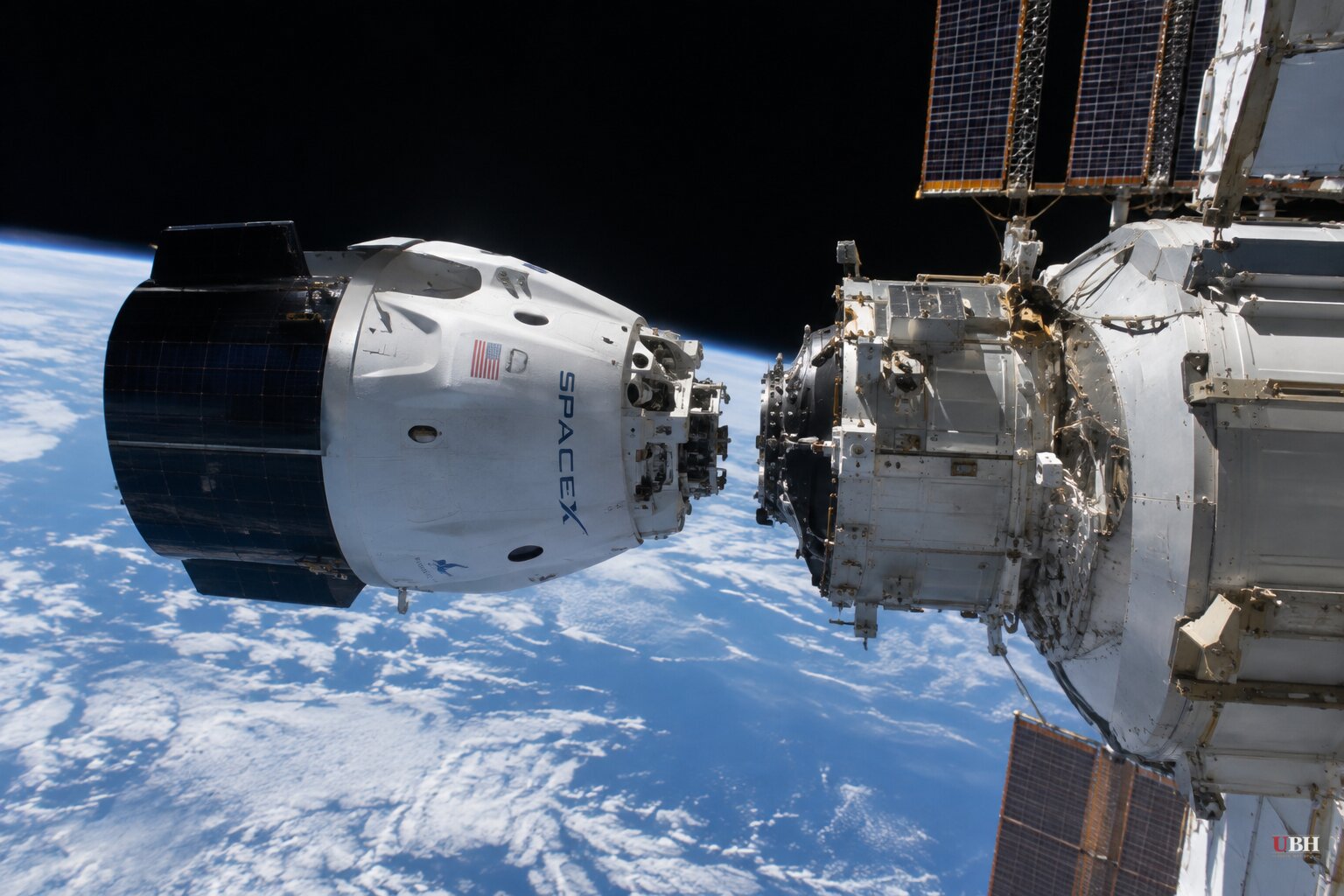
A SpaceX Falcon 9 lifted off from Space Launch Complex 40 at Cape Canaveral Space Force Station at 11:10 a.m. ET on Thursday, October 1, 2026, carrying four astronauts to the International Space Station. Crew Dragon Grace docked at the station's Harmony module at 7:05 p.m. EDT, according to Space.com, a trip of 7 hours and 55 minutes.
That's the fastest any American spacecraft has ever reached the ISS. The previous record, 12 hours and 33 minutes, belonged to SpaceX's uncrewed CRS-31 cargo run in November 2024. The fastest prior crewed U.S. flight was Crew-11 in August 2025, at 14 hours and 43 minutes.
"We got lucky this time," said Julianna Scheiman, SpaceX's director of NASA science and Dragon programs, at the post-launch briefing, according to Space.com. "The space station was in an opportune spot in space, and the orbital mechanics, the physics of it all, worked out for it to be the shortest launch-to-docking time we've had to date."
The overall speed record still belongs to Russia. A Soyuz capsule reached the ISS in 3 hours and 3 minutes in October 2020, using an aggressive two-orbit "fast-track" trajectory that Russian mission planners favor. Space.com noted the gap isn't about raw Dragon performance, it's a difference in mission-control strategy.
Who's Aboard
Crew-13 is commanded by NASA's Jessica Watkins, a geologist making her second spaceflight after Crew-4 in 2022. She's joined by NASA pilot Luke Delaney, Canadian Space Agency astronaut Joshua Kutryk and Roscosmos cosmonaut Sergey Teteryatnikov, according to CBS News. Delaney and Kutryk are former military test pilots; Teteryatnikov served in the Russian submarine force before becoming a cosmonaut. The three are the 296th, 297th and 298th people to fly aboard the ISS.
Kutryk's wife, Heather, is due to give birth to the couple's third child around Thanksgiving, roughly two months into the six-month mission. CBS News reports that will make them the fourth couple in spaceflight history to have a child born while one parent is off the planet. Kutryk also carried a family heirloom aboard Dragon: a pocket watch more than 100 years old. Newscord's outlet comparison found that detail showed up in only one of eight outlets it checked, a small but telling gap in how differently newsrooms covered the same launch.
NASA Administrator Jared Isaacman called the mission "another demonstration of America's unmatched capability in human spaceflight and the strength of our commercial partnerships," per Newscord. ISS Program Manager Dana Weigel noted the crew's mission patch incorporates elements of Apollo 13, saying it "really represents what we can do when we're faced with extremely challenging and dire circumstances."
Starliner and the Redundancy Problem
The record time is the headline NASA and SpaceX wanted. Behind it lies a more serious issue: what Crew-13 confirms about redundancy, or the lack of it, in America's crew-launch capability.
Boeing's Starliner was designed in 2014 to alternate ISS crew rotations with Dragon. It hasn't flown astronauts since its 2024 Crew Flight Test, when helium leaks and five of eight reaction control system thrusters malfunctioned in transit, according to SpacePolicyOnline's reporting cited by Tech Times. NASA brought the capsule home uncrewed while its two-person crew returned to Earth aboard a Dragon in March 2025. In February 2026, NASA formally classified that failure a "Type A mishap", the agency's most serious designation.
Boeing's next Starliner flight, an uncrewed cargo-only mission under a modified contract, is targeted for no earlier than the fourth quarter of 2026, Tech Times reported. Until Starliner returns to crewed service, if it ever does before the ISS is retired around 2030, Dragon is the only path NASA has to get its astronauts to orbit.
One wire item in the source mix, from Newsbytes, framed the moment differently, claiming Crew-13 "could be one of SpaceX's last rides" before a Starship transition and that "NASA is also teaming up more with Boeing's Starliner capsule for future missions." Neither claim is supported by the other reporting here. NASA's own messaging around Crew-13, and the Type A mishap classification detailed by Tech Times and SpacePolicyOnline, point the opposite direction: Starliner is further from flying crew, not closer, and Dragon remains NASA's sole crew vehicle for the foreseeable future.
A reasonable concern raised by Starliner's defenders, including Boeing engineers quoted in earlier NASA safety reviews, is that losing a second independent crew vehicle leaves the U.S. program with no backup if Dragon ever faces a grounding of its own. That's a legitimate single-point-of-failure argument. It doesn't change the fact that, as of today, it's the reality NASA is operating under.
Crew-13's four new station residents will spend roughly six months aboard the ISS, conducting research on stem-cell-derived heart and Parkinson's disease models, blood flow abnormalities, and crop growth in microgravity, per NASA's mission materials cited by Newscord. They relieve the Crew-12 team, NASA's Jessica Meir and Jack Hathaway, ESA's Sophie Adenot and Roscosmos cosmonaut Andrey Fedyaev, who launched in mid-February 2026 and are expected to depart for a water landing off the California coast as soon as Monday, October 5, according to Space.com and USA Today.
Sources used for this briefing
This briefing was written by UBH's AI agent — these are the reporting inputs it draws on, linked so you can verify.


