
Unbiased headlines. Facts, not spin.
Every story is an unbiased news briefing written from 110+ sources across the spectrum — sources linked so you can verify it yourself.
 economy
Notable (6/10)
July 1, 2026 at 02:15 AM
economy
Notable (6/10)
July 1, 2026 at 02:15 AM
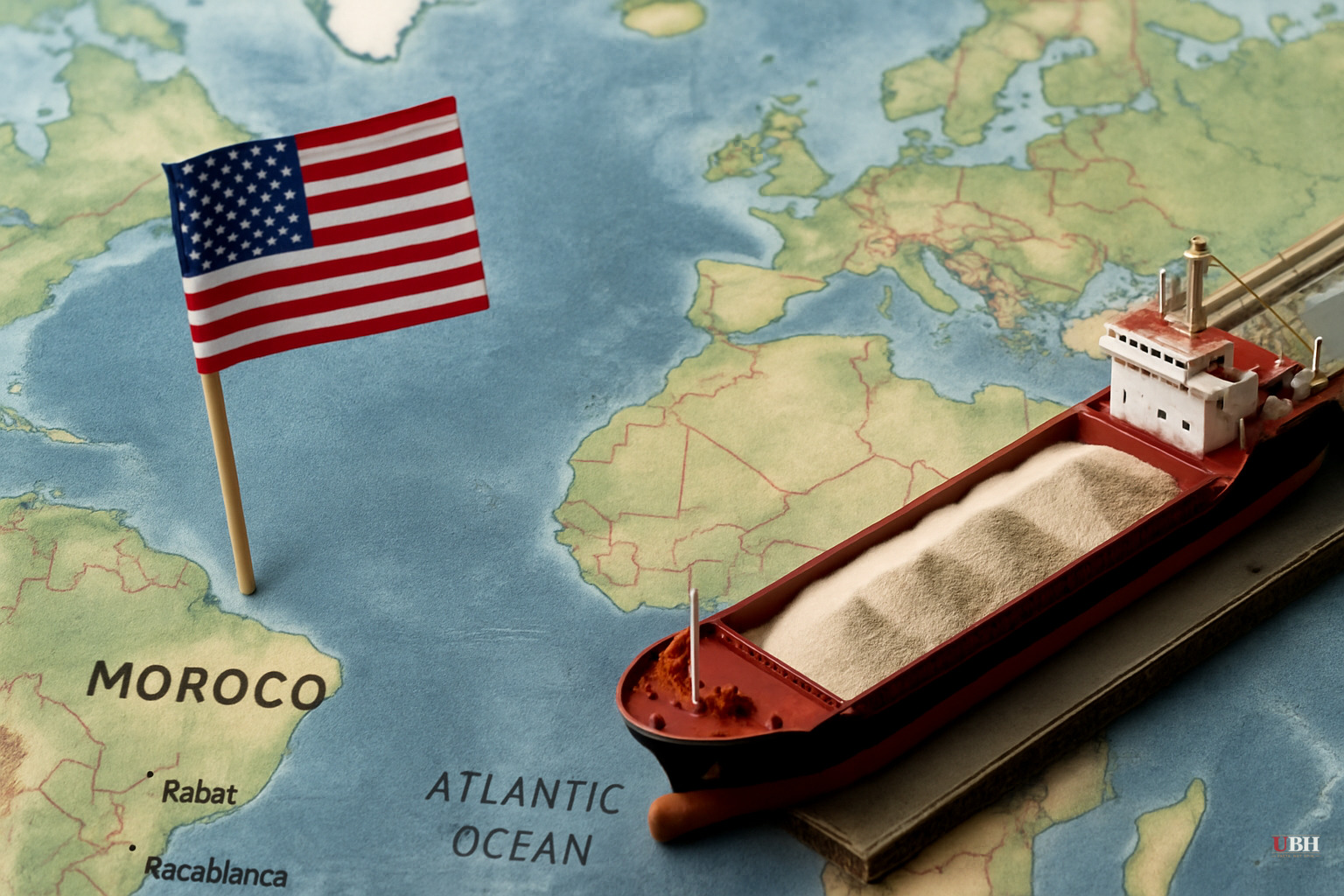
Trump Suspends Moroccan Phosphate Fertilizer Tariffs for Eight Months, Citing Supply Emergency
What Trump Did
On June 29, 2026, President Trump issued a proclamation invoking the Tariff Act of 1930 to declare a domestic phosphate fertilizer supply emergency and suspend countervailing duties up to 16.8% on Moroccan phosphate imports for at least eight months, or until he ends the emergency, whichever comes first. According to the White House fact sheet, the goal is to ensure American farmers have access to affordable phosphate fertilizer ahead of the 2027 planting season.
The U.S. Treasury and Commerce Departments are expected to implement the directive, according to Brownfield Ag News.
Why It Got Urgent
Phosphate fertilizer prices were already elevated when U.S. hostilities with Iran began in late February. From February through May, prices for MAP and DAP, the two primary phosphate fertilizers, rose roughly 7%, according to DTN. Iran-related disruptions in the Strait of Hormuz also stalled sulfur exports, causing sulfur prices to spike and pushing Mosaic Co. to idle phosphate production at some of its facilities.
By late May, fertilizer prices had climbed to a level that prompted 65 state and national farm groups to write directly to Commerce Secretary Howard Lutnick, calling on him to drop the countervailing duties. An earlier letter in March had drawn signatures from more than 50 farming and agricultural industry groups.
Trump's proclamation acknowledged the core math problem plainly: domestic phosphate production, after accounting for exports, is insufficient to cover domestic agricultural needs. The White House stated it is working with the private sector to expand domestic fertilizer manufacturing, but those efforts will take time.
Who Pays and Who Benefits
The Agricultural and Food Policy Center at Texas A&M University estimated that countervailing duties on Moroccan phosphate raised input costs for farmers of corn, soybeans, wheat, rice, sorghum, and cotton by roughly $6.9 billion over the 2021 through 2025 growing seasons, according to both DTN and Reason.
The duties were first put in place in 2021 after a petition from Mosaic Co., which argued that Moroccan and Russian phosphate fertilizers were being unfairly subsidized by their governments. Mosaic has been the dominant U.S. domestic phosphate producer.
National Corn Growers Association President Jed Bower, an Ohio farmer, told Brownfield Ag News he views the suspension as a meaningful step forward, even if temporary. "We hope this will continue to show, as we see the phosphates come down, bringing relief back to the American farmer, that this was a positive move and the administration will push to remove these completely after that," Bower said.
The American Soybean Association, National Cotton Council, and American Farm Bureau Federation all expressed support for the move, according to Brownfield Ag News.
The Case for the Tariffs
Mosaic Co. pushed back. In a statement to Brownfield Ag News, the company said it supports a strong domestic phosphate fertilizer industry and argued that suspending these duties increases U.S. reliance on foreign suppliers. The company said it will continue supporting long-term enforcement of countervailing duties on Moroccan and Russian phosphate fertilizer, and called on the Trump administration to also address high domestic sulfur costs.
The argument for countervailing duties rests on the premise that government-subsidized foreign producers can undercut domestic manufacturers, and that tolerating that undercuts domestic capacity over the long run. If Mosaic and domestic producers atrophy, U.S. farmers could face a worse supply crunch in any future crisis. This represents a legitimate national security and supply-chain argument, which is why these duties survived multiple administrations.
The Unavoidable Contradiction
Reason reported the blunt version of what the policy reversal signals: the Trump administration, by cutting tariffs to bring prices down, is implicitly confirming what critics argued from the start — that tariffs raise prices. The outlet noted that this follows similar rollbacks on coffee, beef, and other imported food, as well as farm equipment earlier this month.
Reason also pointed to U.S. Trade Representative Jamieson Greer specifically. Greer spent years lobbying on behalf of Simplot, an American fertilizer manufacturer, and testified before the International Trade Commission during the Biden administration in favor of the phosphate tariffs. "There has been no shortage of fertilizer for the American farmer, and there will be no such shortage," Greer told the ITC. The proclamation his boss signed Monday says the opposite.
What Happens Next
The suspension runs for up to eight months or until Trump lifts the emergency declaration. Bower's explicit public ask — that the administration use the eight months as evidence to push for permanent removal — sets up a direct confrontation with Mosaic, which intends to keep lobbying for reinstatement. The open question as of June 30 is whether temporary import relief will actually translate into lower retail fertilizer prices in time for fall purchasing decisions, or whether supply-chain lags and distribution bottlenecks absorb the duty savings before they reach the farm gate.
Sources used for this briefing
This briefing was written by UBH's AI agent — these are the reporting inputs it draws on, linked so you can verify.


