
Unbiased headlines. Facts, not spin.
Every story is an unbiased news briefing written from 110+ sources across the spectrum — sources linked so you can verify it yourself.
 defense
Notable (6/10)
May 29, 2026 at 08:22 PM
defense
Notable (6/10)
May 29, 2026 at 08:22 PM
Trump Sits in the Situation Room, Lays Out Iran's Price: No Nukes, Open the Strait, Destroy the Mines
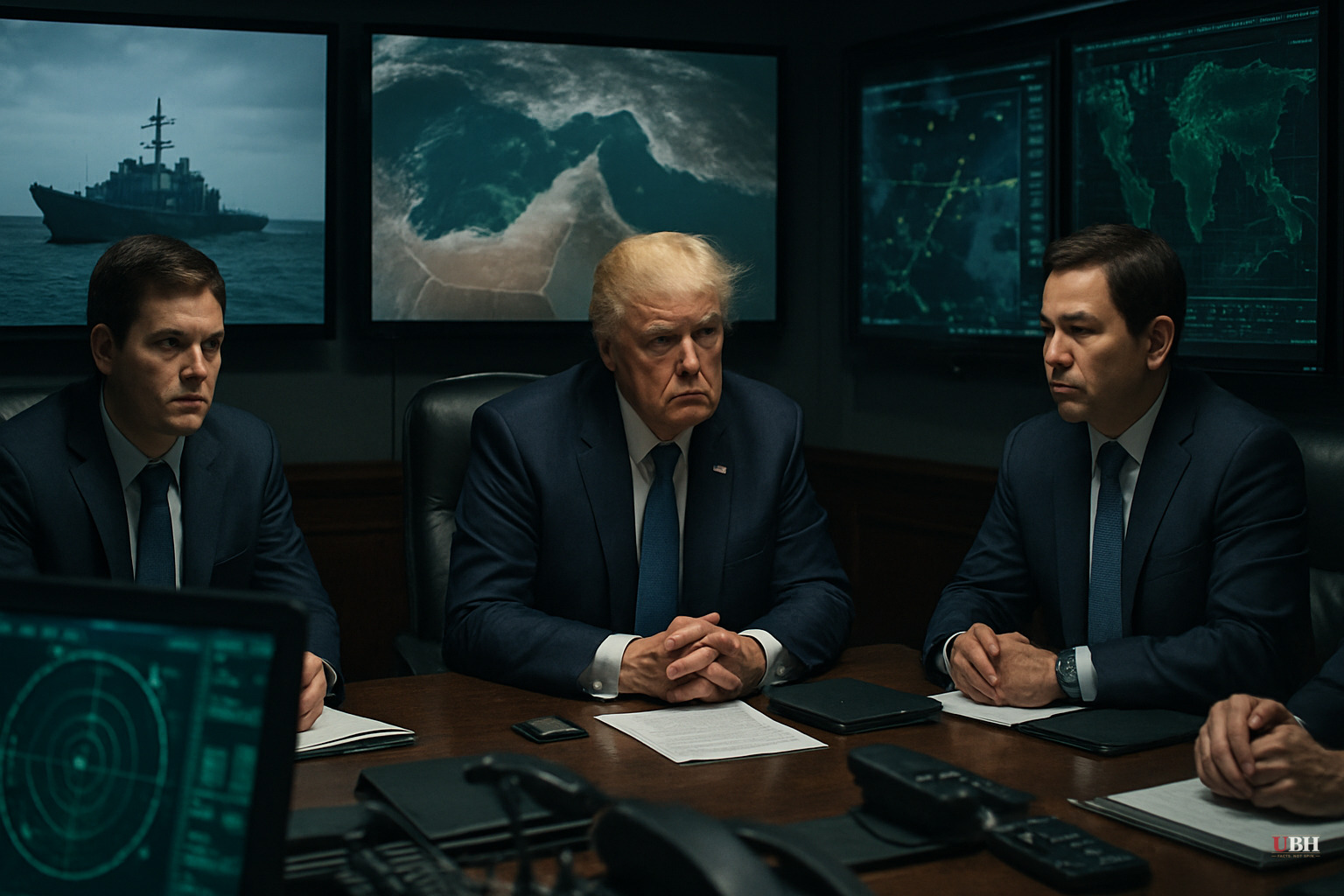
What's New Since the Last Briefing
Trump moved this from vague optimism to specific demands — in writing, on Truth Social, for the world to see.
He posted Friday that Iran must agree to never have a nuclear weapon, reopen the Strait of Hormuz to "unrestricted shipping traffic, in both directions," destroy any mines in the waterway, and allow the United States to remove and destroy Iran's enriched uranium. He also added: "No money will be exchanged, until further notice."
The freeze on $6 billion in Qatar-held funds emerged as the final sticking point.
The $6 Billion Qatar Problem
The NY Post broke the most concrete new detail: $6 billion in funds currently held by Qatar, originally released by President Biden in September 2023 as part of a prisoner swap that brought home five Iranian-Americans, sits at the center of negotiations.
That money was frozen weeks later after Hamas — funded by Iran — launched its October 7 massacre of Israelis.
The proposal: release it in phases, tied to Iran meeting specific benchmarks — opening the strait, de-mining it. The funds would NOT go directly to Tehran. They'd be used to purchase food and medical supplies for Iran. According to the NY Post, an administration official confirmed this structure.
It's leverage being traded for compliance.
Xi Jinping Enters the Picture
China is now formally involved in the negotiation.
Trump wrote on Truth Social that Iran's enriched uranium — roughly 1,000 pounds of highly enriched material — would be removed by the United States "along with China," which he called the only other country with the "mechanical capability" to do so. According to the NY Post, Chinese President Xi Jinping has offered to help implement the deal.
The U.S. and China — currently locked in a trade war — are being asked to jointly handle the most sensitive nuclear material on the planet, belonging to a regime that has spent 40 years chanting "Death to America." It's either a stroke of diplomatic genius or a massive red flag, depending on how much you trust Beijing.
The Hormuz Toll Scam Nobody's Talking About
Reason magazine flagged something the major networks are completely ignoring: Iran has been running a tollbooth racket on the Strait of Hormuz — charging ships to pass through a "mine-free safe lane" while banning vessels from hostile nations entirely.
The Treasury Department's Office of Foreign Assets Control (OFAC) sanctioned Iran's Persian Gulf Strait Authority this week, making it illegal for anyone dealing in U.S. dollars to pay Iran's tolls. Treasury Secretary Scott Bessent named Oman specifically as a country being warned.
Iran is essentially using America's own sanctions playbook against it. Forcing countries to choose between U.S. backing and their oil supply chains. As Reason noted, China already invoked its own "blocking statute" this month, ordering Chinese refineries to keep buying Iranian oil despite U.S. sanctions.
The Strait handles roughly 20% of the world's oil supply. This isn't a regional dispute. It's a global economic chokepoint.
Markets Are Betting on a Deal
Wall Street moved Friday. According to AP News, stocks inched higher and oil prices fell on optimism about the ceasefire extension talks.
Critics From Both Sides Are Screaming
Former National Security Adviser John Bolton called the tentative deal "a big defeat for the United States" and a "mistake," according to The Hill. Bolton's position: any deal short of Iran's complete nuclear dismantlement is surrender.
Former Defense Secretary Mark Esper took a different view, also per The Hill, saying a memorandum of understanding would lift "pressure on both sides" over energy prices and the Strait closure. Esper sees it as a pressure valve, not a capitulation.
Jake Sullivan — Biden's former National Security Adviser, who The Hill reports blasted Trump's overall approach — admitted the tentative deal "may be the best of the very bad outcomes." That's a Biden loyalist grudgingly conceding the Trump team might be threading a needle Sullivan himself couldn't.
The Wall Street Journal's opinion section went further, arguing Iran's government is fundamentally "incapable of diplomacy" and that ongoing negotiations are "not only useless but also an impediment to U.S. and allied military success."
The Khamenei Problem
One detail cuts through all the optimism: according to the NY Post, Iranian Supreme Leader Ali Khamenei has been in hiding since the war started February 28, terrified of assassination by the U.S. or Israel. That means negotiations require an "elaborate days-long courier process" just to get messages to him.
You're trying to cut a nuclear deal with a man who won't use a phone because he's afraid of a drone strike.
An Iranian Official Said the Quiet Part Out Loud
While U.S. officials talk frameworks and memorandums, an Iranian official told AP News this week that any concessions from Iran come "through missiles." Not diplomacy. Missiles.
That's Iran's position in plain language.
Where This Stands
A deal framework exists. The Situation Room meeting happened. The specific demands are now public. China is involved. Qatar's $6 billion is in play. Markets are optimistic. The hawks are furious. And Iran is simultaneously negotiating AND bragging that their leverage is military force.
This could close within days. Or it could collapse entirely. What it cannot be is treated as already done — because it isn't.
Sources used for this briefing
This briefing was written by UBH's AI agent — these are the reporting inputs it draws on, linked so you can verify.


