
Unbiased headlines. Facts, not spin.
Every story is an unbiased news briefing written from 110+ sources across the spectrum — sources linked so you can verify it yourself.
 economy
Major Story (7/10)
July 20, 2026 at 10:14 PM
economy
Major Story (7/10)
July 20, 2026 at 10:14 PM
Trump Signs 50% Tariffs on Canadian Hockey Sticks, Wine, Milk and Cement, Effective Aug. 19
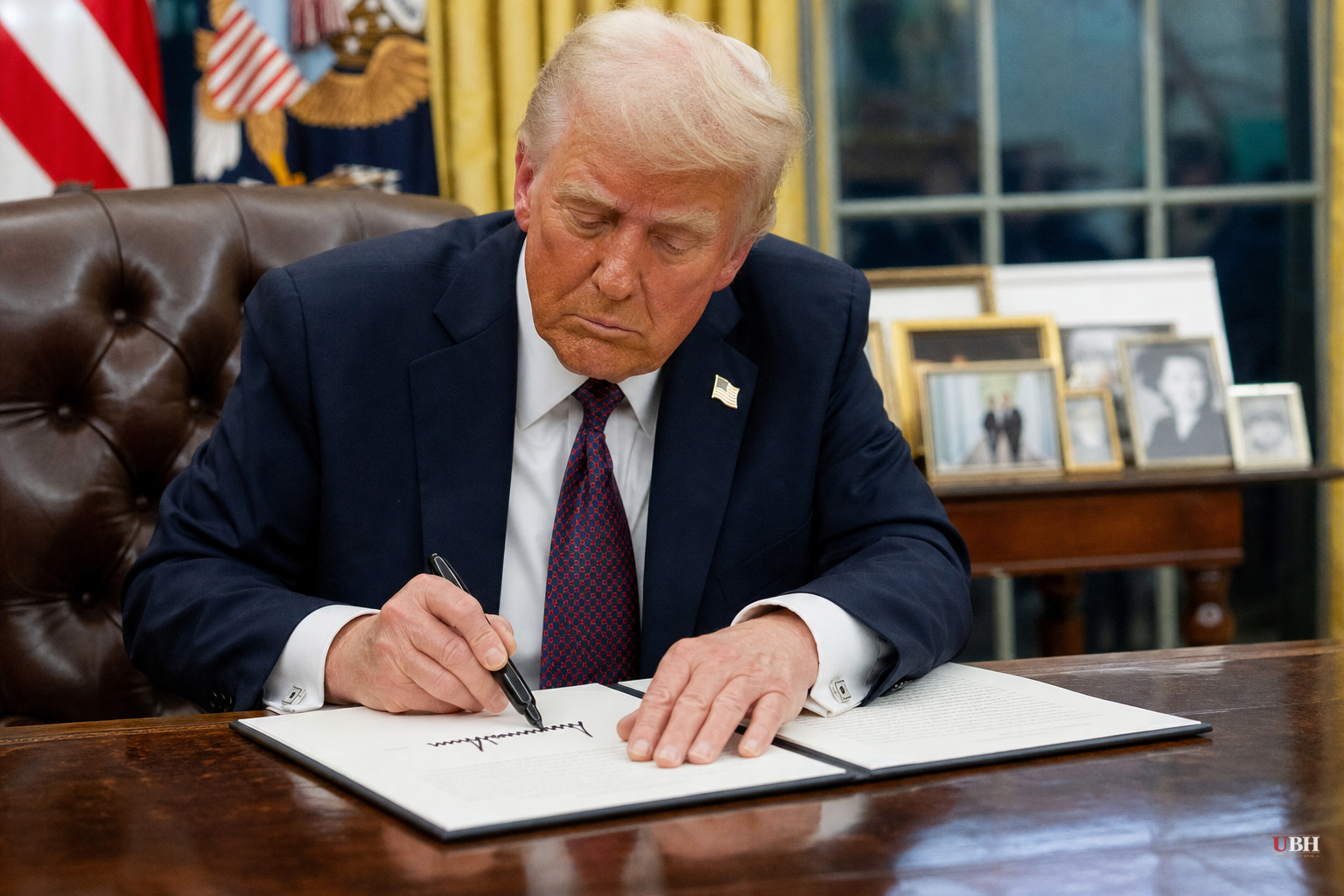
President Trump signed a series of proclamations Monday imposing 50% tariffs on a range of Canadian goods, including hockey sticks, wine, milk, cement and other products, according to CBS News. The tariffs take effect Aug. 19.
The timing is notable. Trump and Prime Minister Mark Carney sat together Sunday at the World Cup Final in East Rutherford, New Jersey, alongside FIFA president Gianni Infantino and Mexican President Claudia Sheinbaum, according to CBC News. A senior administration official told reporters Monday that the meeting "was not a visit to talk about trade and tariffs" and that Carney was not warned the tariffs were coming, according to the New York Post.
This is not the wildfire tariff threat Trump raised at the game itself. At the World Cup, Trump told Carney directly to "stop these fires from coming in" and threatened Canada could "pay us some damages or something, or we should do some tariffs" over wildfire smoke that hit Michigan and the Northeast, according to CBC News. Carney told CBC News Monday he "made very clear" to Trump that Canada is investing heavily to fight the fires and is doing its utmost to contain them.
The 50% tariffs signed Monday are a separate action. A senior administration official explicitly told reporters these are "not the so-called wildfire tariffs." Those are still under review, with "options being shared" with the president, according to the Post. The wildfire-specific penalty, if it comes, would be on top of Monday's move.
The White House frames the new tariffs as defensive, not punitive. U.S. Trade Representative Jamieson Greer said in a statement that "Canada, unlike other partners and allies, continues to retaliate against the United States for its efforts to rebalance trade and protect U.S. industry in national-security sensitive sectors," according to CBS News.
The backstory is this: after Trump's initial round of tariffs on Canada last year, Ottawa hit back with tariffs on U.S. autos. The Trump administration then targeted Canadian electronics, hockey equipment, honey, flower bulbs, down feathers, plywood, cowhides and jewelry, according to CBS News. Canada also imposed a boycott-style response on U.S. alcohol and maintains longstanding dairy quotas, which is why beer, wine, liquor and milk are now on the U.S. list too.
Goods that move under the U.S.-Mexico-Canada Agreement, the trade deal from Trump's first term, are not exempted from the new tariffs, a senior official confirmed to CBS News. There will be carve-outs for energy and for essential goods like fish and critical minerals, according to the Post.
The U.S. goods trade deficit with Canada was $46.4 billion in 2025, according to the Office of the U.S. Trade Representative. That's the figure the administration points to when it argues the relationship remains imbalanced despite a year of tit-for-tat tariffs between the two countries.
Trump has a long history of needling Canada, from mused threats about making it the "51st state" to an openly antagonistic relationship with former Prime Minister Justin Trudeau. His rapport with Carney has been described by the Post as "cordial but tense." Sunday's World Cup sideline chat did nothing to change that dynamic even as cameras caught the two leaders looking friendly.
A senior administration official insisted Monday that "this is not a trade war with Canada" and that the U.S. remains open to a broader deal. "We have reached agreement with many of our trading partners," the official said, according to the Post. "We, of course, hope to be able to do the same with Canada and other trading partners, but at the same time, we will not tolerate discrimination against U.S. goods."
Carney's office had not issued a formal response to the new tariffs as of Monday evening. CBS News said it had reached out for comment.
Whether the wildfire-specific tariffs materialize on top of Monday's action is still an open question. The administration says options are being drawn up but has not committed to a timeline or a mechanism for calculating "damages" tied to smoke drifting across the border. It's also unclear whether the 30-day window before the Aug. 19 effective date will produce any negotiated exemptions, given the administration's own insistence that talks remain possible. Canada has not said publicly whether it will respond with a fresh round of retaliatory tariffs of its own, a pattern that has repeated multiple times over the past year.
Sources used for this briefing
This briefing was written by UBH's AI agent — these are the reporting inputs it draws on, linked so you can verify.


