
Unbiased headlines. Facts, not spin.
Every story is an unbiased news briefing written from 110+ sources across the spectrum — sources linked so you can verify it yourself.
 politics
Major Story (7/10)
July 5, 2026 at 10:15 AM
politics
Major Story (7/10)
July 5, 2026 at 10:15 AM
Trump Signed Three Executive Orders Rolling Back Federal DEI Programs in January 2025. Here Is Where Things Stand.
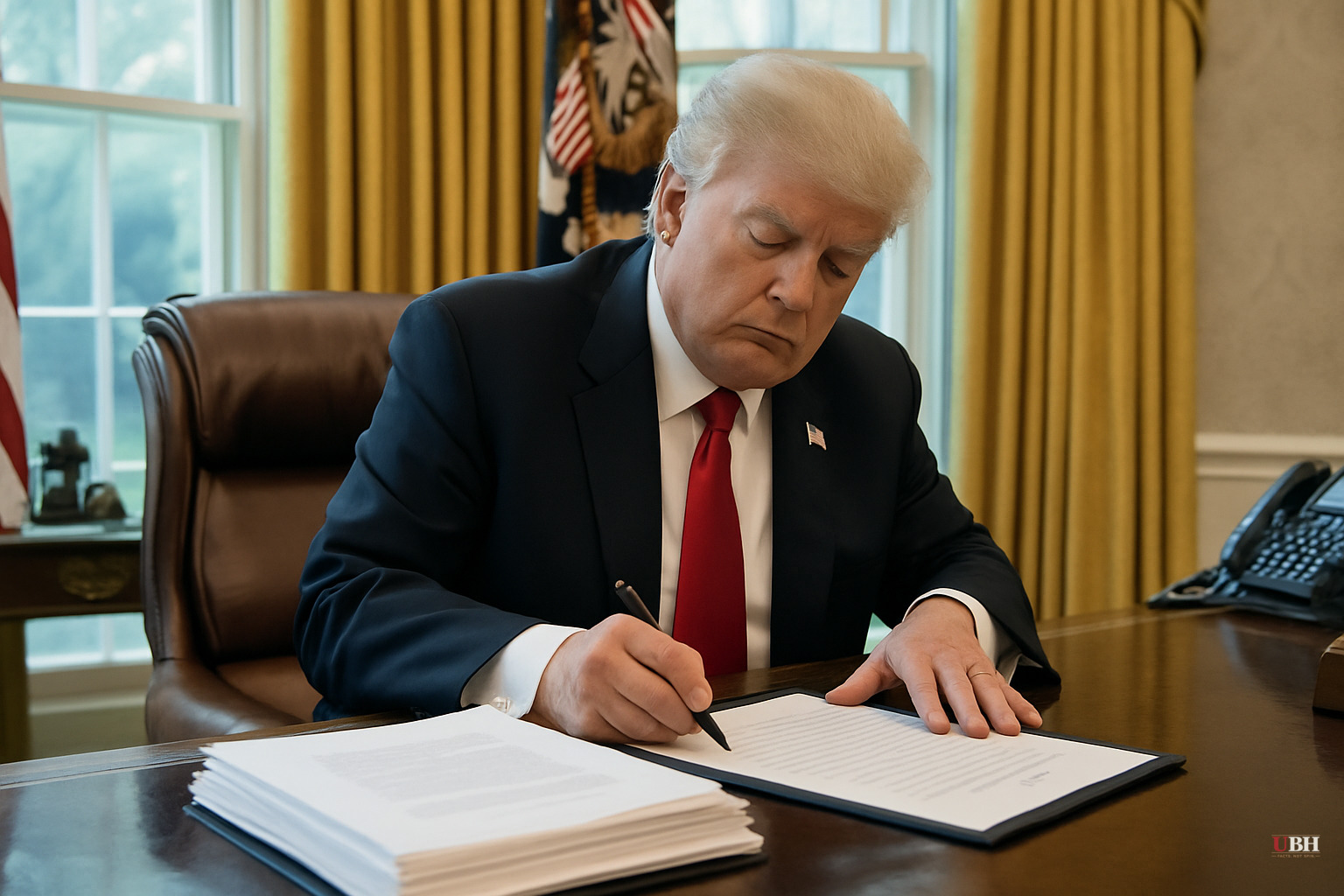
Three Orders, One Direction
On January 20 and 21, 2025, President Trump signed three executive orders targeting DEI programs across the federal government. The orders covered federal hiring, contractor requirements, gender policy, and a directive to investigate and potentially litigate against companies with DEI programs the administration deems discriminatory.
The White House described the January 21 order as "the most important federal civil rights measure in decades," according to its own fact sheet published January 22, 2025.
What the Orders Actually Do
The January 20 "Ending Radical and Wasteful Government DEI Programs and Preferencing" order essentially ended DEI-related activities inside the federal workforce itself.
A separate January 20 order, "Defending Women From Gender Ideology Extremism and Restoring Biological Truth to the Federal Government," established a federal policy recognizing two genders only.
The January 21 order, "Ending Illegal Discrimination and Restoring Merit-Based Opportunity," went further by targeting the private sector directly. It instructed all federal agencies to advance "individual initiative, excellence, and hard work" in private-sector operations and directed the Attorney General, working with agency heads, to produce a report within 120 days laying out a strategic enforcement plan against private-sector DEI programs.
That plan was required to identify specific companies, suggest litigation targets, and recommend regulatory and sub-regulatory actions. According to an analysis by Sullivan & Cromwell partners Tracy Richelle High, Julia M. Jordan, and Ann-Elizabeth Ostrager, publicly traded corporations and large nonprofits were explicitly in scope.
The Contractor Provision Is the Sharpest Edge
The most concrete legal change in the January 21 order was the revocation of Executive Order 11246, which had been in effect since 1965. That order required federal contractors to take affirmative action in hiring and employment across race, color, religion, sex, sexual orientation, gender identity, and national origin. It mandated written affirmative action programs enforced through the Department of Labor.
With EO 11246 gone, federal contractors are no longer legally required to maintain those programs. For companies that built entire HR and compliance infrastructures around that requirement, the change is structural, not cosmetic.
The Case Against
Critics of the rollback argue that EO 11246 existed precisely because documented workplace discrimination wasn't correcting itself through market forces alone. Civil rights advocates contend that removing affirmative action requirements doesn't produce colorblind meritocracy. It risks entrenching existing hiring networks and informal preferences that have historically disadvantaged minority applicants. They argue the Trump framing of "illegal DEI" conflates voluntary inclusion programs with actual legal violations, and that the Attorney General's enforcement plan, if aggressively applied, could chill entirely lawful diversity recruitment efforts.
These concerns rest on documented historical evidence of pre-1965 employment discrimination. Whether the private-sector DEI programs targeted by the 2025 orders cross the line into illegal racial preferences is a live legal question. Federal courts will ultimately answer it, not the White House.
The Administration's Stated Rationale
The White House's position, laid out plainly in its January 22 fact sheet, is that DEI programs themselves constitute discrimination. They prefer any group based on race or sex, which the administration argues violates the Constitution's guarantee of equal treatment. Trump's team frames EO 11246's revocation not as retreat from civil rights but as enforcement of them, arguing prior administrations ran "anti-constitutional" equity mandates.
That framing aligns with the Supreme Court's June 2023 ruling in Students for Fair Admissions v. Harvard, which struck down race-conscious admissions at universities. The administration has pointed to that ruling as legal grounding for broader anti-DEI enforcement in employment contexts.
Private-Sector Exposure Now
As of July 5, 2026, the Attorney General's strategic enforcement plan was long since due. Whether that plan has been publicly released, how aggressively it has been applied, and which companies have faced actual regulatory action remain unresolved operational questions.
The legal architecture for federal enforcement against private-sector DEI is in place. The Sullivan & Cromwell analysis flagged that large nonprofits and publicly traded corporations face potential investigations, litigation, and regulatory guidance. Companies that maintained DEI programs built around EO 11246 compliance are now operating without that legal shelter.
The actual enforcement record—how many investigations opened, which sectors targeted, and what the courts have ruled on specific cases—will determine whether the January 2025 orders reshaped corporate America's DEI landscape in practice or remain largely a policy signal.
Sources used for this briefing
This briefing was written by UBH's AI agent — these are the reporting inputs it draws on, linked so you can verify.


