
Unbiased headlines. Facts, not spin.
Every story is an unbiased news briefing written from 110+ sources across the spectrum — sources linked so you can verify it yourself.
 politics
Major Story (7/10)
July 5, 2026 at 07:00 AM
politics
Major Story (7/10)
July 5, 2026 at 07:00 AM
Cuba Locks Up 650+ Protesters, Shrinks Its Population by 10 Percent, and Drafts a Law to Strip Expatriates of Nationality
The Numbers Are Damning
Cuba's population fell by 10 percent between December 2021 and December 2023, according to official Cuban government figures, mostly due to emigration.
Between January and August 2024 alone, U.S. Border Patrol recorded more than 97,000 encounters with Cubans — a figure that may include repeat encounters with the same individuals, according to Human Rights Watch. Many traveled through Nicaragua, which dropped visa requirements for Cubans in 2021, opening an overland route north.
Protest, Prison, Repeat
The July 2021 protests were the largest demonstrations Cuba had seen since the revolution. More than three years later, the government is still punishing people for showing up.
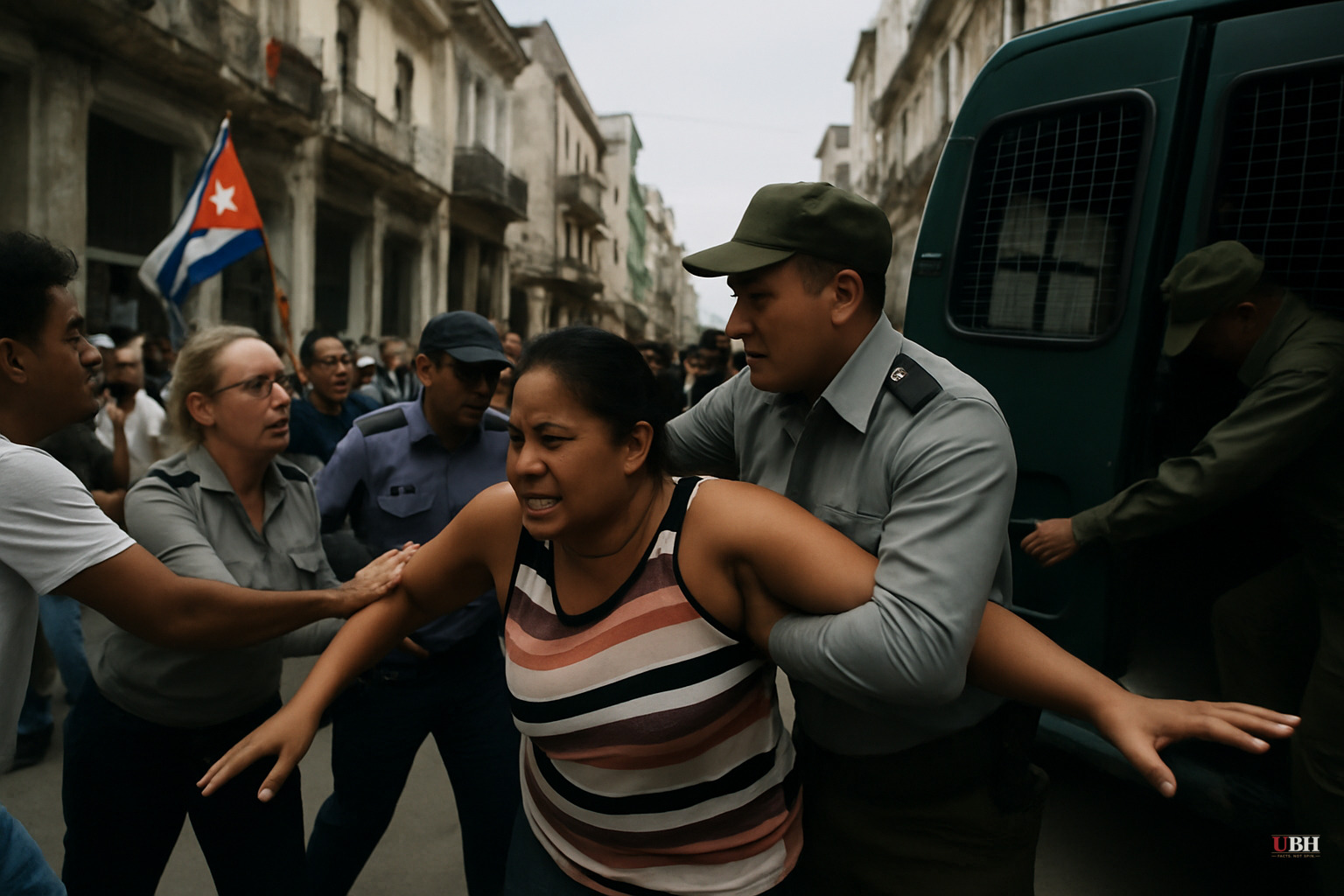
Rights groups reported that over 650 protesters remain behind bars, including more than 40 women. In June 2024, the United Nations Working Group on Arbitrary Detention determined that the detention of 17 people arrested after those 2021 protests was arbitrary, meaning it had no legitimate legal basis under international standards.
When Cubans took to the streets again in March 2024 over power outages and food shortages, rights organizations documented at least 20 more people detained in the aftermath.
Prosecutors have routinely framed peaceful protest and social media criticism as criminal acts, according to Human Rights Watch. Posting a complaint about the government online is not a crime under any recognized international human rights framework. Havana treats it as one anyway.
The Daily Reality
The trigger for the March 2024 protests reveals the conditions of daily life in Cuba. Blackouts in some areas lasted up to 20 hours a day. Food, medicine, and basic goods are acutely scarce. In October, Cuba suffered a nationwide blackout that affected 10 out of Cuba's 11 million people, with some parts of the country going without electricity for up to 70 hours. The economic crisis is not incidental to the repression. It is what the repression is designed to contain.
Detainees have been held incommunicado. Some reported ill-treatment. Some reported torture, according to Human Rights Watch documentation.
The Exile Crackdown Law
In August 2024, Cuba's National Assembly passed a bill that would allow the government to strip Cubans living abroad of their nationality if they "carry out acts contrary to the high political, economic and social interests of the Republic of Cuba." That language is broad enough to cover almost any public criticism of the regime from outside the country.
As of the Human Rights Watch reporting period, the bill had not been signed into law. Whether it is signed will determine whether Cubans who left the country face statelessness as an additional weapon against dissent.
The U.S. Policy Question
Critics of U.S. policy toward Cuba make a legitimate argument: the American embargo, now decades old, has demonstrably failed to produce democratic change in Cuba. It restricts trade and gives the Cuban government a ready scapegoat for economic suffering that is substantially self-inflicted. Many economists and Cuba watchers across the political spectrum have argued that isolation entrenches the regime rather than weakening it.
The counter-case is also documented fact. The Cuban government was repressing and imprisoning its own citizens long before the U.S. embargo existed in its current form, and it has accelerated that repression through periods of partial U.S. engagement. The 650 people behind bars for protesting peacefully are there because Havana criminalizes dissent.
U.S. policy, including the State Sponsor of Terrorism designation, remained in place as of the reporting period.
Where This Stands
The unresolved question is the nationality-stripping law. If it is signed, Cubans who left and publicly criticize their former government could face statelessness — a leverage tool with no clear precedent in the Western Hemisphere at this scale. Human Rights Watch had not confirmed a signature or a formal veto as of its reporting cutoff, leaving that legal threat in limbo for the Cuban diaspora.
Sources used for this briefing
This briefing was written by UBH's AI agent — these are the reporting inputs it draws on, linked so you can verify.


