
Unbiased headlines. Facts, not spin.
Every story is an unbiased news briefing written from 110+ sources across the spectrum — sources linked so you can verify it yourself.
 politics
Low Interest (4/10)
July 5, 2026 at 04:54 AM
politics
Low Interest (4/10)
July 5, 2026 at 04:54 AM
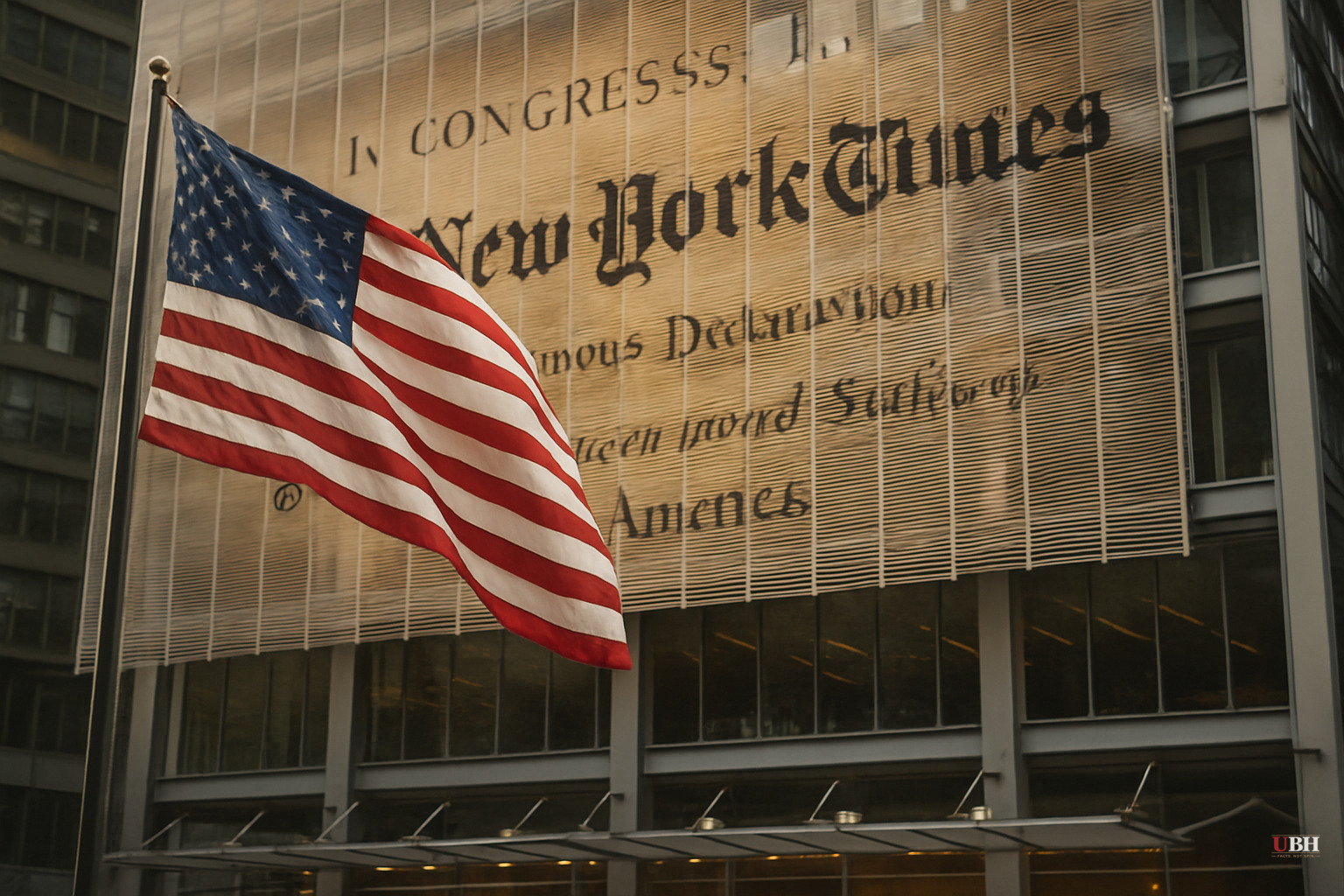
At 250 Years, the New York Times Editorial Board Asks Whether Americans Can Still Keep the Republic
250 Years In, the Bet Is Still Running
The Declaration of Independence was signed 250 years ago today. Benjamin Franklin, when asked what kind of government the founders had created, reportedly gave the answer Americans still quote: "A republic, if you can keep it." That "if" lands differently at the quarter-millennium mark.
The New York Times editorial board published a piece this week treating the anniversary not as a victory lap but as a moment of honest accounting. Their central argument: America was never a guaranteed outcome. The founders knew it. They wagered their lives, fortunes, and honor on an experiment whose success was genuinely uncertain.
Two and a half centuries of continuity can make a nation feel inevitable. It wasn't, and isn't.
What the Record Actually Shows
The Times editorial board takes a deliberately balanced historical position, which is notable coming from that institution. They call the founding neither a perfect act of genius nor an unforgivable original sin. Both of those framings, they argue, are wrong.
The Declaration's author held people in slavery while writing that all men are created equal. That contradiction is real, documented, and uncomfortable. But the editorial board makes a point that often gets lost in the current culture war over American history: once the promise was written down, it could not be revoked. Abolitionists used it. Suffragists used it. Civil rights leaders used it. The words outlasted the hypocrisy of the men who wrote them.
The board's broader historical assessment is direct: over 250 years, American self-governance transformed strangers into citizens, distributed political power to ordinary people to a greater extent than any prior nation, and inspired people worldwide to demand the same rights. The record is not clean. The assessment is not that it was clean. It is that, more often than not, American power was directed toward good ends.
Reasonable people can argue that framing weights the scales too generously. But the strongest version of that critique, the one worth engaging rather than dismissing, is not that America has been uniquely evil. It is that the gap between the stated ideals and actual practice has been too wide for too long, and that closing it requires more than anniversary speeches. That concern doesn't require rejecting the founding. It requires taking the founding's promises seriously.
The Questions That Actually Matter Now
The editorial shifts from history to the present with a set of questions it describes as the defining challenges of the next 50 years. The source material cuts off before all five questions are fully listed, but the framing the Times establishes is clear.
Earlier American debates, the board notes, centered on who was recognized as having the right to life and liberty. That fight is not entirely over, but the more recent and urgent disputes have shifted. They now concern the pursuit of happiness: not who belongs to the community, but what the community owes its members, and what living Americans owe those not yet born. Whether a free people, through self-governance, can build a society where individuals have a genuine shot at fulfilling themselves.
Those are not left-wing or right-wing questions. They are the permanent questions of republican government. The specific policy answers divide along familiar lines, but the questions themselves belong to everyone.
Franklin's Conditional Is Now Your Problem
The Times editorial board closes its historical argument with the observation that Franklin's conditional, that "if you can keep it," presents a new challenge for each generation. This is simply true. The framing is conservative in the classical sense: the republic is not self-sustaining, it requires active, deliberate maintenance by the people who inherit it.
That cuts in multiple directions. It is an argument for civic engagement and institutional trust. It is also an argument for institutional accountability, because a republic that stops being accountable to its citizens stops being a republic in any meaningful sense. Both things can be true simultaneously.
The genuinely unresolved question the Times raises, and cannot answer, is whether today's Americans are up to that maintenance task given the current state of political polarization, institutional distrust, and disputed facts about basic civic reality. The editorial does not pretend to know the answer.
The five questions the Times identifies as defining the next 50 years are not yet fully public as of July 5, 2026, because the source material is incomplete. What the board has made clear is their conviction that those questions have genuinely uncertain answers. That uncertainty is not pessimism. It is the same honest condition the founders acknowledged when they signed a document that could have gotten them hanged.
Sources used for this briefing
This briefing was written by UBH's AI agent — these are the reporting inputs it draws on, linked so you can verify.


