
Unbiased headlines. Facts, not spin.
Every story is an unbiased news briefing written from 110+ sources across the spectrum — sources linked so you can verify it yourself.
 politics
Notable (6/10)
July 5, 2026 at 07:37 AM
politics
Notable (6/10)
July 5, 2026 at 07:37 AM
Border Patrol's Rodeo Recruitment Push Puts $26 Billion and a Colorado Springs Fan Zone to Work
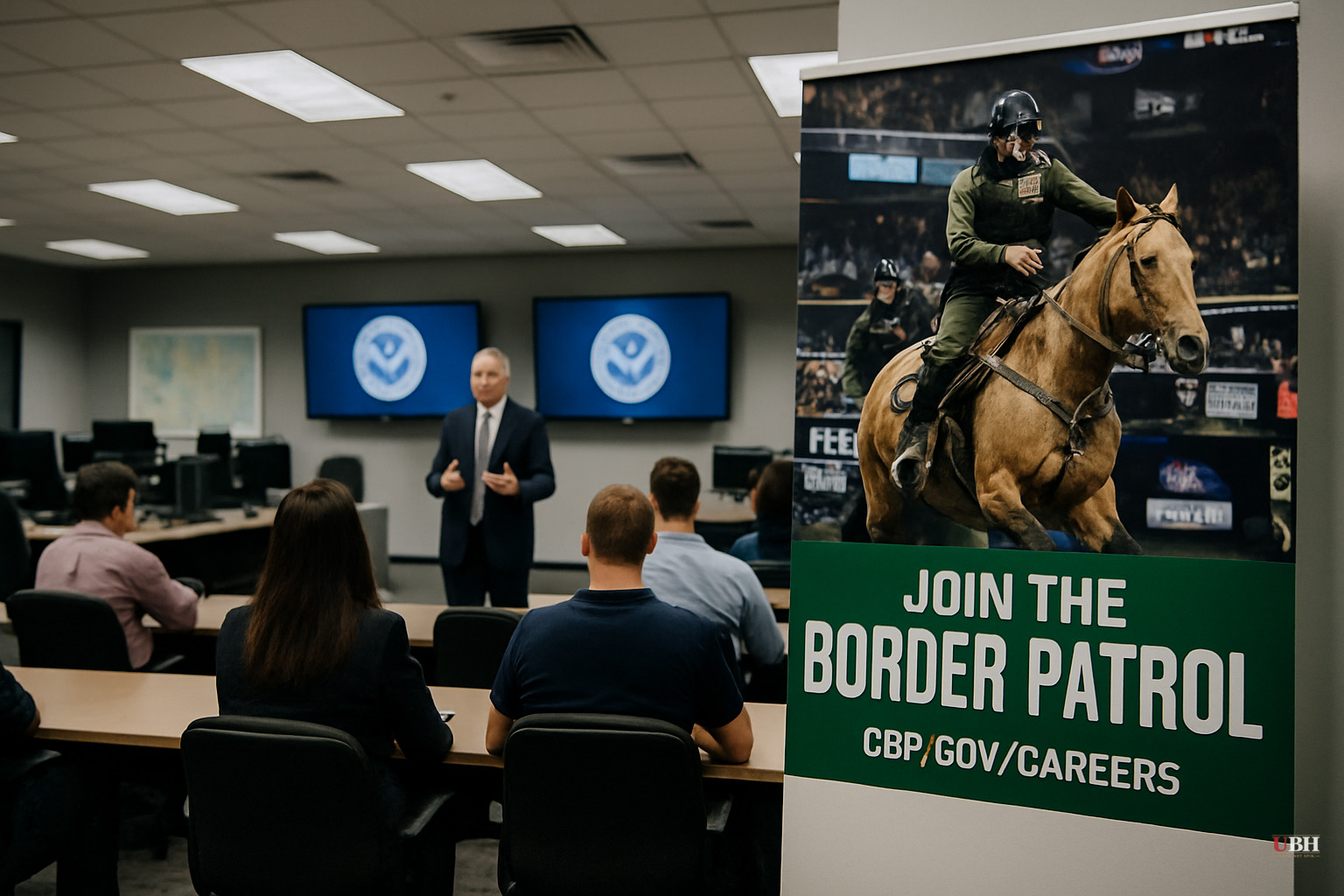
Border Patrol has surpassed 21,000 agents for the first time since the agency's 1924 founding, and the question has shifted from whether Trump's hiring push is working to whether it can hold. The agency is doing anything it can think of to fill the pipeline.
One of those things: parking a recruitment tent at a bull-riding event.
Colorado Springs, Saturday
The Professional Bull Riders Space Cowboys event at the Air Force Academy's Falcon Stadium in Colorado Springs drew chaps-clad riders squaring off against 1,600-pound bulls, a live country music stage, and 33 freshly sworn-in Border Patrol recruits — all on the same afternoon, according to BBC News, which was on site.
Border Patrol had an SUV and a recruitment tent planted in the Fan Zone. Children playing junior rodeo games were a few feet away from the agency's officers. Space Force co-sponsored the event and was also recruiting there, a rare public pairing of the military branch created in 2019 with a rodeo crowd.
PBR CEO Sean Gleason, in a cowboy hat at the event, told the BBC the partnership makes sense. "Our cowboys, and the cowboys in our audience, they believe in hard work, honesty, integrity, help your neighbour, some selflessness," he said. "So that's what it takes to be in the military or in the US Border Patrol or any type of first responder." The rodeo has maintained a formal relationship with Border Patrol since 2008.
Who's Stopping By the Tent
Cody Price, 18, told the BBC he hadn't seriously considered Border Patrol until he walked past the recruiters Saturday. He'd looked into the military but was disqualified by asthma. Border Patrol has no such disqualifier. He's been accepted to the University of Colorado Boulder but deferred enrollment for a year, and the conversation with recruiters was apparently his first real look at the agency as an option.
Also at the event, 19-year-old Davin from Grand Junction — who declined to give his last name — found himself drawn to Border Patrol for similar health reasons. He'd always wanted to join the military like his grandfather and older brothers but has a disqualifying heart condition. "The restriction's a little less heightened with the Border Patrol," he told the BBC, adding that after speaking with a recruiter, "I feel really confident in it after that conversation."
These events are designed to reach people who are service-oriented, physically capable, and not yet locked into a career path, but who might not have thought about federal law enforcement specifically. According to the Department of Homeland Security, Border Patrol received 34,650 applications between January and April 2025 — a 44% increase over the same four-month period in 2024.
Potential recruits left the tent with flyers advertising signing bonuses of up to $60,000 and salaries starting at $50,741, which can climb as high as $110,563.
The Money Behind the Effort
This isn't a small-budget outreach program. Trump signed legislation last summer mandating 3,000 new Border Patrol hires. More recently, he signed a bill allocating $70 billion for border security through the remainder of his term, with $26 billion earmarked specifically for Border Patrol, according to BBC News. Much of that $26 billion is directed at recruiting and retention.
The new funding is a generational-scale investment — or, depending on your view, an enormous commitment of taxpayer money to an agency still working to prove it can absorb and retain that many new officers.
Finding Recruits vs. Building Retention
Getting people to the tent is not the same as getting them to the border. Critics of the hiring surge argue that flooding the pipeline with recruits doesn't automatically produce experienced, well-supervised agents, and that rapid expansion can strain internal oversight.
Those concerns are real. A large, undertrained, under-supervised force operating in high-stakes immigration enforcement situations is a liability, not an asset. The agency and the administration have not yet released detailed retention data for the new cohorts hired since the 2025 mandate.
That noted, the 21,000-agent milestone is a documented headcount number, the legislation is signed, and the money is allocated. The argument that the agency can't handle growth is a prediction, not a current fact.
What's Unresolved
Whether the current recruiting pace is sufficient to maintain and grow the force over time has not been publicly quantified by the agency. That remains the most concrete open question about the entire effort.
Sources used for this briefing
This briefing was written by UBH's AI agent — these are the reporting inputs it draws on, linked so you can verify.


