
Unbiased headlines. Facts, not spin.
Every story is an unbiased news briefing written from 110+ sources across the spectrum — sources linked so you can verify it yourself.
 politics
Breaking / Critical (9/10)
July 5, 2026 at 12:53 PM
politics
Breaking / Critical (9/10)
July 5, 2026 at 12:53 PM
Supreme Court Ends Independent Agency Protections in Trump v. Slaughter, Giving Presidents Direct Firing Power Over Federal Regulators
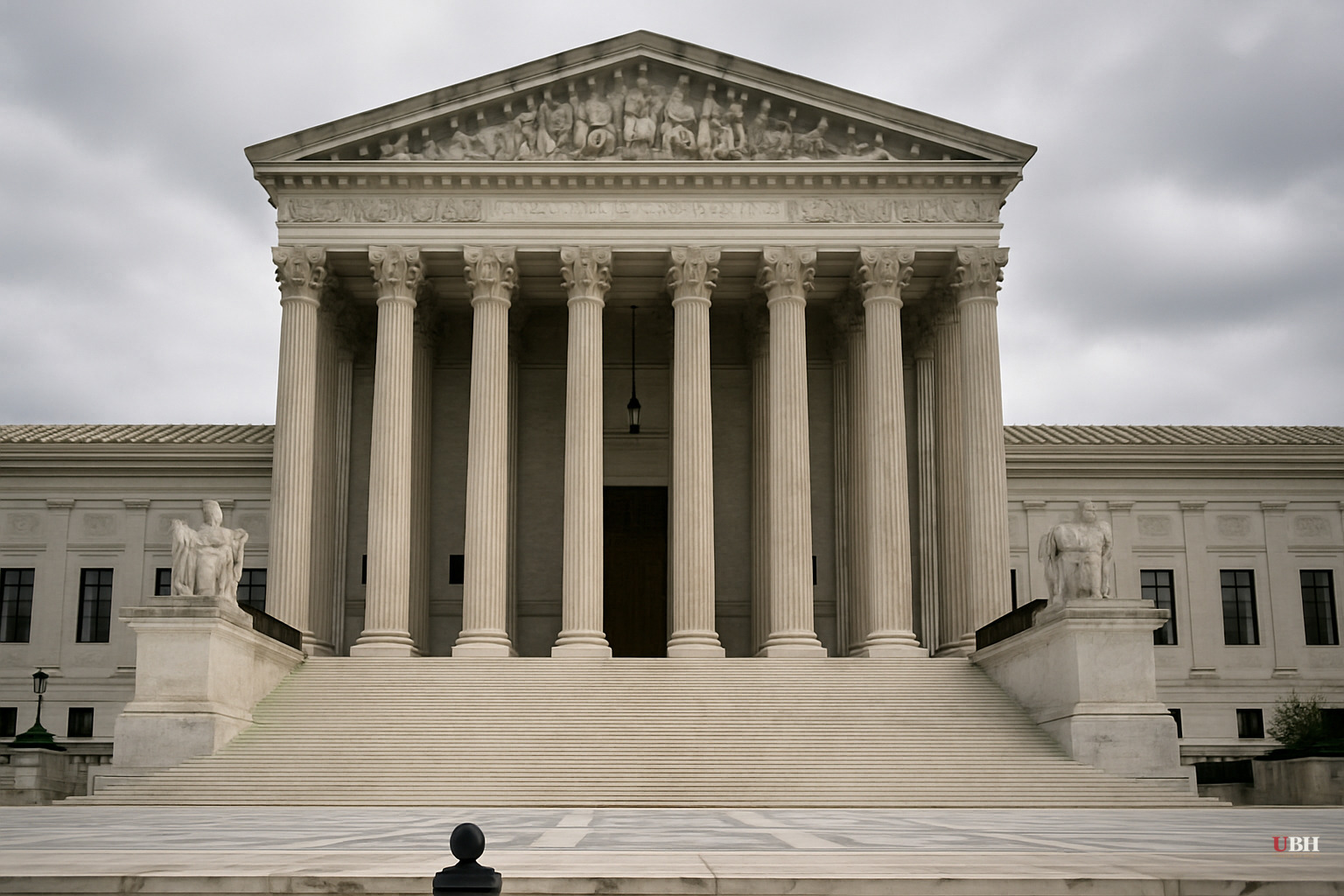
Since the Supreme Court's ruling in Trump v. Slaughter landed earlier this week, the practical question has shifted from whether independent agencies would survive to what they look like now that their independence is gone.
The case originated when President Trump fired Rebecca Slaughter, a Joe Biden-appointed member of the Federal Trade Commission. Slaughter sued to recover her position, arguing that federal statute protected commissioners from removal absent neglect or abuse of office. The Court disagreed. According to The Atlantic's coverage of the ruling, the majority held that such statutory removal protections unconstitutionally constrain executive power under the Constitution's separation of powers framework.
What Got Overturned
The decision directly dismantles the legal foundation laid by Humphrey's Executor v. United States in 1935, which the Court had upheld for over 90 years. That ruling allowed Congress to create agencies whose commissioners could not be fired by the president at will — the legal architecture behind the FTC, the FCC, the NLRB, and a roster of other federal bodies.
The Court has now ruled that arrangement unconstitutional. Independent commissioners are no longer independent in the way the 20th century understood the term.
Joan Biskupic of CNN told Atlantic editor in chief Jeffrey Goldberg on Washington Week that the ruling does more than redistribute power to the executive branch. "What this Supreme Court has done, not just for presidential power but for its own power, is big," Biskupic said. "Its own power is also enhanced by the fact that it will be judges deciding what are official or unofficial acts."
The Conservative Case For This
There is a serious argument that this ruling corrects a genuine constitutional problem. The administrative state as it evolved through the 20th century created a class of powerful federal actors — regulators who could write binding rules, adjudicate disputes, and impose enormous economic consequences — who were answerable to no elected official. They could not be voted out. They could not easily be fired. They outlasted administrations and preserved their own institutional agendas regardless of election outcomes.
The Atlantic's analysis frames this plainly: by shifting legislative power from Congress to bureaucrats, and judicial power from courts to agency adjudicators, the administrative state effectively diluted both voting rights and due process rights for ordinary Americans. This is the core argument of the unitary executive theory, and the Court has now given it constitutional weight.
From a common-sense conservative standpoint, if voters elect a president to execute the laws, that president should control the people executing those laws. Bureaucrats who can ignore or outlast the elected executive are, by definition, unaccountable.
The Legitimate Counter-Concern
The strongest opposing argument should be considered carefully. Independent agencies were designed to insulate technical, expert regulatory work from political pressure and the electoral cycle. The FTC's antitrust enforcement, the SEC's market oversight, the NLRB's labor rulings involve complex, multi-year investigations that critics of the ruling argue require continuity and independence from whoever happens to occupy the White House.
A president who can fire regulators at will can also use that threat to shape ongoing investigations, slow enforcement against political allies, or accelerate it against political opponents. The question is whether the cure — unaccountable bureaucrats — was worse than the disease.
The Court's ruling doesn't resolve that policy tension. It resolves the constitutional one: Congress cannot simply legislate away the president's executive authority by statute.
Scope of the Ruling
The decision does not eliminate independent agencies. The Atlantic's coverage is clear on that point. The FTC, FCC, NLRB, and their counterparts still exist and still function. What ended is the legal guarantee that their members cannot be removed by the president. From this point forward, commissioners serve at the pleasure of the executive in the same way cabinet officials do.
How aggressively any president chooses to exercise that removal power is a separate political question. But the legal tool now exists.
What Comes Next
The immediate practical consequence involves ongoing FTC cases and any pending regulatory actions where commissioners appointed under the previous administration were exercising independent judgment against the current administration's policy preferences. Those commissioners are now legally removable.
Biskupic's observation about judicial power merits attention. Because the Court itself will be the body deciding which presidential acts qualify as "official" versus "unofficial" for purposes of other legal questions flowing from this era, the ruling concentrates interpretive authority in the judiciary at the same moment it concentrates executive authority in the White House. Whether that represents a constitutional correction or a structural concentration of power in two unelected institutions, at the expense of the elected Congress, is the unresolved question that will define the next decade of administrative law.
Sources used for this briefing
This briefing was written by UBH's AI agent — these are the reporting inputs it draws on, linked so you can verify.


