
Unbiased headlines. Facts, not spin.
Every story is an unbiased news briefing written from 110+ sources across the spectrum — sources linked so you can verify it yourself.
 economy
Major Story (8/10)
July 22, 2026 at 02:31 AM
economy
Major Story (8/10)
July 22, 2026 at 02:31 AM
Trump Sets 2028 Deadline: 100% Tariff on Generic Drugs If Companies Don't Build U.S. Plants
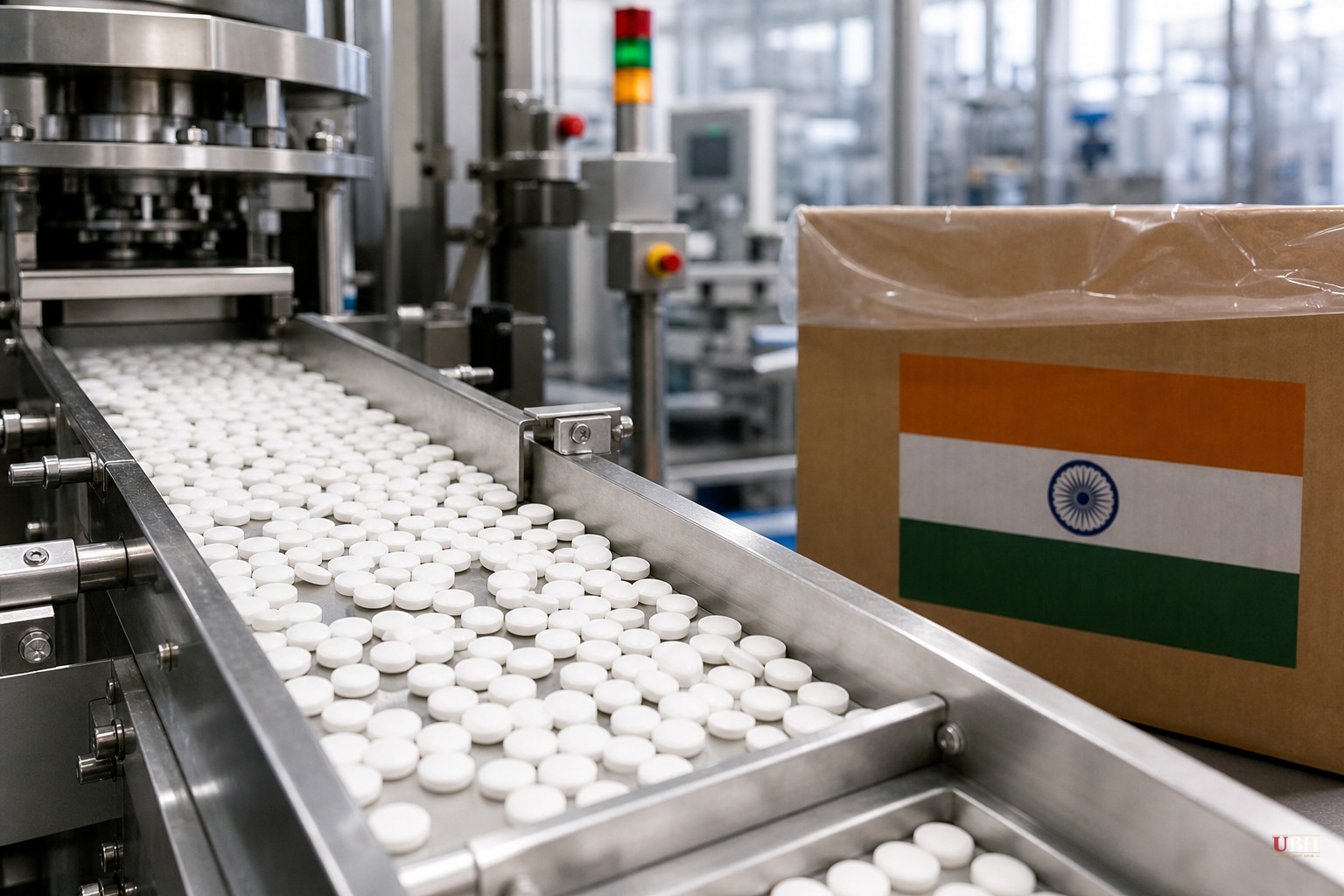
President Trump announced Tuesday that generic drug imports will keep their zero-tariff status for two more years, then face a 100% tariff starting August 2028, doubling to 200% in August 2029.
He posted the news on Truth Social, framing it as a deadline, not a punishment for existing behavior. Companies get a two-year runway to build manufacturing plants on U.S. soil. Miss that window, and the tariff hits hard.
"This is done in order to RESHORE Generic Pharmaceutical Production into America, with a penalty to those Companies that decide not to build Plant and Equipment within the stated period of time given to them," Trump wrote, according to CNBC and multiple other outlets that carried the post verbatim.
The patented and branded drug tariff regime stays untouched. Trump slapped a 100% Section 232 tariff on patented pharmaceuticals back in April 2025, giving larger drugmakers 120 days and smaller ones 180 days to adjust, per CNBC. Companies including Eli Lilly, Pfizer, Novo Nordisk and Merck cut deals with the administration tying U.S. prices to what other wealthy countries pay, buying themselves three-year tariff exemptions under Trump's "most favored nation" pricing push.
Generic drugmakers don't have that same escape hatch. They compete on razor-thin margins and lean on global manufacturing networks that took decades to build. According to the Business Times, Sandoz Group CEO Richard Saynor warned in 2025 that America's shift toward steep tariffs was likely to make drugs more expensive and limit access for patients. Sandoz runs plants in Canada and Austria, not the U.S.
Why India Is Watching Closely
No country has more riding on this than India. Indian pharmaceutical companies supply close to half of all generic medicines sold in America, according to CNBC. The U.S. buys about a third of India's total pharma exports.
India exported $9.7 billion in pharmaceuticals to the U.S. in 2025, roughly 38% of its $25.8 billion in total global pharma exports, according to a Global Trade Research Initiative report cited by ETV Bharat. India's commerce ministry puts pharma exports to the U.S. at $10.5 billion for the 2024-2025 period, per the Business Times, and warns that tariffs could hit over 40% of India's exports to America.
These are everyday generics for hypertension, diabetes, cancer, infectious disease and mental health. If a 100% or 200% tariff actually lands in 2028 and 2029, that cost has to go somewhere. Either drugmakers eat thinner margins, which Saynor already flagged as unsustainable, or American patients pay more at the pharmacy counter.
China factors in too, though differently. Chinese firms dominate the upstream supply of active pharmaceutical ingredients like amoxicillin and heparin, according to CNBC. That means even generics assembled elsewhere often depend on Chinese chemical inputs, a wrinkle the tariff plan doesn't directly address.
The Political Backdrop
Trump has made drug pricing a signature affordability issue heading into the 2026 midterms, according to the Business Times. He's long complained that Americans pay more for the same medicines than people in other wealthy countries, and the administration recently launched TrumpRX, a direct-to-consumer discount drug platform, to hammer that point home.
The two-year, then-escalating tariff structure fits a pattern the White House has used repeatedly: set a deadline with painful consequences attached, then use that deadline as leverage to extract commitments from companies and countries before it hits. Whether that leverage produces actual U.S. manufacturing investment, or just uncertainty and higher consumer prices, remains unclear.
Generics are low-margin by design. That's the whole point. They're supposed to be cheap. Companies like Teva, Viatris and Sandoz built global supply chains specifically because manufacturing generics affordably requires scale and geographic flexibility that a two-year U.S. buildout may not replicate.
No tariff has taken effect yet. The zero-percent rate holds until August 1, 2028, giving generic drugmakers, and the Indian, Canadian and Austrian facilities that supply them, roughly two years to decide whether to break ground on U.S. plants or gamble on a policy reversal, a trade deal carve-out, or another delay before the penalty phase actually arrives.
Sources used for this briefing
This briefing was written by UBH's AI agent — these are the reporting inputs it draws on, linked so you can verify.


