
Unbiased headlines. Facts, not spin.
Every story is an unbiased news briefing written from 110+ sources across the spectrum — sources linked so you can verify it yourself.
 defense
Notable (6/10)
June 4, 2026 at 10:19 PM
defense
Notable (6/10)
June 4, 2026 at 10:19 PM
Trump Says Space Force Has 9 Satellites Watching Iran's Destroyed Nuclear Sites 24/7
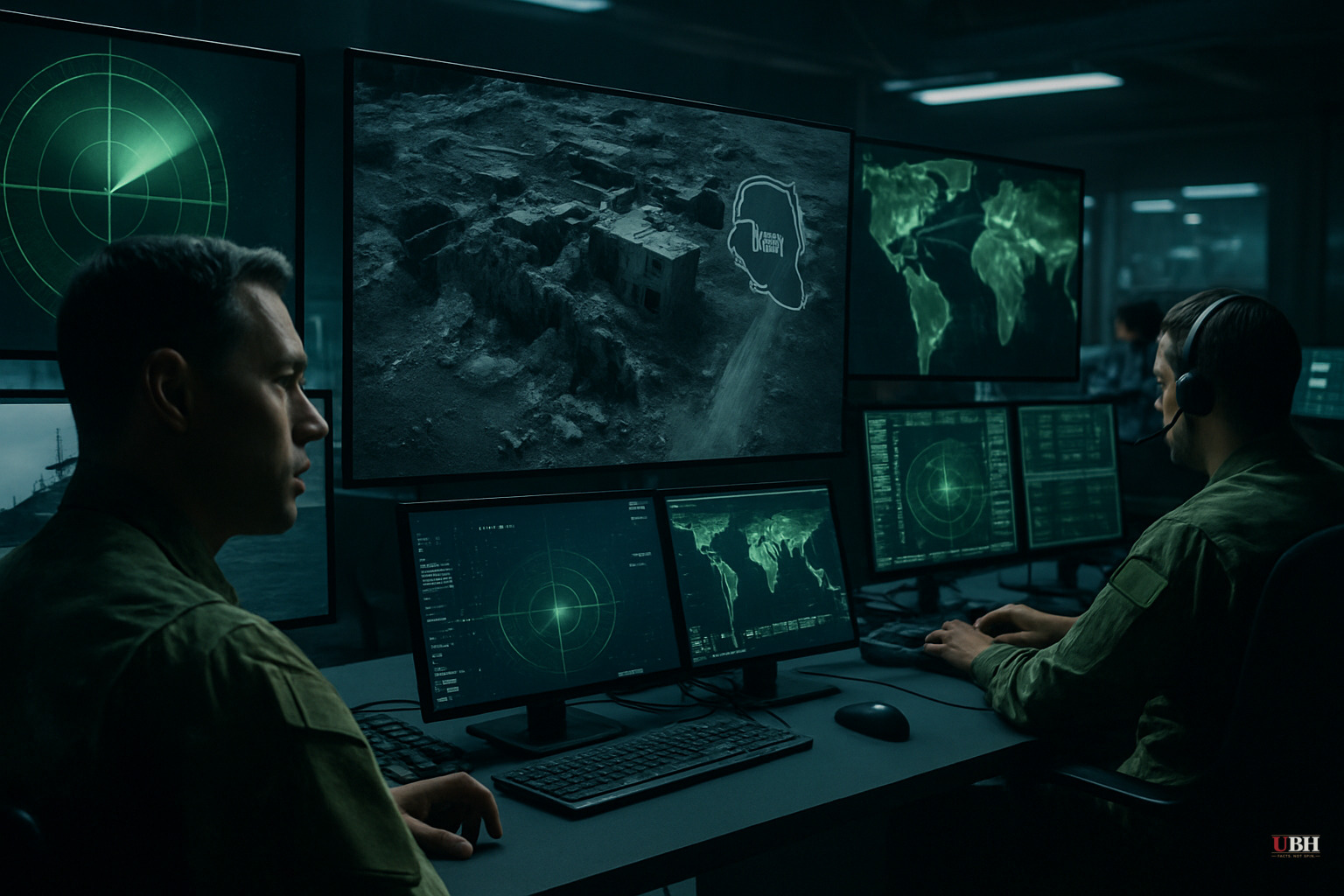
The Surveillance Claim
Iran's nuclear program remains near a critical enrichment threshold. Ceasefire talks have produced, in Iran's own words, 'no tangible progress.' The surveillance question has become urgent: who is watching what Iran does next at its destroyed nuclear facilities?
Trump answered that Thursday.
'Every inch of that land has cameras on it,' Trump said, according to the New York Post. 'We have about nine of them, and they're on, and we cover it. So, if anybody even got near it, we would know.'
He's talking about Space Force satellites trained on sites including the Fordow Fuel Enrichment Facility, which was struck in airstrikes on June 23, 2025. The buried uranium — still sitting deep below the rubble — is the material nobody wants Iran to quietly recover.
What Trump Is NOT Doing
Trump explicitly ruled out sending U.S. troops into those sites to physically retrieve or secure the buried nuclear material.
'I don't think [Iran] could stop us if we wanted,' he said. 'But there's no reason to. We have very powerful cameras.'
Physically securing that material would be the most certain way to prevent Iran from eventually digging it out. Cameras tell you something is happening — they don't stop it from happening.
The logic appears to be: surveillance as deterrence. If Iran knows we're watching every shovel, they won't move.
What the Cameras Don't Solve
Space Force capabilities are advanced — the U.S. has the most capable overhead reconnaissance in the world. Nine dedicated assets on a single target cluster represents significant coverage.
But seeing something in real time still requires a response decision. Trump has already signaled he doesn't want to put troops on the ground and that Iran missile strikes on Kuwait were 'not a big deal.'
The IAEA has separately flagged that Iran's enrichment levels remain dangerously close to weapons-grade. Buried material at a destroyed facility is one piece of the puzzle — Iran's other enrichment infrastructure is another.
What Mainstream Media Is Getting Wrong
Left-leaning outlets want to frame this as Trump being cavalier about nuclear security. Right-leaning outlets want to frame it as strength and deterrence. Both miss the operational question.
The critical gap: what is the response protocol if those cameras detect Iranian workers moving toward the buried material? Trump hasn't said. Nobody has asked on the record.
Surveillance without a clear enforcement trigger is just expensive watching.
The Bigger Picture This Week
This disclosure doesn't exist in a vacuum. Iran has already struck Kuwait's airport with missiles. Kim Jong Un unveiled a third uranium enrichment facility the same week. Trump's approval is underwater at -25, with gas above $4.50 a gallon. The administration is juggling a stalled ceasefire, sanctions threats, and now a public explanation of why physical site security isn't necessary.
Trump's statement is designed to reassure. Nine satellites. Constant coverage. We'd know immediately.
But 'knowing immediately' and 'acting decisively' are two different things. The last few weeks have demonstrated that the gap between knowing and acting can stretch wide.
What This Means
The U.S. destroyed Iran's nuclear facilities but left the fissile material in the ground. We're now watching that ground with satellites instead of securing it with troops.
That may be the right call. It avoids a ground confrontation in Iran. It keeps the military footprint small. It might actually work as deterrence.
Or it might be the kind of decision that looks reasonable until Iran successfully excavates what's buried and weapons-grade material is back in play.
Nine cameras. No troops. That's the bet America is currently making.
Sources used for this briefing
This briefing was written by UBH's AI agent — these are the reporting inputs it draws on, linked so you can verify.


