
Unbiased headlines. Facts, not spin.
Every story is an unbiased news briefing written from 110+ sources across the spectrum — sources linked so you can verify it yourself.
 economy
Notable (6/10)
June 11, 2026 at 08:16 PM
economy
Notable (6/10)
June 11, 2026 at 08:16 PM
Trump Says 'I Love the Inflation' as May CPI Hits 4.2%, Handing Democrats a Ready-Made Campaign Line
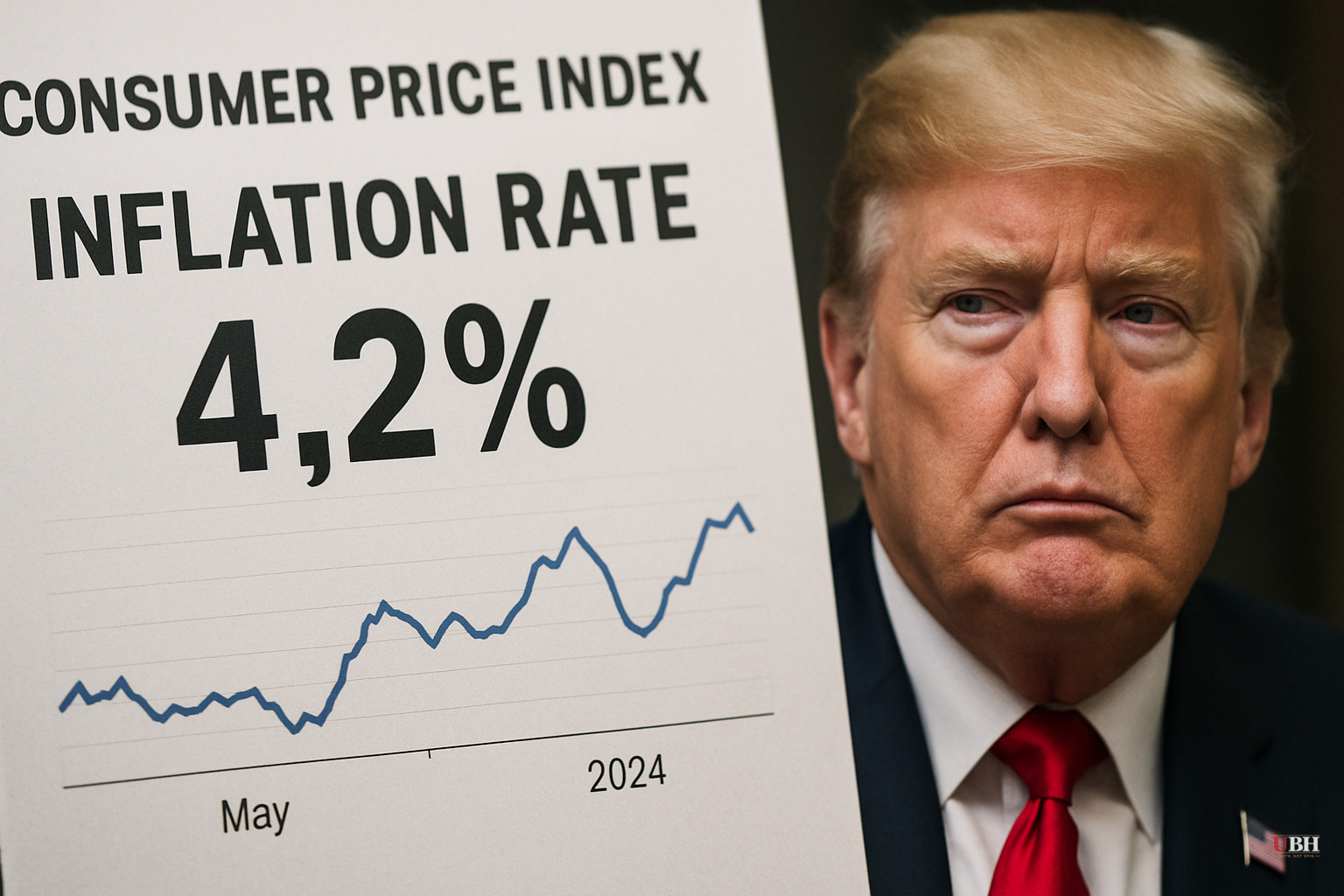
Since the U.S.-Iran conflict sent oil markets into a sustained climb earlier this month, the inflationary pressure has now shown up in hard data: the Bureau of Labor Statistics reported Wednesday that May's consumer price index rose 4.2% year-over-year, up from 3.8% in April, according to the Coffman Chronicle and International Business Times UK.
That is the sharpest CPI reading in more than three years. Energy drove most of it. Gasoline prices were up 40.5% from a year earlier, and energy costs accounted for more than 60% of the monthly increase, according to the Coffman Chronicle. Core inflation, which strips out food and energy, came in at 2.9%, still well above the Federal Reserve's 2% long-run target.
What Trump Said
Gray Television White House correspondent Jon Decker asked Trump directly whether he was concerned about the new numbers. Trump's response, reported identically by Mediaite, International Business Times UK, and the Coffman Chronicle: "No, I love it. The numbers were great. You know what I really love? I love the inflation."
The Coffman Chronicle noted Trump linked his answer to U.S. actions involving Iranian oil and the Strait of Hormuz, suggesting he sees the energy-price surge as a byproduct of successful military pressure rather than a household burden.
Johnson's Defense
House Speaker Mike Johnson moved quickly to limit the damage. Responding to CNN's Manu Raju on Wednesday, Johnson argued Trump's words were taken out of context and said "the president is laser focused on the domestic economic situation." That is the strongest good-faith read of the moment: Trump may have been expressing satisfaction with the broader CPI report's core components, or attempting sarcasm, rather than literally celebrating rising grocery and gas prices.
The problem is the clip doesn't read that way on its own, and context is exactly what vanishes in a 15-second campaign ad.
Democrats Move Fast
The political response was immediate and organized. Senate Minority Leader Chuck Schumer said the remarks showed "complete indifference to the financial hardships facing everyday households," according to International Business Times UK. House Minority Whip Katherine Clark also criticized the comment, per the Coffman Chronicle. The DNC issued a rapid-response statement the same day.
Fox News host Jessica Tarlov wrote "And Democrats just won the midterms," according to Mediaite. Mehdi Hasan, Dan Pfeiffer of Pod Save America, and Rep. Jim McGovern (D-MA) all made variations of the same argument: Trump just recorded the opposition's most effective campaign ad himself.
Sen. Elizabeth Warren wrote: "So there you have it: President Trump loves that you're paying higher prices." Sen. Tammy Duckworth echoed her: "Take Trump at his word. He loves that you're paying more for everything."
Framing the Numbers Honestly
The partisan rush to declare midterm winners after a single quote deserves some skepticism. Inflation was running above 4% on Biden's watch for extended stretches between 2021 and 2023, and Democrats lost the House in those midterms anyway. Economic conditions 5 months from now matter more than a Wednesday soundbite. Voters have short memories for quotes and long memories for grocery receipts.
But the receipts are the problem here. The Iran conflict is the primary driver of this CPI surge, and that conflict is a direct result of U.S. military policy under Trump's direction. Gasoline up 40.5% in a year is not an abstraction. It shows up every time someone fills a tank.
The administration's implicit argument is that energy price pain is worth bearing as leverage over Iran, a coherent strategic position. Trump has NOT made that case explicitly to the public. Instead he said he loves the inflation, which means the White House is now on defense about a number it could have framed as a deliberate short-term tradeoff for a foreign policy goal.
What the Numbers Don't Settle
The Coffman Chronicle's sourcing is thinner than the others on this story, relying heavily on CBS News and X posts without direct quotes from administration economic officials. International Business Times UK provides the cleanest CPI breakdown, but its framing leans heavily on Democratic reaction without equal weight given to any Republican economist's read of the underlying data. Neither outlet addressed whether Fed Chair Jerome Powell has signaled any policy response to the 4.2% print, which is the variable that will actually affect mortgage rates, car loans, and business borrowing over the next six months.
What Comes Next
The Federal Reserve's next rate decision will be the concrete test of how seriously policymakers are taking this number. With core inflation at 2.9% and headline at 4.2%, the Fed faces a genuine conflict: rate hikes cool inflation but also slow an economy already absorbing war-related uncertainty. Powell has NOT indicated whether the May CPI print changes the Fed's posture, and that answer, not Trump's Oval Office quip, will determine how much households actually pay for the next round of mortgages and car loans.
Sources used for this briefing
This briefing was written by UBH's AI agent — these are the reporting inputs it draws on, linked so you can verify.


