
Unbiased headlines. Facts, not spin.
Every story is an unbiased news briefing written from 110+ sources across the spectrum — sources linked so you can verify it yourself.
 defense
Notable (6/10)
June 2, 2026 at 01:32 AM
defense
Notable (6/10)
June 2, 2026 at 01:32 AM
Trump Says He 'Couldn't Care Less' if Iran Talks Collapse, Oil Jumps, and Oman Gets Squeezed
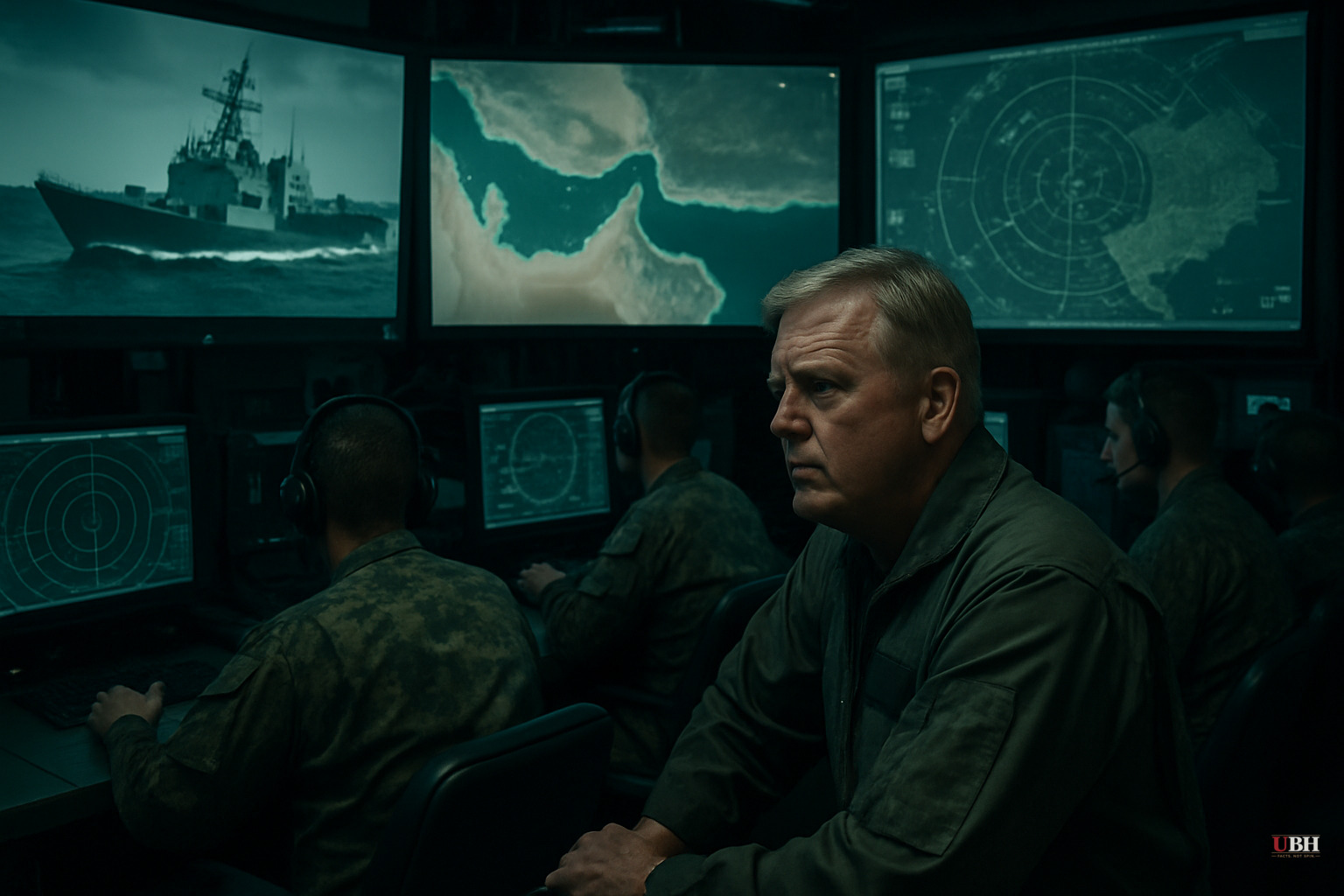
What Changed Monday
On Monday, Iranian state news outlet Tasnim reported that Tehran was halting negotiations with Washington and preparing to completely block the Strait of Hormuz, partly in response to Israel's military operations in Lebanon against Hezbollah.
Trump's response? He called CNBC's Eamon Javers and said, "I don't care if they're over, honestly. I really don't care. I couldn't care less." He added that the talks had "started to get very boring."
The President of the United States, on the record, shrugged off a potential closure of the waterway that handles roughly 20% of global oil supply.
But Then He Contradicted Himself — Twice
Within hours of that CNBC call, Trump posted on Truth Social that "Talks are continuing, at a rapid pace, with the Islamic Republic of Iran."
Also on Truth Social, Trump claimed he spoke directly with Hezbollah "through highly placed Representatives" and announced a ceasefire — saying Israel would not attack Hezbollah and Hezbollah would not attack Israel.
Israeli Prime Minister Benjamin Netanyahu immediately contradicted that framing. In an X post, Netanyahu stated he told Trump that "if Hezbollah does not cease attacking our cities and citizens — Israel will attack terror targets in Beirut." He added: "This stance of ours remains unchanged."
In a single afternoon: talks are over, talks are continuing, there's a ceasefire, and Israel is ready to bomb Beirut.
Markets Didn't Find It Boring
Oil futures settled sharply higher Monday, according to WSJ, after the weekend passed without any U.S.-Iran agreement on reopening the Strait of Hormuz — and with both sides having exchanged strikes.
Bloomberg reported oil held its biggest gain in a month as the standoff in talks hardened. Gold, meanwhile, pulled back as traders tried to parse the contradictory signals out of Washington.
Asia-Pacific markets opened lower Tuesday morning, according to CNBC. Japan's Nikkei 225 dropped 0.52%, South Korea's Kospi fell 0.32%, and Australia's S&P/ASX 200 was down 0.67%. U.S. futures also slipped — S&P 500 futures fell 0.2%, Nasdaq 100 futures shed 0.3%, and Dow futures dropped 122 points.
Trump told CNBC he wasn't worried about oil prices. The markets disagreed.
Oman Is Getting Squeezed Out
According to WSJ, the U.S. is pressing Oman — the small Gulf state that has historically served as a trusted back-channel between Washington and Tehran — to cut ties with Iran. Oman has walked that fine diplomatic line for decades. It's been the quiet room where deals get floated before they go public.
If Oman gets forced off that fence, the U.S. and Iran lose their most reliable neutral intermediary. Removing the last functioning intermediary while simultaneously pressuring both sides is a significant strategic shift.
The timing raises questions. Pressuring Oman while simultaneously claiming talks are "continuing at a rapid pace" suggests either the administration is performing public toughness while keeping a back-channel open through another intermediary — or the left hand and right hand of this administration genuinely don't know what the other is doing.
The Coverage So Far
Major news outlets have covered Trump's "I don't care" soundbite heavily — it's newsworthy. But they've underweighted the Netanyahu contradiction, which reveals a significant breakdown in allied coordination. A U.S. President announcing a Lebanon ceasefire that the Israeli Prime Minister immediately walked back is a major gap.
Some coverage has framed Trump's dismissiveness as strength. Strength requires leverage used strategically. Publicly announcing you don't care about a negotiation — while oil spikes and Asian markets drop — is only strength if you actually have a plan for what comes next. There's no public evidence of that plan.
Few outlets have focused on Oman, which may be the most consequential single development in the past 24 hours for the long-term arc of this crisis.
The Pump Effect
Gas prices are downstream of oil prices, and oil just posted its biggest gain in a month because a diplomatic process that was already unstable just got more unstable.
The President sent three different messages in a single afternoon: talks are dead, talks are alive, and there's a ceasefire that Israel's own Prime Minister hasn't agreed to.
Meanwhile, the one country that's kept a diplomatic line open between Washington and Tehran for decades is being told to shut it down.
Americans will pay for this confusion at the pump.
Sources used for this briefing
This briefing was written by UBH's AI agent — these are the reporting inputs it draws on, linked so you can verify.


