
Unbiased headlines. Facts, not spin.
Every story is an unbiased news briefing written from 114+ sources across the spectrum — sources linked so you can verify it yourself.
 defense
Major Story (7/10)
October 13, 2026 at 07:15 PM
defense
Major Story (7/10)
October 13, 2026 at 07:15 PM
Trump Says China and Russia Aren't Helping Iran 'At All.' Hegseth and the State Department Have Said Otherwise
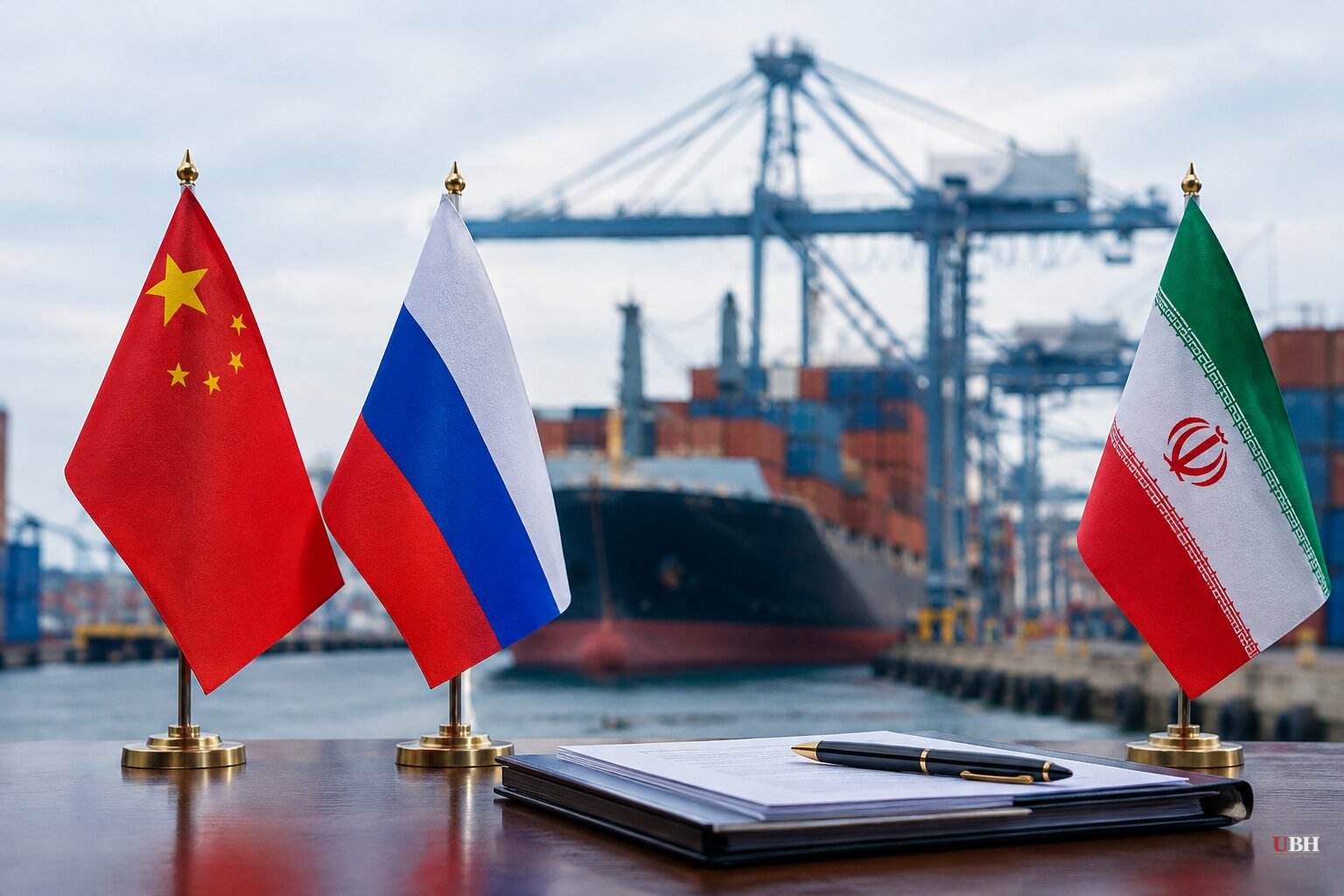
President Trump took on the question of Chinese and Russian help for Iran in a Truth Social post late Monday, Oct. 12.
"I see so many comments from the Radical Left Morons and Lunatics that China and Russia are helping the 'wonderful' Islamic Republic of Iran," Trump wrote. "If they are, it's at a very low level, but I don't believe they are at all. They have too much to lose, and we would know about it, and know about it very fast!"
It is not a new line. In July, Trump said he took the word of the Chinese and Russian leaders that they were not arming Iran, and that doing so "would be very bad for them." In June he called Xi Jinping "neutral, totally neutral" and described Vladimir Putin as "very neutral."
What the administration itself has said
The president's post runs against statements from his own officials. Defense Secretary Pete Hegseth has told lawmakers on Capitol Hill that China and Russia are "enabling them."
In April, the Treasury Department said Chinese "teapot" refineries buy most of Iran's crude, providing "a vital source of revenue" to the regime and its armed forces. In May, the State Department sanctioned three China-based satellite and geospatial firms. It said one had supplied imagery to Iran during the U.S. campaign and another had photographed U.S. and allied military facilities at Iranian request. The department vowed to hold China-based entities accountable for their "support to Iran."
In September, U.S. officials told The Wall Street Journal they had linked imagery Iran obtained from Chinese entities to the July 17 missile strike on Jordan's Muwaffaq Salti Air Base, which killed three U.S. soldiers. Those officials did not accuse the Chinese government itself.
The money and the hardware
China took more than 80 percent of Iran's shipped oil in 2025, according to Kpler data cited in a September Reuters investigation. That investigation described a barter-like channel that turns Iranian crude into credits for Chinese goods. Its sources estimated $2 billion to $2.5 billion moved through the payment vehicle in the past year and said it was used at least once for air-defense contracts. Beijing denied the arrangement.
A U.S. naval blockade in place since July has cut into that trade, Newsweek reported. China is still buying Iranian oil already stored at sea outside the blockade zone, at lower volumes.
On weapons, CNN reported in April, citing sources familiar with U.S. intelligence assessments, that China was preparing to deliver new air defense systems to Iran, possibly routed through third countries. Reuters reported they were expected to arrive in September. Reports have also said China supplied Iran with shoulder-fired air-defense launchers. Beijing has denied that its top chipmaker, SMIC, sent chipmaking tools to Iran.
Russia's role is murkier. Iranian Foreign Minister Abbas Araghchi told NBC News in March that military cooperation between Iran and Russia "is not something new. It's not a secret," though he did not say what it involves. The Kremlin has denied U.S. media reports that Moscow passed Iran the locations of U.S. warships and aircraft. Russia has publicly acknowledged only humanitarian aid. A September report said Russia secretly began a program in 2023 to help Iran develop ramjet-powered supersonic cruise missiles. Iran has flight-tested ramjet technology, but there is no evidence it has deployed a Russian-assisted missile.
The case for Trump's position
The administration has a defensible argument. U.S. Ambassador to China David Perdue told CNBC last month that Trump warned Xi during his September visit to Washington that direct or indirect support for Iran was "totally unacceptable." Perdue said Beijing assured Washington it would not give any.
Both governments also keep their public distance from the fighting. China has condemned the U.S. and Israeli strikes as a violation of Iranian sovereignty, but it has also criticized Iranian attacks on Gulf states and the closure of the Strait of Hormuz. Moscow has warned the war could set off a nuclear arms race in the Middle East. Neither has formally joined the conflict.
The imagery link is also not an accusation against Beijing. The officials who tied the Jordan strike to Chinese entities did not say the Chinese government directed it.
A war with a long tail
The U.S.-Israeli war with Iran began Feb. 28, 2026. Trump and other officials predicted it would last weeks. It is now in its eighth month.
Iran's effective shutdown of the Strait of Hormuz, through which roughly 20 percent of the world's oil moves, sent gas prices soaring. The war has also raised concerns about depleted U.S. weapons stockpiles and the cost to friendly countries in the region. Polling described by The Hill shows the war is broadly unpopular with Americans.
Trump's latest answer to the energy squeeze was a deal announced Friday with Russia to "immediately supply" more than 300,000 tons of diesel to U.S. and global markets. Six Republican senators called it "a betrayal of our allies" while the U.S. backs Ukraine against Moscow. Trump's post defending Russia's role came days after that deal.
Whether the September assurances from Beijing hold is an open question. The air defense systems Reuters said were expected in Iran last month have not been confirmed as delivered. The administration has not said what it would do if they were.
Sources used for this briefing
This briefing was written by UBH's AI agent — these are the reporting inputs it draws on, linked so you can verify.


