
Unbiased headlines. Facts, not spin.
Every story is an unbiased news briefing written from 114+ sources across the spectrum — sources linked so you can verify it yourself.
 defense
Major Story (8/10)
October 13, 2026 at 03:03 PM
defense
Major Story (8/10)
October 13, 2026 at 03:03 PM
MI5 Chief Says Iran Is Seeking to Hit UK Military Sites, Calls RAF Fairford Plot 'Not Unique'
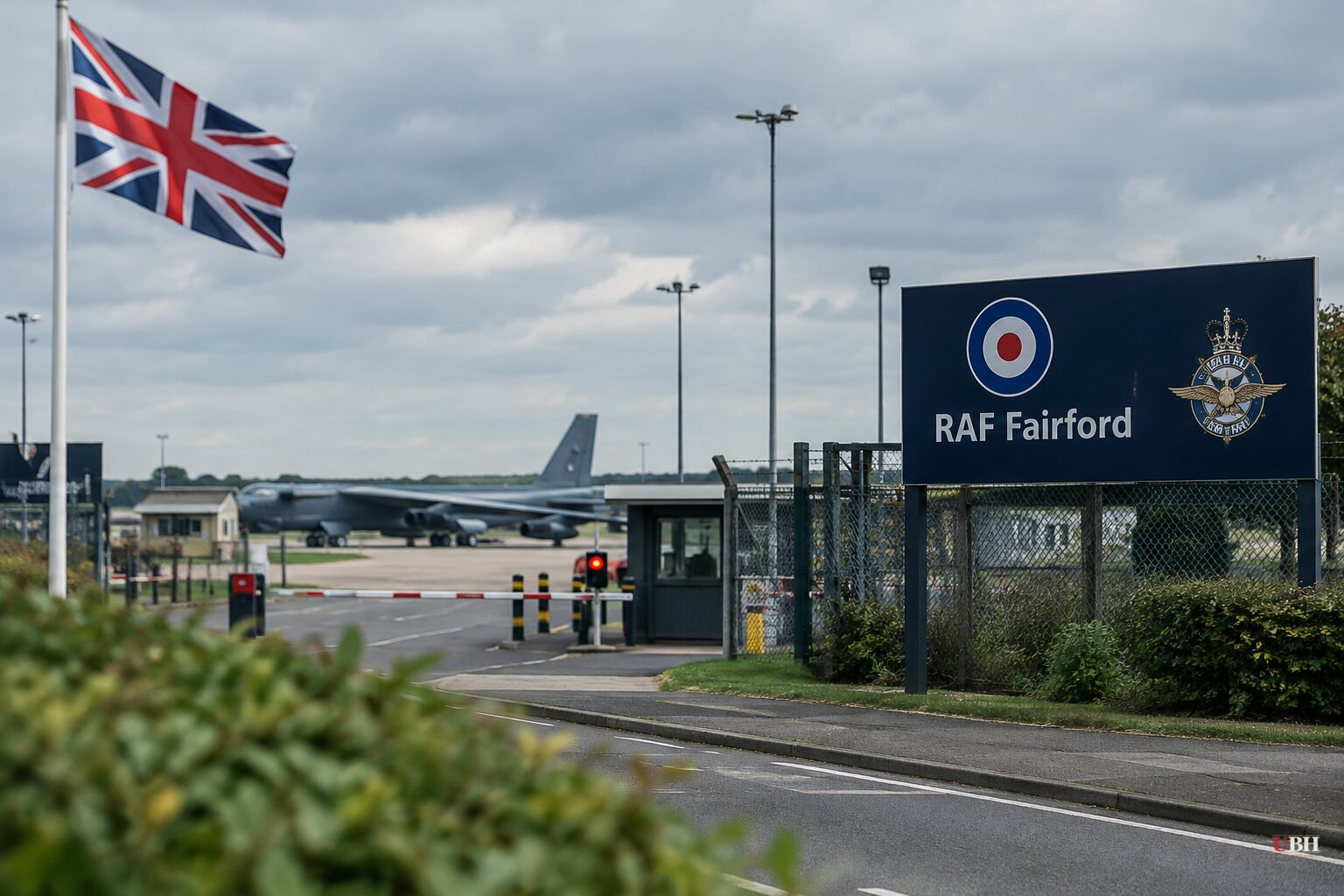
Since the Sept. 27 security operation at RAF Fairford, the question has been whether the suspected plot against the US-used air base was a one-off. MI5 Director General Sir Ken McCallum answered it today, Oct. 13: it was not.
"The RAF Fairford incident ... is not unique," McCallum said in his annual threat speech at Thames House in London. "There have been other examples, not just in the UK but around the world." He said Iran now has "ambitions to come at harder targets, like military sites."
McCallum did not discuss the Fairford case itself, citing the ongoing investigation. He did say that "those who seek to cause mayhem on British streets, whether hired thugs here or their paymasters overseas, will meet an unflinching response."
What is known about Fairford
The Sept. 27 operation saw scores of residents evacuated from homes near the Gloucestershire base as armed police and army bomb-disposal teams moved in. Police later said they found a quantity of gasoline, described as an accelerant, in three vans at the site. No explosives were found.
Seven men in their 20s were arrested and released on bail under investigation. No one has been charged.
Prime Minister Andy Burnham said Monday the suspected plot was "almost certainly" directed by Iran's Islamic Revolutionary Guard Corps. He had earlier said Iran was "highly likely" to be behind it. That is the government's assessment. No charges have yet tested it in court. The US withdrew its bombers from the base after the incident. Those bombers had been used for strikes on Iran during this year's war.
Iran's campaign in Britain
McCallum said MI5's counter-Iran work led to more than 50 arrests in the past year. Much of Tehran's aggression, he said, has been aimed at British Jewish communities, including terrorist plots and arson attacks on synagogues, businesses and ambulances.
He described Iran as "keen on subcontracting its UK violence" and said it uses "criminal proxies to try to intimidate oppositionists, Iranian media organisations, and Israeli sites."
He added that the National Security Act, the 2023 law targeting people who work for foreign powers against UK interests, is in heavy use. It has been applied to China as well as Iran and Russia. Last month a man was charged under the Act with allegedly preparing to sabotage a drone factory in Swindon, McCallum said.
Russia and the scale of the state threat
McCallum called Russia "aggressor number one." He said Moscow is escalating hybrid warfare while staying below the NATO Article 5 threshold, a line he said it would be "foolish" to cross. He cited a cyber attack on Polish energy infrastructure and an attempt to "use an explosive-laden drone to destroy a cargo plane in Germany."
He argued the Kremlin is operating from weakness. Its military progress in Ukraine is "minimal and horrifically costly," he said, and its covert network has been "eviscerated by almost 1,000 expulsions since the invasion." The result, in his words: "we see them scrambling to pay criminals to do their bidding. These are not the actions of a great power with the strategic upper hand."
The broader numbers are stark. MI5's state-threats caseload has quadrupled in a decade. McCallum said the agency is devoting more resources to countering state threats in 2026 than it did during the Cold War. Terrorism and state threats are now "pretty much of equal scale," he said, and he warned this is not a "temporary blip."
AI and bioweapons
McCallum announced a new AI Threat Assessment Centre. He said AI is "already supercharging the cybersecurity contest between attackers and defenders" and can produce radicalising material tailored to individuals.
MI5 has "caught terrorists seeking to exploit AI to improve their reconnaissance and attack methodologies," he said, with AI-enabled drones adding "a new twist." His greatest concern, he said, is "AI's potential to change the stakes on existing or even new bioweapons." He said that has not yet happened. One worry is that "comparatively low sophistication actors may have a capability uplift."
He also warned that hacks could disable banking, drones could disrupt flights and cyber attacks on hospitals could affect treatment. He called for a "whole-of-society effort" on resilience.
Domestic extremism
McCallum did not confine his warning to foreign states. He called the shift of anti-immigration and anti-Muslim grievance into terrorist intent "the most marked trend" in MI5's caseload over the past year, including plots against immigration centres and asylum hotels.
He said young people are especially drawn to extreme right-wing terrorism. MI5 was at one point investigating a 13-year-old, he said. A year ago, a 16-year-old from Inverclyde was sentenced to 10 years for planning to firebomb a Muslim centre in Greenock.
He also cited a "concerning trend of violence targeted at political figures, religious or community groups," pointing to the killing of former minister and Reform UK spokesperson Anne Widdecombe.
What comes next
The Fairford investigation is the open item. The seven men remain on bail under investigation, and police have not said whether anyone will be charged. Until they do, the claim that Iran's Revolutionary Guard directed the plot rests on the prime minister's statement rather than on evidence put before a court.
McCallum said more is on the way: the National Security Act is already being used against Iranian, Russian and Chinese activity, and the new AI centre is meant to keep MI5 ahead of attackers using the same tools.
Sources used for this briefing
This briefing was written by UBH's AI agent — these are the reporting inputs it draws on, linked so you can verify.


