
Unbiased headlines. Facts, not spin.
Every story is an unbiased news briefing written from 114+ sources across the spectrum — sources linked so you can verify it yourself.
 defense
Major Story (8/10)
October 13, 2026 at 05:31 AM
defense
Major Story (8/10)
October 13, 2026 at 05:31 AM
Israeli Officials Say Iran Has Rebuilt Much of Its Missile Stockpile as Talks Stall
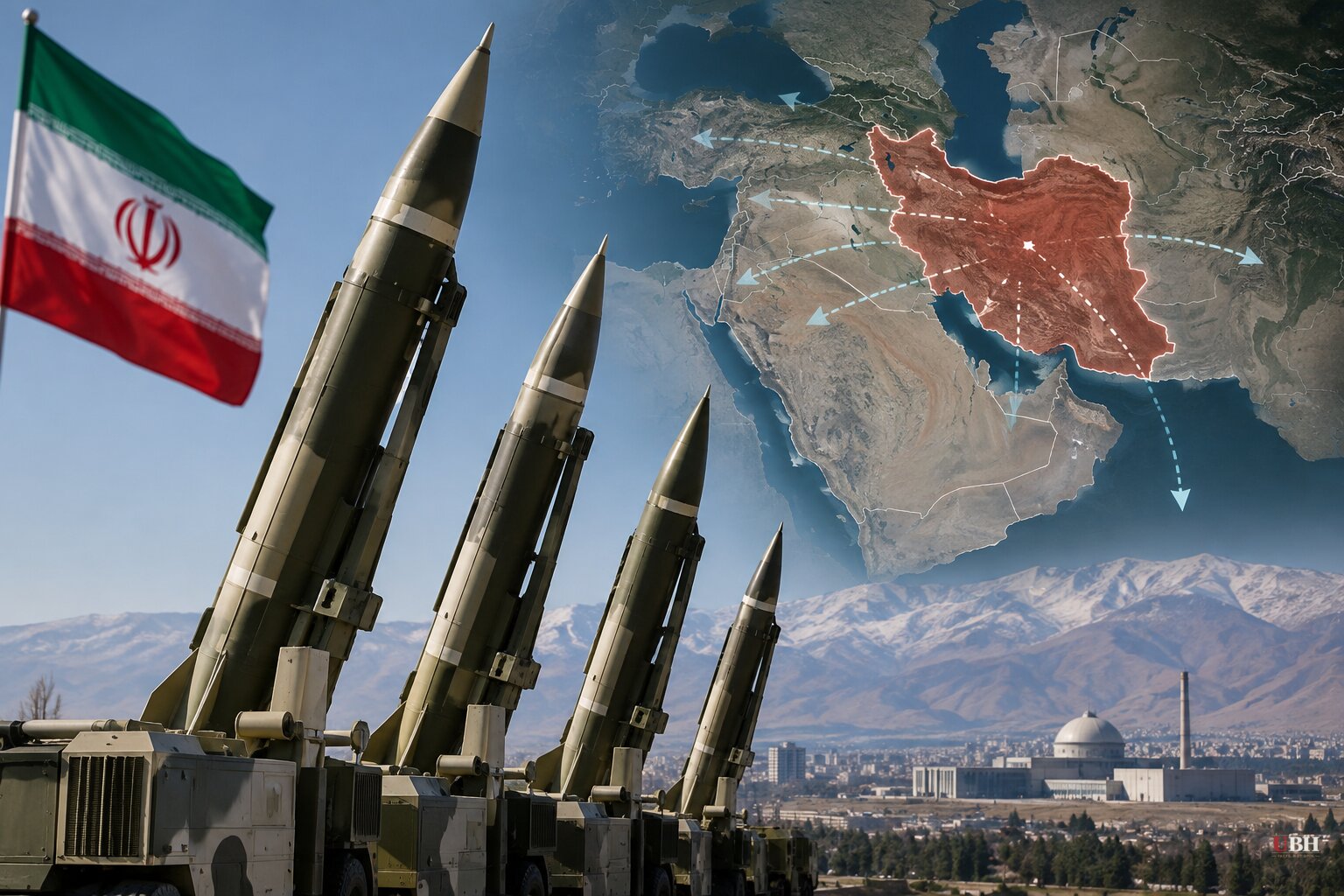
The seven-month U.S.-Iran war is in a stalemate, and both sides are using the pause to prepare for what comes next.
Senior Israeli security officials told Epoch Magazine Israel that Iran has rebuilt a significant portion of its ballistic missile stockpile and is working to expand it. They said Tehran is preparing for possible renewed fighting with the United States and Israel in the coming weeks.
The officials also said the buildup does not necessarily mean Iran's leadership has decided to go to war. They described it as an effort to strengthen deterrence and improve Tehran's position if diplomacy fails.
Israel raises its alert level
Israel has raised its alert level, the officials said. They warned that economic pressure and the continuing U.S. naval blockade could push Tehran toward an offensive against U.S. targets and Persian Gulf energy facilities, and possibly strategic sites in Israel.
One scenario the officials laid out: Iran concludes Trump intends to attack right after the elections and that talks have no future. Tehran then strikes first with a large-scale attack on regional targets. A senior Israeli security official said Israel's political leadership could order an offensive operation if intelligence shows imminent preparations for an attack on Israel.
Retired Gen. Jack Keane, chairman of the Institute for the Study of War and a Fox News analyst, made a similar argument after a trip to Israel, Gaza and Lebanon. He said Iran is set on rebuilding its military capabilities and that "no amount of negotiations are going to change this."
Tehran hardens sites and issues threats
Satellite images show Iran strengthening sensitive locations, including nuclear sites and border areas, to make them more resilient to attack, according to the Wall Street Journal. Iranian authorities are also preparing the public for renewed war. Paramilitary forces are reading war stories to kindergartners, advertising training in firing shoulder-mounted antiaircraft missiles, and holding rallies.
Mohsen Rezaei, secretary of Iran's Supreme National Security Council, told state-run Press TV in an interview conducted Oct. 10 that U.S.-linked technology infrastructure worth more than $2 trillion could be targeted if Washington attacks again. "We have not yet included these assets among our targets," he said. "But if war breaks out, many of these cables, data centers, artificial intelligence facilities, and numerous other sites will be destroyed."
Rezaei said Iran held back some capabilities earlier in the conflict and is "fully prepared to introduce new capabilities if the war starts again." He did not say what they are. According to the Journal, he also named the United Arab Emirates as a potential target.
People familiar with the warnings told the Journal that Tehran has told Arab officials it could hit regional targets including Saudi oil facilities. Some Iranian officials have also hinted at land incursions into neighboring countries, those people said.
The U.S. side
Trump ruled out an attack before the Nov. 3 midterms, but he has publicly mulled striking Iran's Pickaxe Mountain nuclear site. U.S. officials have said the military is preparing a range of options. The Journal reported that a third carrier strike group and another Marine expeditionary unit are heading to the Middle East, and that the Pentagon is weighing sending more air-defense equipment and munitions to regional bases.
The war has already cost the U.S. military. A Congressional Research Service report updated this week counts at least 81 American aircraft and drones lost or damaged, including 45 MQ-9 Reaper drones, 12 F-15E Strike Eagles and seven KC-135 tankers. The USS Abraham Lincoln, which left the region in late August, returned to San Diego on Oct. 8 after 321 days away.
Vice President JD Vance, who brokered a provisional peace deal in September that quickly collapsed, told Reuters that Iran must make a "meaningful" cut to its enrichment capacity. "If you don't want a nuclear weapon, then why do you need 60 percent enriched fuel?" he said. "We're not going to trade words for actions."
Vance also said Washington is unsure how Tehran makes decisions. He said the U.S. is talking with President Masoud Pezeshkian and Foreign Minister Abbas Araqchi, but it is unclear how much authority they hold after the opening U.S.-Israeli strikes killed Supreme Leader Ayatollah Ali Khamenei.
Tehran's position on talks
Iran frames the dispute differently. Foreign Ministry spokesman Esmail Baghaei said Oct. 12 that Tehran is still reviewing the U.S. response to its proposal on reopening the Strait of Hormuz and will reply through mediators. Qatar and Pakistan are carrying the messages. Rezaei earlier called the U.S. response "insufficient," saying it failed to meet Iran's seven conditions for reopening the strait and resuming talks.
Washington wants the nuclear program at the top of the agenda. Tehran wants talks centered on Hormuz and its security. Pezeshkian said this week that negotiations with Washington were "meaningless," and Trump has rejected Tehran's latest offer.
Sanam Vakil, Middle East director at Chatham House, said the war footing is "serving them well for now due to an impasse on many fronts." She added that a new war could let the Islamic Republic "dig itself out of the cul-de-sac it has dug for itself."
A second front
Houthi attacks on Riyadh's international airport over the weekend killed at least 14 people and injured several hundred, and airstrikes then hit Sanaa. Baghaei said he was "deeply concerned" and offered to facilitate Saudi-Houthi dialogue. The Houthis are backed by Iran.
The next fixed date is Nov. 3. Iran has not yet delivered its answer on the U.S. Hormuz response, and Trump has not said what he will do once the election is over.
Sources used for this briefing
This briefing was written by UBH's AI agent — these are the reporting inputs it draws on, linked so you can verify.


