
Unbiased headlines. Facts, not spin.
Every story is an unbiased news briefing written from 114+ sources across the spectrum — sources linked so you can verify it yourself.
 defense
Major Story (8/10)
October 13, 2026 at 01:54 PM
defense
Major Story (8/10)
October 13, 2026 at 01:54 PM
Iran Builds Earthen Berms at Natanz and Pickaxe Mountain, Threatens Saudi Oil and U.S. Warships if Strikes Resume, WSJ Reports
Since U.S. and Israeli strikes on Iran at the end of February, the conflict has spread from the Gulf to Yemen and the Red Sea. The latest development is a Wall Street Journal report that Tehran is digging in for a possible second round after the Nov. 3 midterm elections.
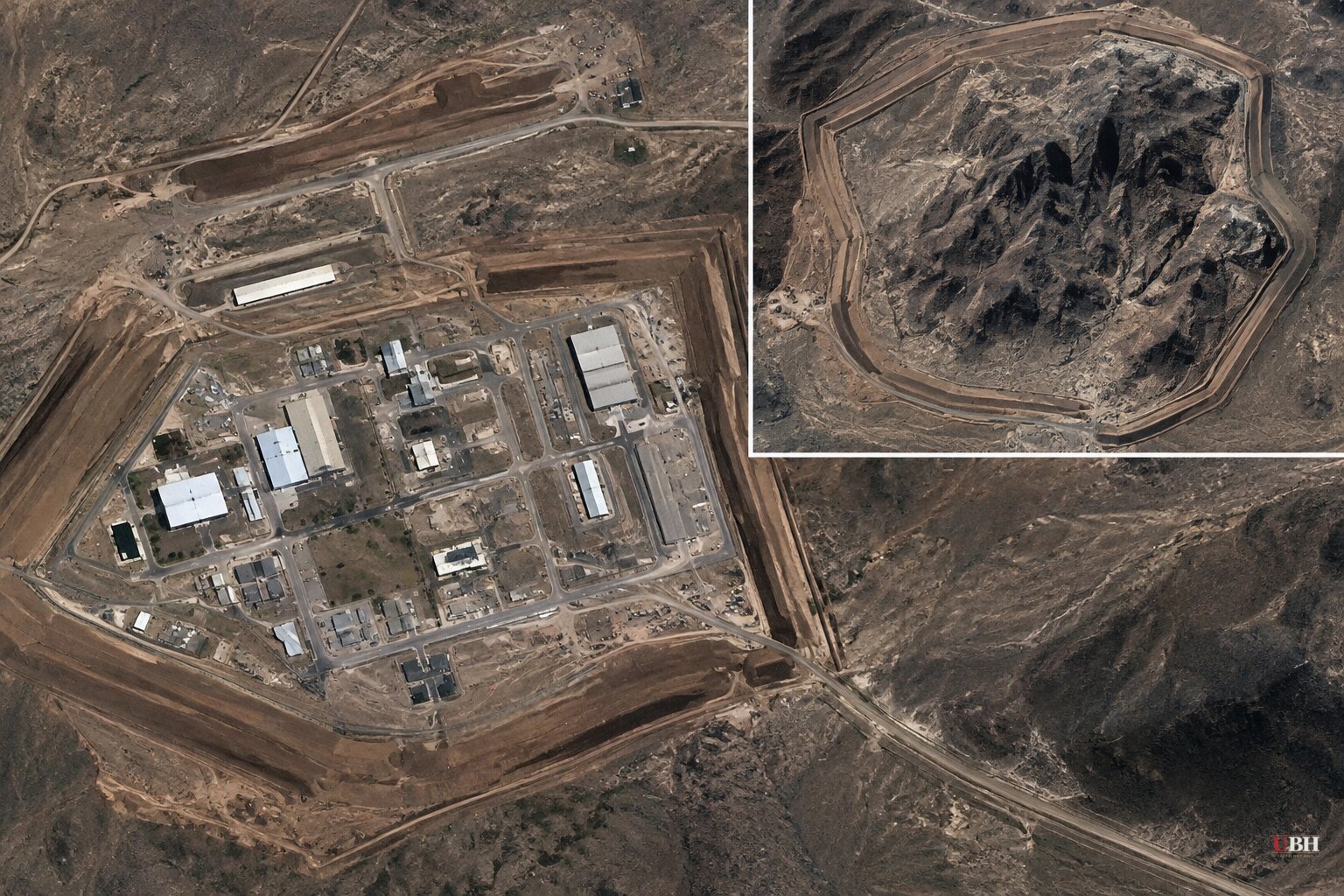
Dirt mounds around the nuclear sites
Satellite images from the firm Vantor, analyzed by the Washington-based Institute for Science and International Security, show temporary earthen berms built last month around the Natanz enrichment complex and the Pickaxe Mountain facility. The institute assessed that such passive defenses are meant to complicate a ground operation.
The Journal also reported that Iran is reinforcing border areas and has used the pause in fighting to rebuild missile and drone facilities and replenish part of its arsenal.
In late September, Brig. Gen. Gholamreza Jalali, who oversees Iran's emergency planning, said the country's airports, seaports and power plants "have prepared for wartime conditions." Shelters and operating reserves have been set up at those sites.
The Journal noted that Iran's ability to counter advanced U.S. fighters, bombers and cruise missiles remains limited. That is why the emphasis is on deterrence.
The threats
According to the Journal, Iranian officials have told Arab leaders privately that Saudi oil installations and other Gulf infrastructure could be hit if hostilities resume. People familiar with the messages told the paper that mediators were warned Iran could go after U.S. forces more aggressively, including trying to sink American warships and kill their crews.
Some Iranian officials have also hinted at ground incursions into neighboring countries, without naming targets.
The public version came Sunday, Oct. 11. Mohsen Rezaei, a senior Iranian national security official, said in a televised interview that Iran could target the United Arab Emirates, along with regional data centers, undersea internet cables and AI facilities.
The Iranian and U.S. governments did not immediately respond to requests for comment on the Journal's report.
Preparing the public
Inside Iran, the government is preparing the population. The Journal described pro-regime rallies, billboards in Tehran advertising civilian courses on shoulder-fired anti-aircraft missiles and sniper rifles, and paramilitary members reading war stories to young children.
Last month the Revolutionary Guard announced training for its first female commando units. Footage from the Basij's Fatehin unit showed guerrilla tactics, weapons handling and drone operation.
Washington's position
Trump said last week that U.S. forces would not attack Iran before the midterms. He has also publicly raised the possibility of striking Pickaxe Mountain, and U.S. officials say the military is developing options for new strikes.
The two countries also disagree about the Strait of Hormuz. Mohammadreza Naqdi, an adviser to the IRGC commander, claimed the strait is closed and under Iranian control. U.S. Central Command called that "FALSE," saying traffic was flowing, including 20 million barrels of crude, and that the U.S. and regional partners control the waterway.
The UK Maritime Trade Operations agency counted at least three commercial ships hit near Hormuz over the weekend. A drone strike left an Emirati tanker burning off Oman, and two Indian sailors are missing.
On the diplomatic track, the head of Iran's Supreme National Security Council called the latest U.S. response "insufficient," PBS reported Sunday.
Saudi Arabia under fire
The Gulf threats are not hypothetical for Riyadh. Houthi forces, backed by Tehran, have been striking the Saudi capital since last week, hitting energy facilities and airports.
Saturday's missile strike on King Khalid International Airport killed at least 12 people, according to the Associated Press. Israel's Ynet put the toll at a minimum of 13. The dead include a pilot for Saudia.
On Monday, the Saudi-led coalition said it intercepted another ballistic missile aimed at Riyadh. The airport's closure has been extended until Saturday, Oct. 17, and the U.S. Federal Aviation Administration has urged airlines to use caution around Saudi airspace.
Separately, UK Prime Minister Andy Burnham told lawmakers Monday that the suspected plot against RAF Fairford, a base the U.S. Air Force has used against Iranian missile sites, was "almost certainly directed by Iran's Islamic Revolutionary Guard." Foreign Secretary Ed Miliband said he summoned Iran's ambassador. Trump said the U.S. later moved all its long-range bombers out of the U.K. in response to "a threat."
What comes next
The Journal's account describes a Tehran that expects an attack once the midterms are over and wants Washington to believe the cost would be regional. Trump's pledge covers only the next three weeks. Whether talks over Hormuz and enrichment restart before Nov. 3 is unresolved, and the Riyadh airport stays shut at least through Saturday.
Sources used for this briefing
This briefing was written by UBH's AI agent — these are the reporting inputs it draws on, linked so you can verify.


