
Unbiased headlines. Facts, not spin.
Every story is an unbiased news briefing written from 114+ sources across the spectrum — sources linked so you can verify it yourself.
 defense
Major Story (8/10)
Event date: October 12, 2026
defense
Major Story (8/10)
Event date: October 12, 2026
Gulf Oil Exports Near Pre-War Levels as Hormuz Flows Reach 80% and Bypass Routes Expand
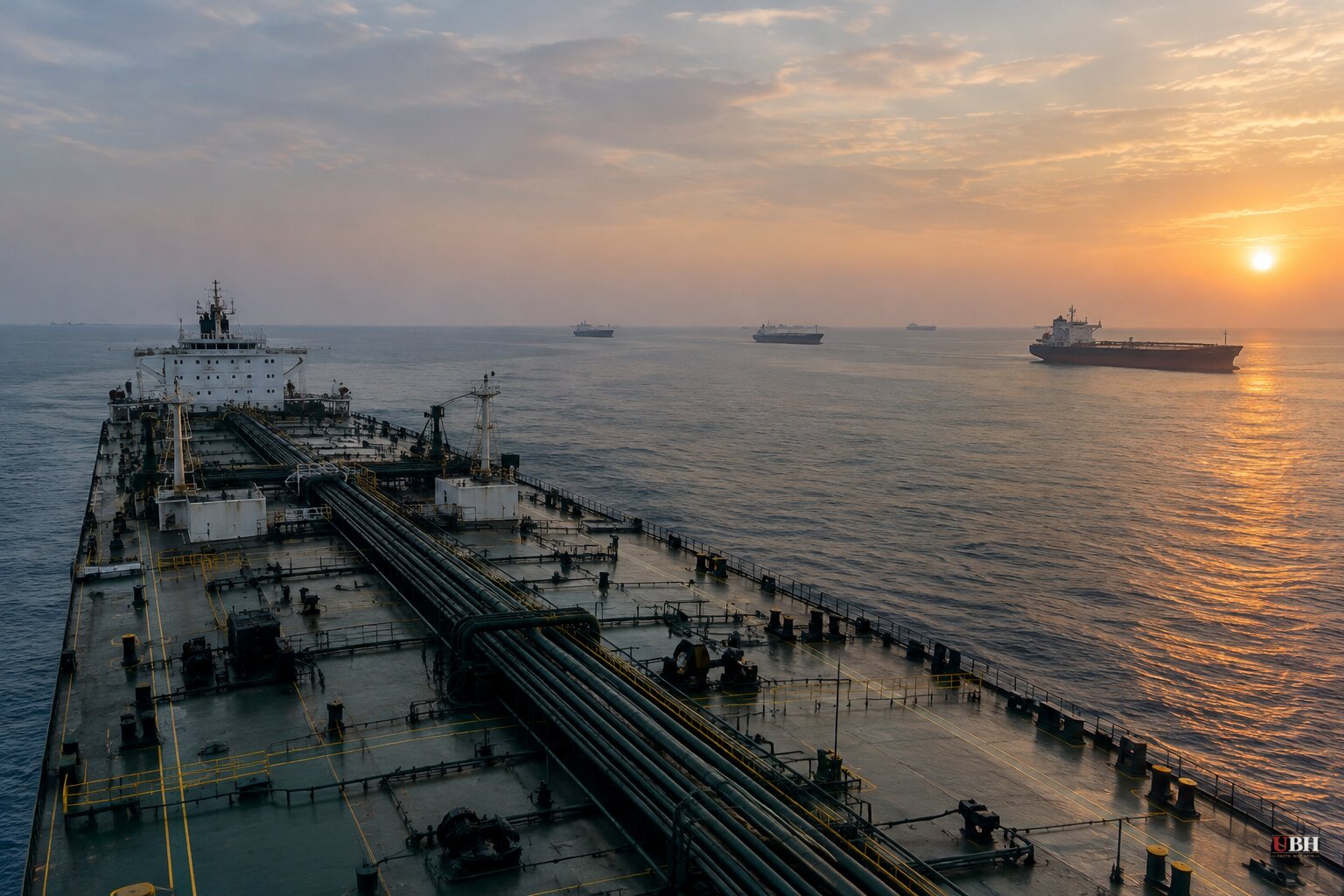
The Strait of Hormuz is open again, mostly. The bigger change is that the oil industry is learning to live without it.
Marine tracking firm Kpler said on Sept. 30 that Middle East oil shipments, excluding Iran, reached at least 16.5 million barrels per day in September. Flows through the strait itself averaged more than 13 million barrels per day in the last week of the month. That is roughly 80% of what moved through the waterway daily before the U.S.-Israeli operation began on Feb. 28.
Goldman Sachs is more bullish. The bank estimates Persian Gulf exports have returned to 23.3 million barrels per day, roughly matching 2025 averages. The two sets of figures measure different things, but both show the barrels are back.
Who is shipping, and how
Saudi exports were about 5.2 million barrels per day in September, up from 2.9 million in August, according to the Kpler data. Iraq exported about 2.5 million barrels per day, up from close to zero in April and May.
About 40% of Gulf crude now leaves without passing through Hormuz, up from 17% before the conflict. "The barrels are back, but the export system moving them is fundamentally different," Kpler said in a report.
Saudi Arabia ramped up its East-West pipeline to the Red Sea port of Yanbu in March. By the end of that month the 1,200-kilometer line was running at its full 7 million barrels per day, according to the Europe Says analysis. Riyadh is expanding that capacity further.
The United Arab Emirates leaned on its Habshan-to-Fujairah pipeline. By June, with alternative shipping arrangements, UAE exports reached 4.3 million barrels per day, about 85% of prewar levels. Abu Dhabi is also building more pipelines, ports and terminals. Pipeline capacity across the region could exceed 14 million barrels per day by the end of 2028, according to the Epoch Times.
Tanker operators have added a workaround. Ship-to-ship transfers let shuttle tankers carry crude out through Hormuz to the Gulf of Oman, hand it to a second vessel bound for Asia, and loop back for another load. "It is unable to stop the Hormuz Shuttle," said Alexander Stahel, founder of Burggraben Holding.
Two readings of control
President Trump has claimed the strait is under U.S. control. "Tremendous oil is coming out of the Hormuz Strait now. We're running it. We have total control," he told reporters at an Oval Office event.
Stahel reads it differently. "Iran's regime has lost control of the Strait of Hormuz," he said in a post on X.
The numbers support neither claim in full. Flows are about 80% of prewar levels, not 100%. And the share of crude bypassing the strait has more than doubled.
The war is not over
The fighting that closed the strait is still unresolved. U.S. Central Command said Operation Epic Fury hit more than 1,000 Iranian sites in its first 24 hours. Iran answered with missile waves aimed at U.S. bases in Qatar, Bahrain, Kuwait and the UAE. It also laid mines near Hormuz, which U.S. forces have worked to destroy.
New fronts have since opened. Iran-backed Houthis have attacked Saudi oil facilities and tankers. Shipping costs through the strait have surged.
Oil prices jumped above $100 a barrel when Iran choked the waterway. They have stayed elevated even as Iran's grip loosened, contrary to the predictions of many analysts that the spike would be short-lived, according to CNN's reporting.
Demand is taking the hit. In January, the International Energy Agency forecast 2026 global oil demand would grow by 930,000 barrels per day. By September it forecast a decline of 2.5 million barrels per day, citing the "impasse" in U.S.-Iran negotiations.
Carbon Brief estimates global fossil fuel emissions will fall about 0.5% this year, the first drop since 2020. Samantha Gross, director of the Energy Security and Climate Initiative at the Brookings Institution, said Trump's push for fossil fuels "might end up accelerating their phase down instead." Sverre Alvik of the consultancy DNV said much of the drop in driving and flying is likely temporary. Longer-lasting shifts, he said, come from the vehicles people choose to buy.
What comes next
In his late-September address to the UN General Assembly, Trump suggested the U.S. and Iran might conclude a deal shortly after the November midterm elections. Indirect preliminary talks are said to be underway, according to the Europe Says analysis.
Timing is the open question. Iran's leverage over global energy flows is shrinking as pipelines and ports come online, with the UAE's second West-East line projected for completion in 2027. Whether Tehran settles before that leverage erodes further, or holds out, is what any post-election deal will turn on.
Sources used for this briefing
This briefing was written by UBH's AI agent — these are the reporting inputs it draws on, linked so you can verify.


