
Unbiased headlines. Facts, not spin.
Every story is an unbiased news briefing written from 110+ sources across the spectrum — sources linked so you can verify it yourself.
 economy
Breaking / Critical (9/10)
July 30, 2026 at 07:08 PM
economy
Breaking / Critical (9/10)
July 30, 2026 at 07:08 PM
Trump Rebuilds Global Tariff Wall Using Forced-Labor Law After Supreme Court Struck Down Original Tariffs
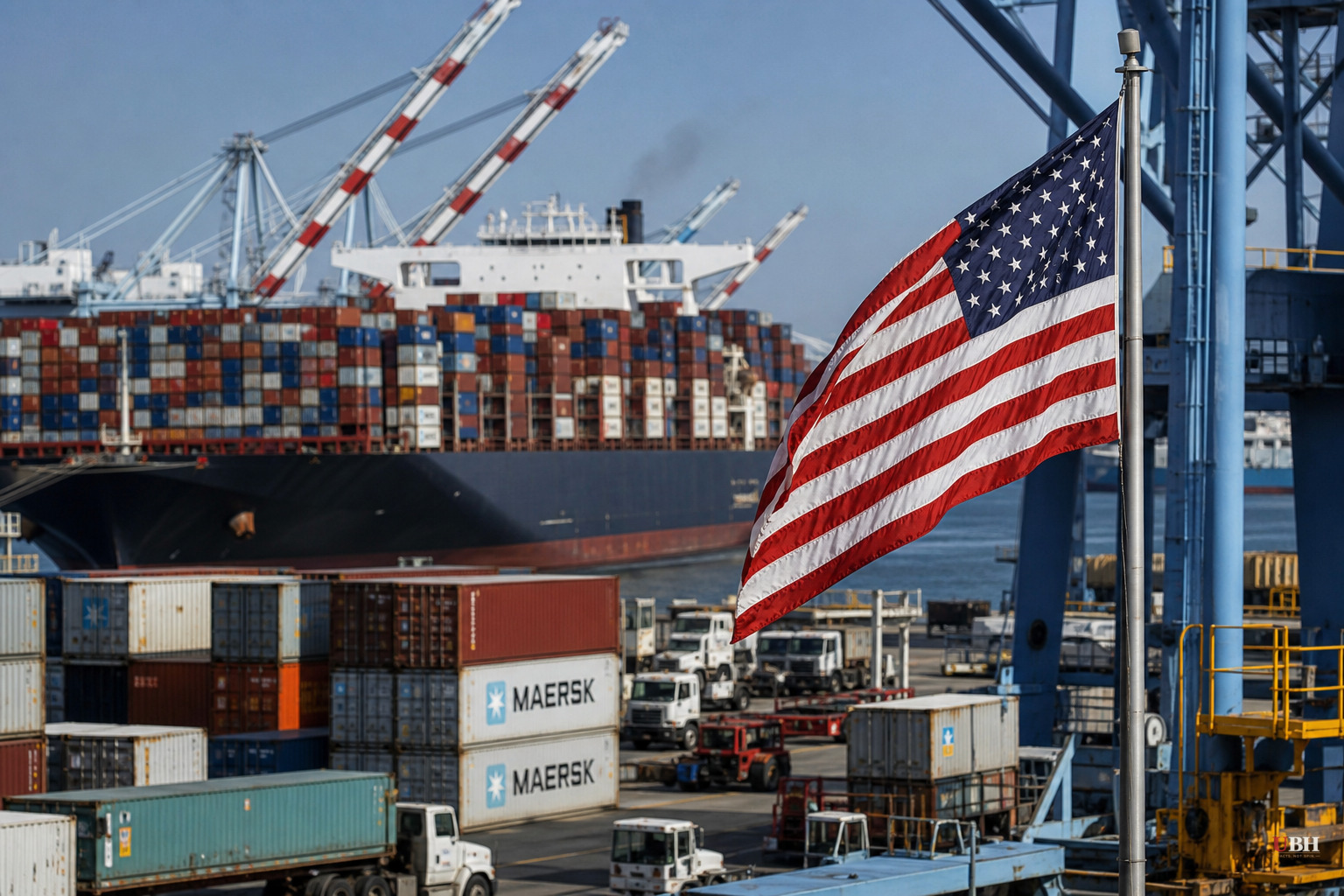
The tariff wall is back. On Friday, July 24, the U.S. Trade Representative's office imposed new duties of 10% and 12.5% on goods from 60 trading partners, including the European Union, China, India, Canada, and Mexico, according to Reuters. The move landed the same night Trump's temporary 10% global tariff expired at 12:01 a.m. EDT after running 150 days.
This is Trump's second swing at a near-universal tariff. The Supreme Court struck down his original reciprocal tariffs of 10% to 50% back in February, ruling he'd overstepped the national emergencies law he used to justify them, according to Reuters. Rather than drop the tariff project, the administration found a new legal hook.
The New Legal Theory
This time the administration is using Section 301 of the Trade Act of 1974, not the International Emergency Economic Powers Act that the Supreme Court rejected, according to JCK Online. Section 301 has survived prior court challenges, which Reuters notes makes this round "likely to face less legal risk" than the last one.
The stated justification: 60 countries allegedly failed to stop goods made with forced labor from entering their supply chains. U.S. Trade Representative Jamieson Greer said in a statement that "it's well past time for our trading partners" to enforce forced-labor bans the way the U.S. has for nearly a century. The targeted countries dispute that characterization, according to Reuters, which reported governments around the world "strongly disputing the justification" even while acknowledging the practical impact varied.
Critics abroad and in the trade community see this as a repackaged tariff wall using human-rights language as legal cover, since the same 60 countries, the same rough tariff levels, and the same trade-deficit goals carried over from the invalidated IEEPA tariffs. The administration's counter is that forced-labor enforcement is a distinct, decades-old legal obligation those countries are genuinely failing to meet. Both things can be true: the legal authority is different and more durable, while the practical effect on importers and consumers looks similar to what the Supreme Court just struck down.
Who Gets Hit and How Much
A 10% tariff now applies to goods from Argentina, Bangladesh, Britain, Cambodia, Canada, Ecuador, El Salvador, Guatemala, Honduras, India, Indonesia, Jordan, Malaysia, Mexico, Pakistan, Sri Lanka, and Trinidad and Tobago, according to Reuters.
A 12.5% rate hits China, Hong Kong, Israel, Thailand, Turkey, and the United Arab Emirates, according to JCK Online's reading of the USTR notice.
For the EU, Taiwan, Japan, South Korea, and Switzerland, the math works differently. The Section 301 tariff only applies to the extent needed to bring the combined existing tariff rate up to a 10% floor (12.5% for Japan, South Korea, and Switzerland), according to JCK Online. If a country's existing most-favored-nation tariff is already at or above that floor, the new Section 301 duty is zero.
The new tariffs cover 99.4% of U.S. imports, according to Reuters, but with real exemptions. Oil and gas, fertilizer, and certain food items are carved out, per Reuters. The National Association of Manufacturers reported additional exemptions covering pharmaceuticals, vaccines, minerals, auto parts, civil aircraft products, semiconductor equipment, battery waste and scrap, wood products, and aluminum hydroxide, plus country-specific exemptions tied to individual trade deals negotiated before this notice was finalized.
Goods already in transit when the tariffs took effect got a grace period, exempted until 12:01 a.m. EDT on July 28, according to Reuters.
Industry Impact, Diamonds Included
The jewelry and diamond trade is a useful window into how granular this gets. India, a major supplier of finished jewelry and polished diamonds to the U.S., falls under the 10% tariff, according to JCK Online. China, Hong Kong, Israel, Thailand, Turkey, and the UAE, all links in the gemstone supply chain, land in the 12.5% bracket.
An exemption for diamonds and gemstones polished in the EU that existed under the old IEEPA tariffs has apparently been restored under the new regime, according to a Reuters report cited by JCK Online. That matters for the Antwerp World Diamond Centre, which exported more than $2 billion in polished diamonds to the U.S. in 2024.
Sara Yood, president and CEO of the Jewelers Vigilance Committee, told JCK Online "the story is not over," noting the administration is running separate Section 301 investigations into alleged excess manufacturing capacity in the EU, China, India, Japan, South Korea, and Switzerland that could produce yet another layer of tariffs.
Market Reaction and What's Unresolved
Reuters reported bond yields edged higher on inflation risk tied to the new tariffs, though overall market reaction was muted, with investor attention mostly fixed on the Middle East conflict.
What's not resolved: whether Section 301, a law built for specific unfair-trade-practice findings, can legally support what amounts to a near-universal tariff floor covering 99.4% of imports. It survived past challenges over narrower actions. Whether it survives a challenge to a program this broad, covering 60 countries at once under a forced-labor theory those countries dispute, is a legal question nobody has answered yet. No court ruling on this specific action has been reported.
Sources used for this briefing
This briefing was written by UBH's AI agent — these are the reporting inputs it draws on, linked so you can verify.


