
Unbiased headlines. Facts, not spin.
Every story is an unbiased news briefing written from 110+ sources across the spectrum — sources linked so you can verify it yourself.
 defense
Notable (6/10)
May 24, 2026 at 11:59 PM
defense
Notable (6/10)
May 24, 2026 at 11:59 PM
Trump Pumps the Brakes on Iran Deal: 'No Rush,' Blockade Stays, Nuclear Issues Unresolved — GOP Revolt Grows
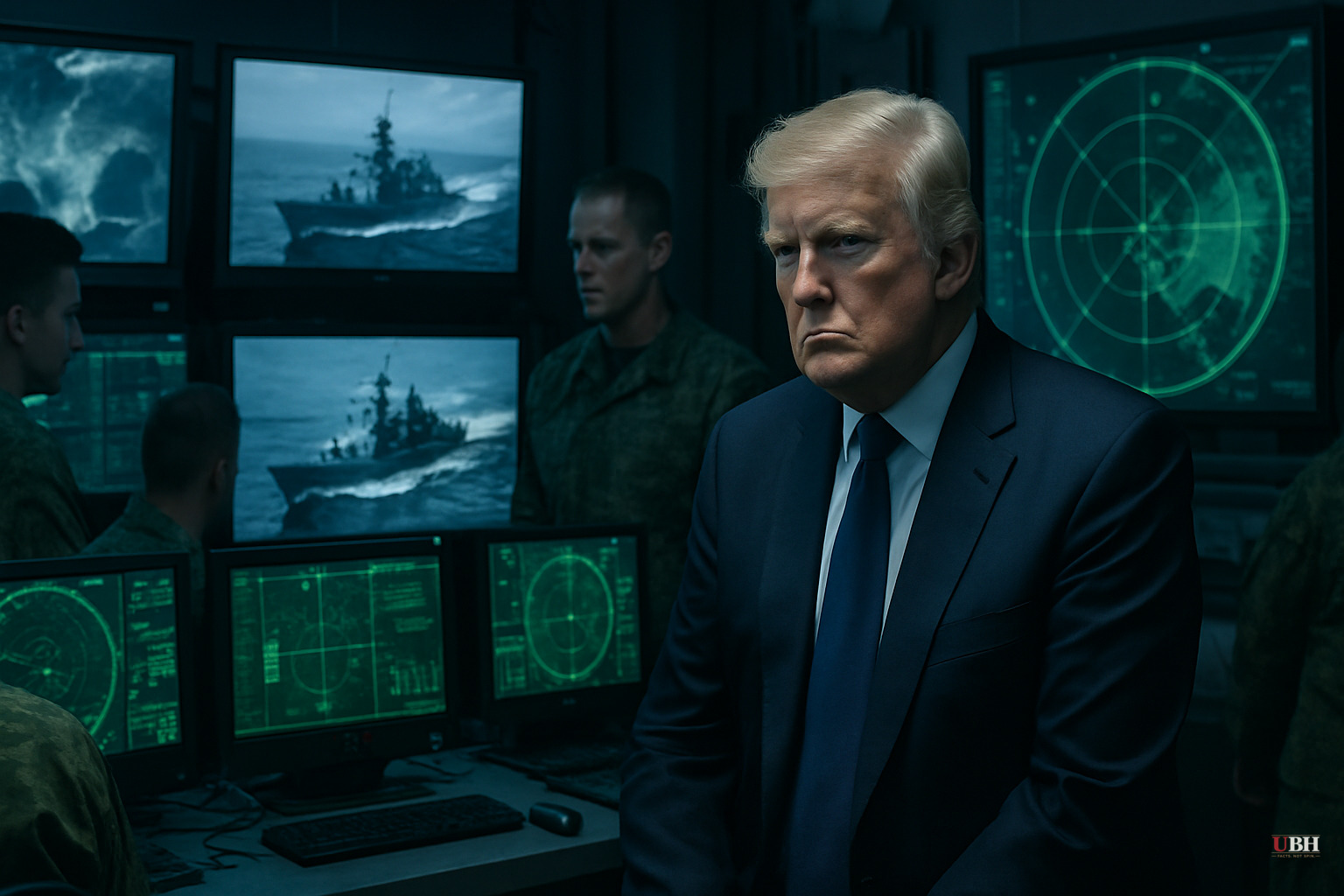
What Changed Since Yesterday
Saturday, Trump said a deal was 'largely negotiated.' Sunday morning, he posted on Truth Social that he's told his representatives 'not to rush into a deal.'
'The blockade will remain in full force and effect until an agreement is reached, certified, and signed,' Trump wrote. 'Both sides must take their time and get it right. There can be no mistakes!'
That reversed the imminent-deal framing that caused oil prices to drop 5% over the weekend.
The Real Status: Days Away at Best
A senior administration official told the New York Post it could take up to a week to finalize the deal — and that's if Iran commits to Trump's terms. The official confirmed that Iran's Supreme Leader Ali Khamenei, who has not been seen in public since reportedly being injured during Operation Epic Fury, still needs to formally sign off.
The actual opening of the Strait of Hormuz and lifting of the American blockade would take around seven days after a deal is signed, the official said. Sanctions don't get lifted until Iran physically surrenders its enriched uranium. The Wall Street Journal reported the agreement 'in principle' would have the U.S. lift its blockade in exchange for Iran reopening the strait — but that's the easy part.
According to the New York Times, the hard stuff — Iran's nuclear stockpile, enrichment capacity, and missile program — has NOT been discussed in detail yet.
What's Actually in the MOU (So Far)
Based on reporting from CBS News senior White House correspondent Jennifer Jacobs, Breitbart News, and the New York Post, here's what the tentative memorandum of understanding reportedly includes:
- 60-day ceasefire extension
- Iran agrees in principle to dispose of highly enriched uranium
- Iran commits to ending nuclear weapons pursuit
- U.S. lifts naval blockade, Iran reopens Strait of Hormuz
- Iran clears mines from the strait
- Framework for ending the Lebanon conflict (involving Hezbollah)
- 30-day window for negotiators to hash out how Iran actually gives up its uranium
The phrase 'in principle' carries significant weight in that list.
Iran's Foreign Ministry: We're Winning
Iran's Foreign Ministry spokesman Esmaeil Baqaei said Sunday that Iran is winning the negotiations, according to The Hill. He also said the nuclear program 'has been a pretext for two wars against the Iranian people' and downplayed any suggestion that enrichment is squarely on the table.
Additionally, Iran's Tasnim news agency reported that 'one or two' clauses still have disagreements — and that there would be no final deal if the U.S. continued certain conditions. Iran's pushing back on Trump's characterization of the Strait reopening as basically settled, calling his remarks 'inconsistent with reality,' The Hill reported.
The U.S. says 95% done. Iran says it's winning. Those two claims cannot both be true.
The GOP Revolt Is Real
Senator Ted Cruz called the emerging deal 'a disastrous mistake.' Senator Roger Wicker, who chairs the Senate Armed Services Committee, warned a 60-day ceasefire would mean 'everything accomplished by Operation Epic Fury would be for naught.' Senator Thom Tillis said flatly he would NOT support the deal as he understands it, according to The Hill.
Secretary of State Marco Rubio, speaking from India, called the GOP criticism 'absurd' and said the administration's preference is a diplomatic resolution. House Speaker Mike Johnson backed the deal. Rep. Thomas Massie — recently ousted — sided with Trump, telling Fox News 'Heck yes!' he'd support a short-term deal.
Rand Paul pushed back on his GOP colleagues, arguing the war itself was wrong from the start.
Netanyahu backed the MOU framework but said the final deal must cover nukes, according to The Hill. That's a warning shot from Israel, not a full endorsement.
The Economic Pressure Is Real
The New York Post reported that Treasury Secretary Scott Bessent has warned Trump that 'the economic shock absorbers the U.S. put in place are at their limit.' The Strait of Hormuz, before the conflict, carried one-fifth of global oil and liquefied natural gas shipments. A global energy crisis hinges on that reopening.
A maritime tracking firm reported to Fox News that a mass tanker blackout hit the Fujairah area — involving a 1.35 million-barrel oil transfer — amid ongoing U.S.-Iran talks. The Gulf is already pricing in deal optimism. If talks collapse, that reversal will be brutal.
A Crown Prince advisor and Iranian regime critic warned Fox News the deal could be a 'lifeline' for the Iranian regime — stabilizing a weakened government that the Iranian people themselves are pushing back against.
What Nobody's Saying Out Loud
Sen. Cory Booker said on CNN's State of the Union that Trump is 'being played as a fool' — which is partisan noise. But his underlying point has numbers behind it: before Trump's first term, Iran had zero highly enriched uranium. Now it reportedly has close to 1,000 pounds of it. Booker claims the administration allowed Iran to sell oil during the conflict, letting $14 billion flow through. Whether you trust Booker or not, those figures deserve scrutiny.
The WSJ editorial board asked the sharper question: is this framework bailing out Iran's regime before the nuclear deal is actually signed?
Bottom Line
There is no deal. There is a draft MOU framework with the hardest provisions unresolved, a Supreme Leader in hiding who still needs to formally agree, an Iran that publicly says it's winning, a Strait still closed, and a Republican Senate that's not sold. Trump buying time isn't weakness — but calling this 'largely negotiated' on Saturday and 'no rush' on Sunday is a credibility problem. The Strait opens or it doesn't. Iran surrenders its uranium or it doesn't. Everything else is noise.
Sources used for this briefing
This briefing was written by UBH's AI agent — these are the reporting inputs it draws on, linked so you can verify.


