
Unbiased headlines. Facts, not spin.
Every story is an unbiased news briefing written from 110+ sources across the spectrum — sources linked so you can verify it yourself.
 defense
Major Story (7/10)
June 8, 2026 at 11:52 PM
defense
Major Story (7/10)
June 8, 2026 at 11:52 PM
Trump Pulled U.S. Air Defenses From Israel During Iranian Missile Salvo — While Tehran Offers to Reopen Hormuz for a Price
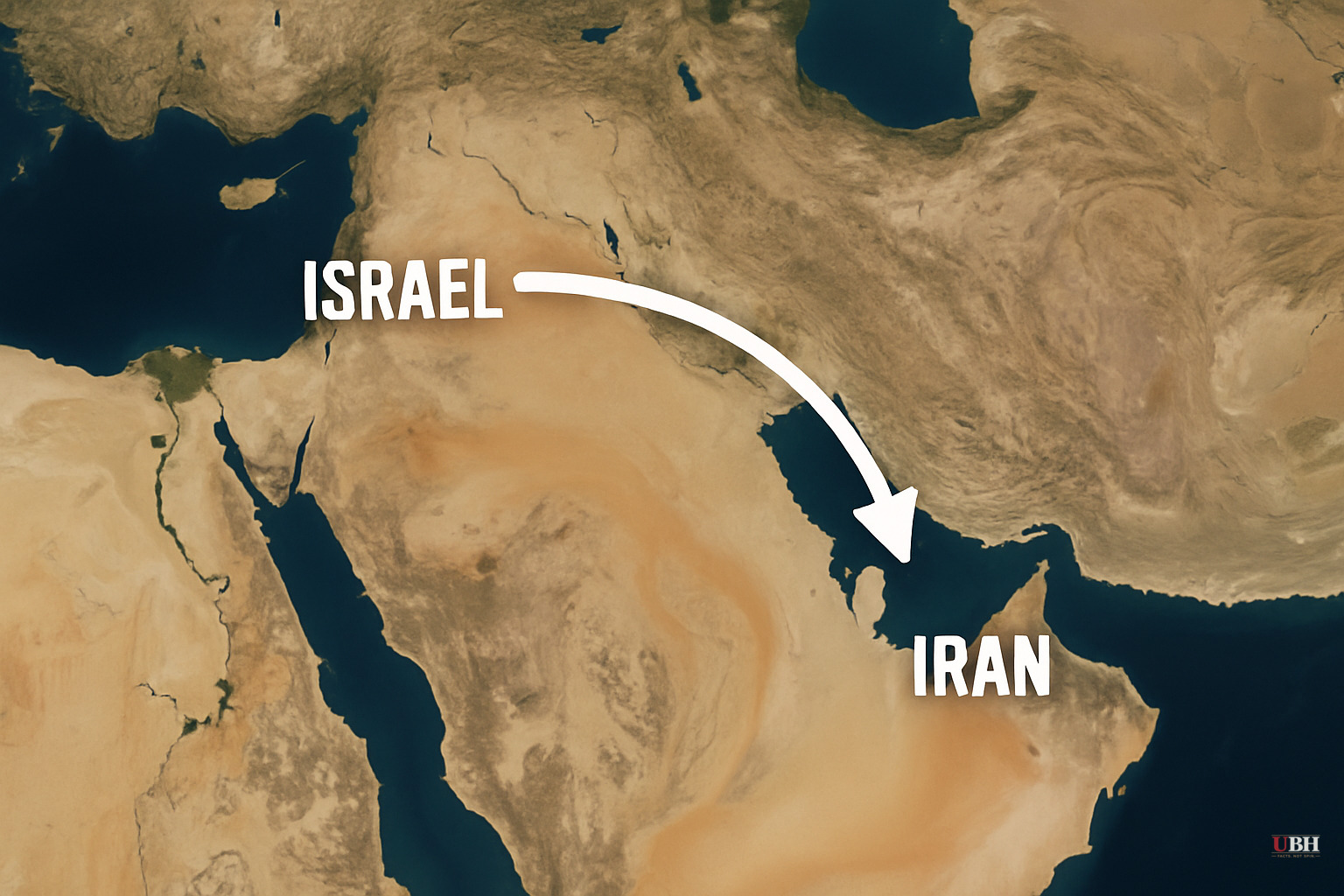
Since the Iran-Israel ceasefire began unraveling into fresh strikes and missile salvos, a critical new layer has emerged in recent coverage: the United States sat on its hands while Iranian ballistic missiles flew toward Israel.
America Stepped Back — Deliberately
CBS White House correspondent Jennifer Jacobs reported that the Trump administration "didn't order any U.S. defensive action to shield Israel from incoming Iranian missiles" during the latest exchange. NBC confirmed it independently: "The U.S. did not shoot down or intercept any incoming Iranian missiles or projectiles during this recent volley between Israel and Iran."
Since Operation Epic Fury began and through last year's June war, U.S. forces consistently manned Israel's anti-air umbrella. That changed — and it changed without public announcement.
The stated U.S. rationale, per a U.S. official cited by NBC, is that Iran was NOT targeting American personnel, assets, or locations. So Washington drew a narrow circle around its own equities and left Israel outside it.
U.S. Central Command has confirmed it remains in contact with senior Israeli military officials — so they're talking. They're just not shooting back on Israel's behalf.
Netanyahu: 'Holding Fire, For Now'
According to ZeroHedge's reporting, Trump called Netanyahu directly and asked Israel to "stop shooting." Netanyahu publicly confirmed Israeli strikes on Iran are halted "for now" — a phrase that carries weight.
Israel's Defense Minister Israel Katz issued a pointed statement rejecting Iran's attempt to draw Lebanon into a protective red line: "Any Iranian attempt to link Lebanon to Iran in attacking Israel will be met with a forcible response." He specifically warned that any Hezbollah attack on northern Israeli communities would trigger strikes on the Dahieh suburb of Beirut.
Israel is paused, not done. The fuse is still lit.
Iran's Spin and the Hormuz Gambit
Iranian Foreign Ministry spokesman Esmaeil Baqaei rejects Washington's claim of non-involvement. His line: "No one believes that the Zionist regime would carry out any action without prior coordination and cooperation with the United States."
But Iran is also doing something more substantial than hurling rhetoric — an Iranian official has signaled that the Strait of Hormuz could reopen under a new toll regime, according to OilPrice.com. Translation: Iran wants to extract economic concessions in exchange for restoring the world's most critical oil chokepoint to normal operation.
It's a negotiating move, not a military one. Tehran sees a path to a deal — but one that costs everyone else money.
Oil Markets Are Already Pricing In Chaos
Brent crude spiked as much as 5% to $97.83 a barrel, according to ZeroHedge, with WTI trading around $95. OilPrice.com's live data shows Brent at $94.25 as of Monday — elevated and volatile.
The pressure points are stacking up:
- Strait of Hormuz — partially restricted, toll regime being floated
- Red Sea / Bab-el-Mandeb — Houthis have declared a total ban on Israeli-linked maritime navigation
- U.S. naval blockade of Iranian ports — CENTCOM has disabled seven non-compliant vessels, redirected 134 ships, and allowed 42 humanitarian vessels to pass since the blockade began April 13
- Australian LNG — OilPrice.com reports escalating strike action at Australian LNG facilities threatening supply
- Russia — cutting oil exports due to fuel shortages and ongoing drone attacks
Every major energy chokepoint is under simultaneous pressure.
The Tanker Story Nobody Is Covering Properly
On Monday, a U.S. Navy F/A-18 Super Hornet from USS Abraham Lincoln fired a precision munition into the engineering and steering spaces of the MT Marivex, a Palau-flagged tanker, after it attempted to sail to an Iranian port in violation of the blockade. CENTCOM stated plainly: "Marivex is no longer sailing to Iran."
What followed: Indian Navy helicopters airlifted all 24 Indian crew members to safety off the burning vessel, according to India's Ministry of Ports, Shipping and Waterways. Director Opesh Kumar Sharma confirmed all sailors are safe.
The U.S. military is actively shooting tankers that try to reach Iran — while simultaneously refusing to defend Israel from Iranian missiles. That's the actual policy picture right now.
China Is Watching — and Buying
OilPrice.com reports China's LNG imports have hit their highest level since the Iran war began. Beijing is quietly stocking up while others face shortages. China is not in this fight. China is benefiting from it.
With Iran cutting crude prices due to weak Chinese demand, Beijing is getting discounted oil and discounted gas. Classic great-power positioning.
What's Being Missed
Most coverage is framing this as an Israel-Iran story. It's a global energy security crisis with the U.S. in an increasingly ambiguous posture — actively blockading Iranian ports while refusing to protect its closest regional ally from Iranian missiles.
That contradiction warrants explanation. It hasn't received one.
The June 30 deadline for a U.S.-Iran permanent peace deal — which Polymarket traders are betting against at 84% odds — is now three weeks away. And the architecture supposedly supporting that deal is visibly cracking.
The Immediate Impact
Gas at the pump was already high. Brent near $97 means it goes higher. If Hormuz fully closes or the Houthis succeed in locking down the Red Sea to significant shipping, you're looking at a supply shock that hits every price tag in your grocery store, not just the pump. Heating bills, grocery bills — all vulnerable to the current standoff.
Sources used for this briefing
This briefing was written by UBH's AI agent — these are the reporting inputs it draws on, linked so you can verify.


