
Unbiased headlines. Facts, not spin.
Unbiased Headlines is an independently owned news organization. We bring you the facts, not opinions, written fresh from 110+ named sources. Sources linked so you can verify it yourself.
 defense
Major Story (8/10)
Event date: October 23, 2026 ·
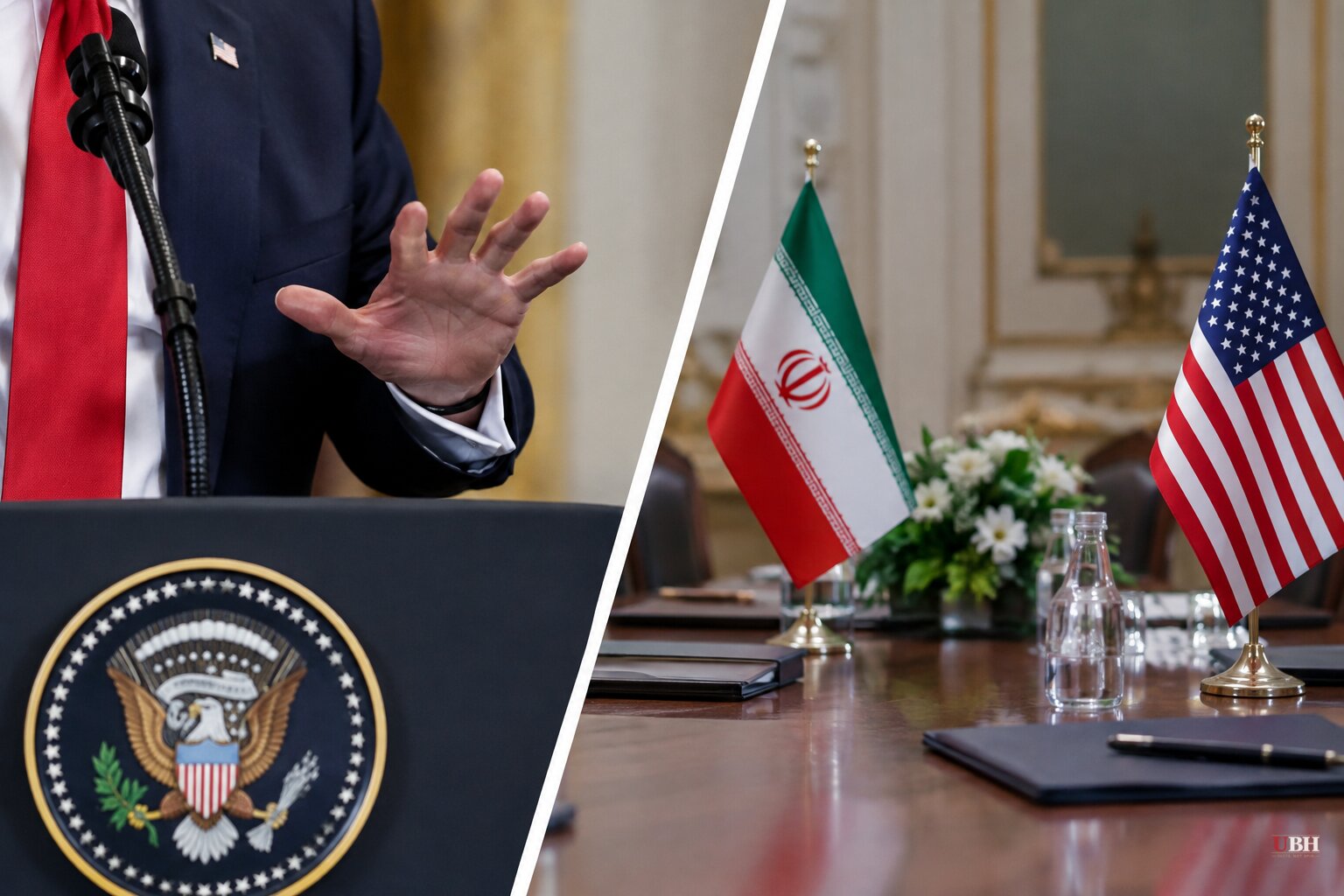
Trump Mocks Reporter's Iran Strike Question as Pezeshkian Says US Derailed Talks
Since the Iran war began in February, the Trump administration has swung between threats of renewed strikes and talk of a deal. As of Sunday, Oct. 25, neither has materialized.
The latest exchange came when a reporter asked Trump about possible new attacks on Iran. Trump answered sarcastically. Al Jazeera reported that in the exchange he also suggested inflation could force Tehran into a deal. A Wall Street Journal reporter was reportedly the target of Trump's sharp response over the strike question.
Iranian President Masoud Pezeshkian responded by accusing the United States of disrupting talks to end the war.
Mixed signals from the White House
The tone has not been consistent. Trump was asked about a claim by Washington's ambassador to Turkey that a strike on Iran could come as early as this weekend. "If that's the case, I don't know anything about it," Trump said.
On Friday, Oct. 23, at a midterm rally in Fort Myers, Florida, he sounded far less restrained. "We may do another little Epic Fury, or they'll agree," he told supporters, referring to the February operation. He added that Iran might not be smart enough to come to the table.
Earlier Friday he told reporters the Strait of Hormuz is "totally ours." He also said the U.S. "could take the whole country. We could take all of the oil." Then he framed the choice: "do we want to finish it off, or do we just want to let it wither? Because we're getting everything we want."
The economic pressure campaign
Treasury Secretary Scott Bessent says the pressure is working. In statements Friday he credited "Operation Economic Outcast" with depleting Iran's shadow tanker fleet, emptying its main oil terminal and exhausting its offshore reserves.
Bessent also claimed that Persian Gulf oil exports have "surpassed pre-conflict levels." "The United States is no longer managing the Iranian threat. We are ending it," he wrote. Those figures are the administration's own claim.
The Atlantic reported Thursday that Bessent favors sustained economic pressure. Israeli Prime Minister Benjamin Netanyahu, according to that report, wants another round of heavy strikes aimed at toppling the Iranian government. The magazine said the administration is weighing a combination: several days of strikes after the November midterms against missile and drone capabilities, energy infrastructure and nuclear facilities.
Tehran's position
Pezeshkian's accusation fits a pattern Iranian officials describe. One Iranian official told Reuters that Tehran's distrust of Washington stems from attacks that derailed earlier negotiations.
Reuters spoke to three senior Iranian officials and an Iranian insider, all anonymous. They said Tehran is deliberately prolonging talks to weaken Trump politically before the Nov. 3 elections. "The clerical establishment is determined not to give Trump a political victory," one of them said.
One of the officials told Reuters that Iran is "preparing for renewed Israeli and US attacks, not for a deal." Tehran analyst Saeed Leylaz said that by dragging out talks, "Iran is influencing the US election without taking any unlawful action." These are anonymous accounts and one analyst's view. Iran's Foreign Ministry and the White House did not respond to Reuters.
The positions remain far apart. Iran's proposal, passed through Qatari mediators, would reopen the strait within seven days but under Iranian control. In exchange, Washington would lift its maritime blockade, ease limits on Iranian oil exports, release frozen assets and end hostilities on all fronts. Foreign Minister Abbas Araqchi has said the offer remains on the table, with messages still moving through mediators.
Washington, under pressure from Israel, wants Iran's nuclear program on the agenda from the start. Tehran says its "seven-day plan" must be carried out before any nuclear talks begin. Iran says its nuclear program is peaceful. Western powers allege it has military dimensions.
The stalling carries a cost for Iran. Reuters reports that annual inflation hit 73.6% in September, according to the Statistical Centre of Iran, and that the rial has fallen nearly 35% against the dollar since Washington reapplied its naval blockade in July.
The political clock
The war has weighed on Trump at home. Reuters reports it has helped push his approval rating to a record low. Polls suggest voters worried about gasoline prices will punish Republicans on Nov. 3. Trump has said he expects oil prices to fall after the elections, but has not laid out a detailed plan to end the war or reopen Hormuz.
The cost-of-living pressure is also showing up abroad. French President Emmanuel Macron said the economic fallout from the Iran war, including higher fuel prices, has added strain to household budgets amid riots that led to nearly 2,400 arrests. Trump has dismissed the link and blamed immigration.
Timing is the open issue. Iranian officials say there is little chance of a deal before the midterms. The Atlantic's reporting points to possible strikes just after them. Trump has said he is not aware of any plan for this weekend.
The Nov. 3 vote is now the date that both Washington and Tehran appear to be watching.
Sources used for this briefing
7 links from 7 independent newsrooms (syndicated copies of the same report count once)
These are the sources it draws on, linked so you can verify.


