
Unbiased headlines. Facts, not spin.
Every story is an unbiased news briefing written from 110+ sources across the spectrum — sources linked so you can verify it yourself.
 economy
Major Story (8/10)
July 21, 2026 at 12:57 PM
economy
Major Story (8/10)
July 21, 2026 at 12:57 PM
Trump Imposes 50% Tariffs on Canadian Goods Using 1930s Depression-Era Law
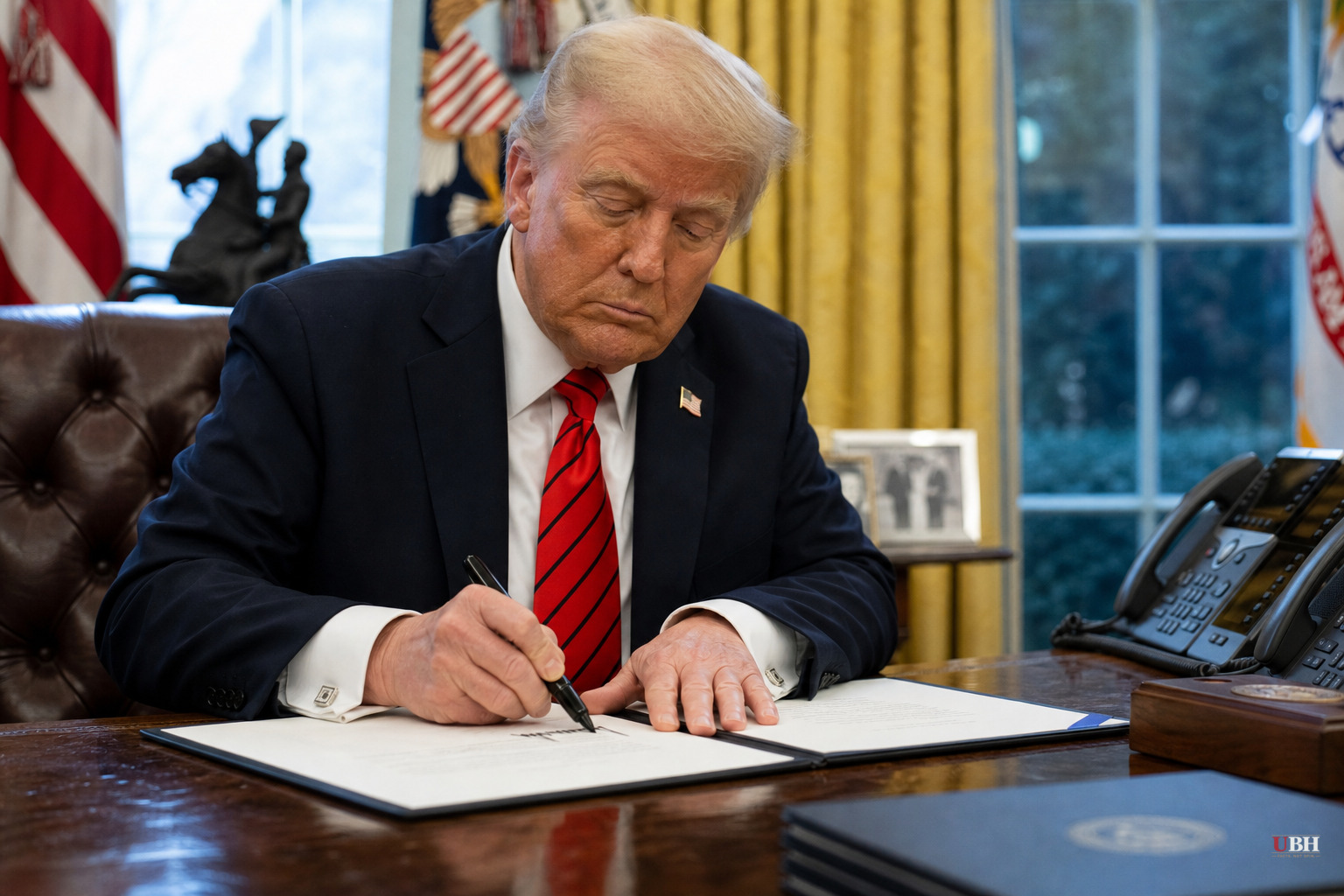
President Trump signed proclamations Monday night imposing 50% tariffs on a range of Canadian goods, including wine, dairy, cement, furniture, and ice hockey equipment, according to Forbes. The tariffs take effect in 30 days, with the White House pointing to Aug. 19 as the effective date, per Reason. Energy, potash, critical minerals, fish, and auto parts are all exempted, according to CBC News. That's a notable carve-out given how central autos and energy are to Canada-U.S. trade. The stated justification: Canada is discriminating against U.S. cars, dairy, and alcohol. U.S. Trade Representative Jamieson Greer said Canada has "taken U.S. alcohol products off Canadian shelves, given better market access to dairy products from the European Union, and has put a cap on U.S. vehicle exports," according to Forbes.
The Legal Vehicle Is the Real Story Trump is
using Section 338 of the Tariff Act of 1930, the Smoot-Hawley law widely blamed for deepening the Great Depression, according to Reason. That provision lets a president impose tariffs up to 50% on countries found to be discriminating against U.S. goods. Legal scholars say Section 338 hasn't been used since the 1940s and was effectively superseded by trade legislation passed in 1962 and 1974. Philip Zelikow of the Hoover Institution, a conservative think tank, made that argument in a piece cited by Reason, calling the authority defunct. Georgetown trade scholar Peter Harrell raised additional legal objections on social media, per the same report. Trump has already lost this fight in court once. The U.S. Supreme Court ruled earlier this year that many of his global tariffs, imposed under emergency powers, were illegally enacted, according to the BBC. A separate batch of Section 122 tariffs was invalidated by the U.S. Court of International Trade, per Reason. Trump is now working through the list of every tariff authority available to him, and Section 338 is one nobody expected him to reach for. If Trump wants to use trade policy as leverage, Congress gave him legitimate tools to do it. Reaching for a dormant Depression-era statute that hasn't survived legal scrutiny in modern courts will draw challenges, and the Constitution assigns tariff authority to Congress, not open-ended executive proclamation.
Why Now CBC
News reported the timing is not random. The U.S. is pushing for changes to the Canada-U.S.-Mexico Agreement (CUSMA, also known as USMCA) that would lock Canadian concessions permanently into treaty text. Eight Canadian provinces have banned U.S. alcohol imports and distribution, which the Trump administration cited as one trigger for the new tariffs, according to CBC. Brian Clow, a former adviser to ex-Prime Minister Justin Trudeau, told CBC's Power & Politics the escalation "is not a surprise to the people in government" who've watched Washington signal it might turn up pressure ahead of CUSMA renegotiation.
Carney's Response Prime Minister Mark
Carney said the tariffs are the latest in "a series of unilateral US trade actions that began with the US imposing a series of tariffs in direct violation of the Canada-United States-Mexico Agreement," according to the BBC. Carney also cited threats to Canadian sovereignty in his statement. Carney did not threaten retaliation. Instead he said Canada is ready to "intensify" trade talks and pointed out Canada has "merely matched" earlier U.S. tariffs on Canada's auto sector, according to Forbes. He added the trade dispute "has raised costs for families, particularly in the U.S." Ontario Premier Doug Ford took a harder line, posting that Canada should respond "tariff for tariff, dollar for dollar" if the new duties proceed, per Forbes. Canada already has 25% counter-tariffs in place on U.S. steel, aluminum, and vehicles from an earlier round, and previously slapped a 25% levy on roughly C$30 billion worth of U.S. goods, though Carney later dropped some of those, according to the BBC. CBC also had to issue a correction: an earlier version of its story wrongly said auto parts were included in the new tariffs. They are not.
What Happens Next Trade lawyers expect legal challenges once the Aug
19 effective date approaches, given the same courts that struck down Trump's IEEPA and Section 122 tariffs this year. Whether Section 338 survives judicial review is now the open question hanging over this entire fight, and it will likely determine whether this becomes a lasting trade weapon or another rejected shortcut.
Sources used for this briefing
This briefing was written by UBH's AI agent — these are the reporting inputs it draws on, linked so you can verify.


